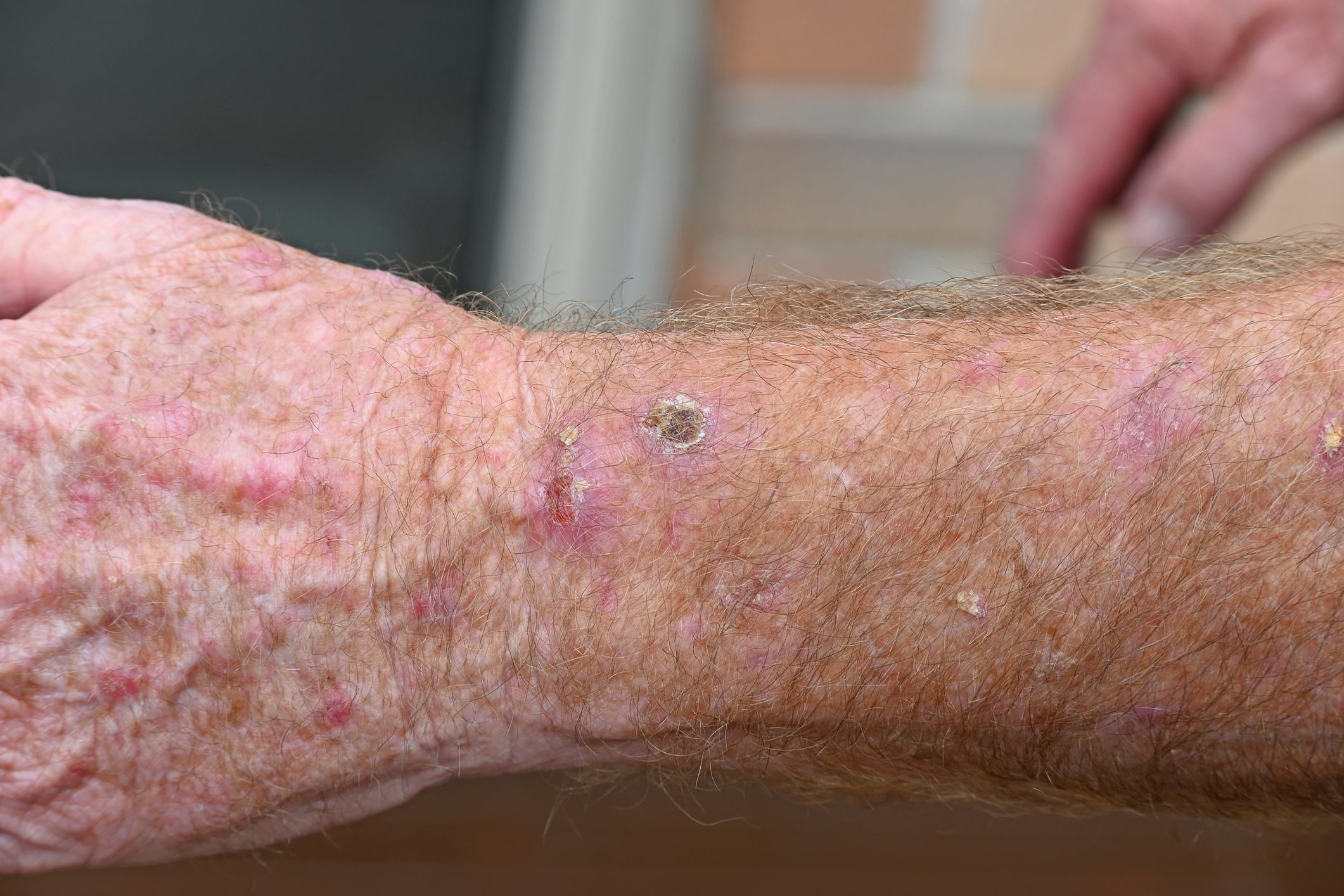
Actinic keratoses occur singly or in confluent patches on sun-exposed areas of the skin. Clinical and/or dermatoscopic diagnosis can be supported by non-invasive diagnostic tools such as confocal microscopy and LC-OCT, which are also used to monitor treatment efficacy [1]. The current European guideline recommends field-directed treatment with topically applied preparations or photodynamic therapy for multiple AK lesions [2]. Various topical active ingredients with different application regimens and mechanisms of action are available.
Autoren
- Mirjam Peter, M.Sc.
Publikation
- DERMATOLOGIE PRAXIS
Related Topics
You May Also Like
- Plastic surgery and reconstructive microsurgery for DFS
Functional limb preservation between infection control, vascular medicine and resurfacing
- SURPASS-CVOT
Tirzepatide versus Dulaglutide in T2D with ASCVD
- Secondary prevention after ACS: individually optimized lipid management
Trend towards early combination therapy and new strategies for lowering Lp(a)
- Pediatric Brain Tumors
Psychiatry versus Neuro-Oncology: Diagnostic Pitfalls
- What the latest studies on the entire EF spectrum mean for clinical practice
Heart Failure – The 2026 Evidence Update
- Acute ischemic stroke
Alteplase and Tenecteplase Are on the Same Level
- CKD in People with Type 2 Diabetes: Evidence-Based, Optimized Treatment
SGLT-2 inhibitors and GLP-1 receptor agonists: significant improvement in renal outcomes
- Wearables: screening via smartwatch?