Medizinonline Medizinonline
  • News
    • News
    • Market & Medicine
  • Patients
    • Disease patterns
    • Diagnostics
    • Therapy
  • Partner Content
    • Dermatology
      • Atopic dermatitis and psoriasis news
    • Diabetes
      • Dia-Month Club – Type 2 Diabetes
      • Diabetes in Motion
      • Diabetes Podcasts
    • Gastroenterology
      • IBD matters
    • Oncology
      • Swiss Oncology in motion
    • Orthopedics
      • Osteoporosis in motion
  • Departments
    • Allergology and clinical immunology
    • General Internal Medicine
    • Anesthesiology
    • Angiology
    • Surgery
    • Dermatology and venereology
    • Endocrinology and Diabetology
    • Nutrition
    • Gastroenterology and Hepatology
    • Genetics
    • Geriatrics
    • Gynecology
    • Hematology
    • Infectiology
    • Cardiology
    • Nephrology
    • Neurology
    • Emergency and intensive care medicine
    • Nuclear Medicine
    • Oncology
    • Ophthalmology
    • ORL
    • Orthopedics
    • Pediatrics
    • Pharmacology and toxicology
    • Pharmaceutical medicine
    • Phlebology
    • Physical medicine and rehabilitation
    • Pneumology
    • Prevention and health care
    • Psychiatry and psychotherapy
    • Radiology
    • Forensic Medicine
    • Rheumatology
    • Sports Medicine
    • Traumatology and trauma surgery
    • Tropical and travel medicine
    • Urology
    • Dentistry
  • CME & Congresses
    • CME continuing education
    • Congress Reports
    • Congress calendar
  • Practice
    • Noctimed
    • Practice Management
    • Jobs
    • Interviews
  • Log In
  • Register
  • My account
  • Contact
  • Publications
  • Contact
  • Deutsch
  • English
  • Français
  • Italiano
  • Português
  • Español
Subscribe
Medizinonline Medizinonline
  • News
    • News
    • Market & Medicine
  • Patienten
    • Krankheitsbilder
    • Diagnostik
    • Therapie
  • Partner Content
    • Dermatology
      • Atopic dermatitis and psoriasis news
    • Diabetes
      • Dia-Month Club – Type 2 Diabetes
      • Diabetes in Motion
      • Diabetes Podcasts
    • Gastroenterology
      • IBD matters
    • Oncology
      • Swiss Oncology in motion
    • Orthopedics
      • Osteoporosis in motion
    • Phytotherapie
    • Rheumatology
  • Departments
    • Fachbereiche 1-13
      • Allergology and clinical immunology
      • General Internal Medicine
      • Anesthesiology
      • Angiology
      • Surgery
      • Dermatology and venereology
      • Endocrinology and Diabetology
      • Nutrition
      • Gastroenterology and Hepatology
      • Genetics
      • Geriatrics
      • Gynecology
      • Hematology
    • Fachbereiche 14-26
      • Infectiology
      • Cardiology
      • Nephrology
      • Neurology
      • Emergency and intensive care medicine
      • Nuclear Medicine
      • Oncology
      • Ophthalmology
      • ORL
      • Orthopedics
      • Pediatrics
      • Pharmacology and toxicology
      • Pharmaceutical medicine
    • Fachbereiche 26-38
      • Phlebology
      • Physical medicine and rehabilitation
      • Phytotherapy
      • Pneumology
      • Prevention and health care
      • Psychiatry and psychotherapy
      • Radiology
      • Forensic Medicine
      • Rheumatology
      • Sports Medicine
      • Traumatology and trauma surgery
      • Tropical and travel medicine
      • Urology
      • Dentistry
  • CME & Congresses
    • CME continuing education
    • Congress Reports
    • Congress calendar
  • Practice
    • Noctimed
    • Practice Management
    • Jobs
    • Interviews
Login

Sie haben noch keinen Account? Registrieren

  • Infamous brain tumor?

Unexpected turnaround in a patient with glioblastoma

    • Cases
    • Neurology
    • RX
  • 3 minute read

Case report: In 2009, the then 32-year-old patient underwent her first brain tumor surgery (glioblastoma WHO °IV, DD: anaplastic astrocytoma WHO °III, Mib-1 10%). The recommended adjuvant treatment [1] was rejected due to an existing pregnancy. In 2011, recurrent surgery with adjuvant radiation (total dose 60 Gy) was performed. Histologically, the classification of the tumor remained equivocal. The indication for chemotherapy was discussed and recommended on an interdisciplinary basis, but was not performed at the patient’s request. Another surgery was performed for recurrence in December 2014 (secondary glioblastoma WHO °IV, IDH1 positive, MGMT methylated, Mib-1 70%). Adjuvant radio-chemotherapy with adapted radiation volume was planned but discontinued after three irradiations (total dose 6 Gy) at the patient’s request, and chemotherapy was again rejected.

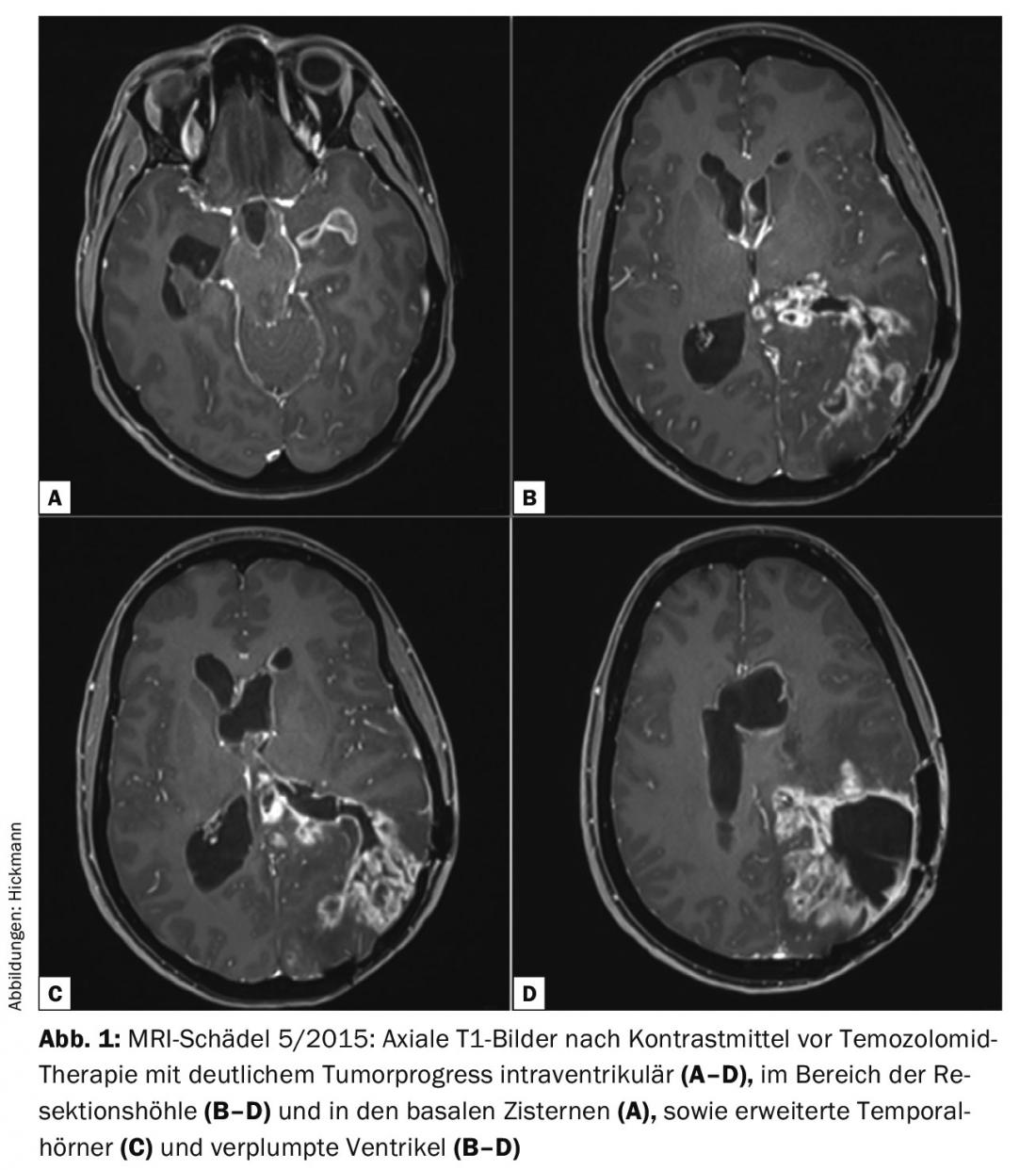
In May 2015, the somnolent patient with a clear tumor progression and intraventricular tumor manifestation with consecutive hydrocephalus occlusus (Fig. 1) was admitted as an emergency case.
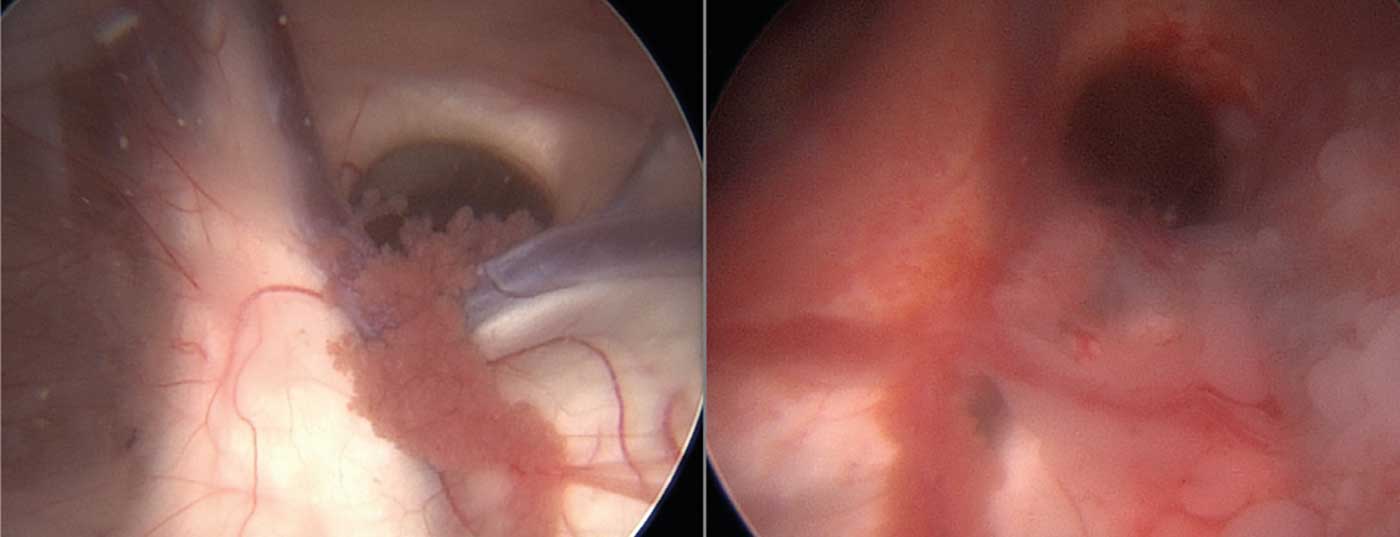
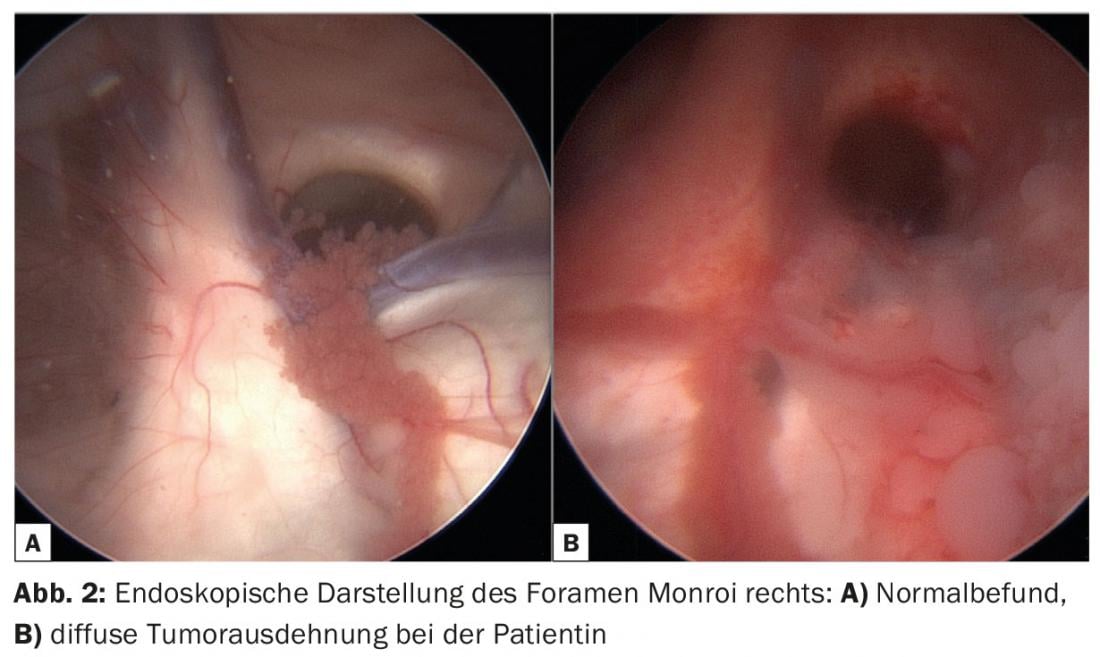
In cases of progressive intracranial pressure symptoms, palliative ventriculo-cisternostomy was performed to relieve hydrocephalus (Fig. 2). In this procedure, the floor of the third ventricle was opened using an endoscopic technique and a free cerebrospinal fluid passage to the subarachnoid spaces was achieved. After surgery, the patient showed rapid clinical recovery, so it was assumed that the preoperative symptomatology was not due to tumor progression alone.
Therefore, despite the infaust overall situation, chemotherapy with temozolomide (6 cycles, regimen 5/28) was started. Under therapy, the patient’s clinical condition continued to improve. Without new neurological deficits, the Karnofsky Performance Score is 90%. Image morphology showed impressive tumor regression without evidence of contrast-enhancing tumor tissue in the last follow-up in September 2015, after four cycles of temozolomide (Fig. 3).
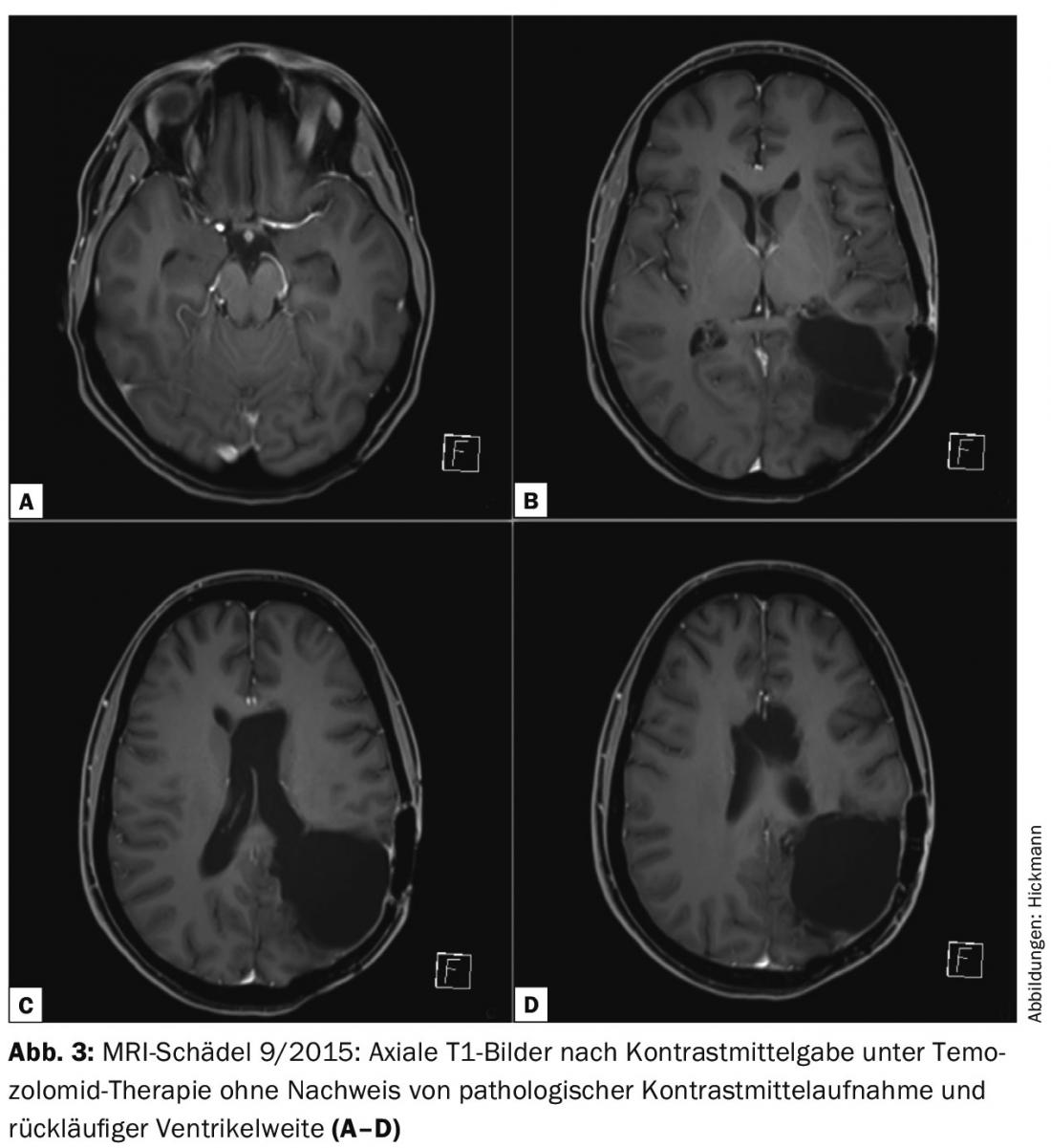
Discussion: The clinical course and histological findings of 2014 suggest the presence of a secondary malignant glioblastoma WHO °IV in this case, which was rather a grade III tumor in 2009. Overall, the tumor has prognostically and therapeutically favorable molecular genetic markers (IDH1 positive [sekundäre Malignisierung], MGMT methylated) [2,3]. Cases with sometimes difficult-to-interpret histological findings and remarkable clinical courses are possible due to the inhomogeneity of the tumors.

The special feature of this case, however, is the course since May 2015. Such a good response to chemotherapy was not expected. In patients with intraventricular tumor progression and deterioration in terms of acute hydrocephalus (visible temporal horns, Fig. 1C) , acute congestion therapy should be considered. In this way, it is possible to assess the extent to which the symptoms are due to tumor progression or congestion, especially if – as in this case – not all adjuvant therapy options have been exhausted and the tumor has a predictively favorable molecular genetic profile. The very good response of the recurrent tumor to chemotherapy is probably due to temozolomide naivety in addition to molecular genetic factors (MGMT-methylated) [2]. In addition, the blood-brain barrier was extensively disrupted, so that there may additionally have been particularly good CNS permeability to temozolomide. Even though this is an impressive individual case, this course confirms our idea that in patients with malignant brain tumors who have not been fully treated, more controversial therapeutic approaches should also be considered.

Literature:

  1. Stupp R, et al: Radiotherapy plus concomitant and adjuvant temozolomide for glioblastoma. N Engl J Med 2005; 352(10): 987-996.
  2. Stupp R, et al: High-grade glioma: ESMO Clinical Practice Guidelines for diagnosis, treatment and follow-up. Ann Oncol 2014; 25(Suppl 3): iii93-101.
  3. Wen PY, Kesari S: Malignant gliomas in adults. N Engl J Med 2008; 359(5): 492-507.

InFo NEUROLOGY & PSYCHIATRY 2015; 13(6): 34-35.
Autoren
  • Dr. med. Anne-Katrin Hickmann
  • Prof. Dr. med. Robert Reisch
  • Dr. med. Lucas Widmer
  • Dr. med. Marcin Sumila
  • Prof. Dr. med. Stephan G. Wetzel
Publikation
  • InFo NEUROLOGIE & PSYCHIATRIE
Related Topics
  • Brain tumor
  • chemotherapy
  • Glioblastoma
Previous Article
  • Patient-based decisions are important

Surgical treatment of intracerebral hemorrhage

  • Education
  • Neurology
  • RX
  • Surgery
View Post
Next Article
  • Diabetes Day in Bern

New insulins improve compliance and reduce the risk of hypoglycemia

  • Congress Reports
  • Endocrinology and Diabetology
  • RX
  • Studies
View Post
You May Also Like
View Post
  • 6 min
  • Findings from research on the generalization of exposure therapy

Treatment of comorbid anxiety

    • Education
    • Psychiatry and psychotherapy
    • RX
    • Studies
asthma_winter_istock-887318372
View Post
  • 4 min
  • Symptom-free despite asthma?

Asthma treatment requirements have increased

    • Congress Reports
    • General Internal Medicine
    • Pharmacology and toxicology
    • Pneumology
    • RX
View Post
  • 9 min
  • Phytotherapy for rhinosinusitis

Evidence, active substances and clinical classification for medical practice

    • Education
    • General Internal Medicine
    • Infectiology
    • ORL
    • Pharmaceutical medicine
    • Phytotherapy
    • RX
    • Studies
View Post
  • 10 min
  • Contact eczema

Causes and prevention at work

    • Allergology and clinical immunology
    • CME continuing education
    • Dermatology and venereology
    • Prevention and health care
    • RX
View Post
  • 15 min
  • Pulmonary hypertension

PH and lung diseases

    • Cardiology
    • CME continuing education
    • Pneumology
    • RX
    • Studies
View Post
  • 6 min
  • Respiratory infections: viral bronchitis or bacterial pneumonia?

Old crucial question in the light of current findings

    • Congress Reports
    • General Internal Medicine
    • Infectiology
    • Pharmaceutical medicine
    • Pharmacology and toxicology
    • Phytotherapy
    • Pneumology
    • RX
View Post
  • 6 min
  • What biomarkers reveal about "biological youth" - and what not (yet)

Epigenetic ageing

    • Education
    • Genetics
    • Geriatrics
    • Prevention and health care
    • RX
    • Studies
View Post
  • 4 min
  • Amyotrophic lateral sclerosis and nutrition

Calorie optimization in ALS through digital intervention

    • Education
    • Neurology
    • Nutrition
    • RX
    • Studies
  • IBD matters

    Zum Thema
Top CME content
  • 1
    Can you swallow intelligence? Relevant substance classes times for healthy people
  • 2
    PH and lung diseases
  • 3
    Causes and prevention at work
  • 4
    Clinical care from birth to adulthood
  • 5
    Aligning care with the patient

Newsletter

Sign up and stay up to date

Subscribe
Medizinonline Medizinonline
  • Contact
  • General terms and conditions
  • Imprint

Input your search keywords and press Enter.