Medizinonline Medizinonline
  • News
    • News
    • Market & Medicine
  • Patients
    • Disease patterns
    • Diagnostics
    • Therapy
  • Partner Content
    • Diabetes
      • Dia-Month Club – Type 2 Diabetes
      • Diabetes in Motion
      • Diabetes Podcasts
    • Gastroenterology
      • IBD matters
    • Oncology
      • Swiss Oncology in motion
    • Orthopedics
      • Osteoporosis in motion
  • Departments
    • Allergology and clinical immunology
    • General Internal Medicine
    • Anesthesiology
    • Angiology
    • Surgery
    • Dermatology and venereology
    • Endocrinology and Diabetology
    • Nutrition
    • Gastroenterology and Hepatology
    • Genetics
    • Geriatrics
    • Gynecology
    • Hematology
    • Infectiology
    • Cardiology
    • Nephrology
    • Neurology
    • Emergency and intensive care medicine
    • Nuclear Medicine
    • Oncology
    • Ophthalmology
    • ORL
    • Orthopedics
    • Pediatrics
    • Pharmacology and toxicology
    • Pharmaceutical medicine
    • Phlebology
    • Physical medicine and rehabilitation
    • Pneumology
    • Prevention and health care
    • Psychiatry and psychotherapy
    • Radiology
    • Forensic Medicine
    • Rheumatology
    • Sports Medicine
    • Traumatology and trauma surgery
    • Tropical and travel medicine
    • Urology
    • Dentistry
  • CME & Congresses
    • CME continuing education
    • Congress Reports
    • Congress calendar
  • Practice
    • Noctimed
    • Practice Management
    • Jobs
    • Interviews
  • Log In
  • Register
  • My account
  • Contact
  • Publications
  • Contact
  • Deutsch
  • English
  • Français
  • Italiano
  • Português
  • Español
Subscribe
Medizinonline Medizinonline
  • News
    • News
    • Market & Medicine
  • Patienten
    • Krankheitsbilder
    • Diagnostik
    • Therapie
  • Partner Content
    • Diabetes
      • Dia-Month Club – Type 2 Diabetes
      • Diabetes in Motion
      • Diabetes Podcasts
    • Gastroenterology
      • IBD matters
    • Oncology
      • Swiss Oncology in motion
    • Orthopedics
      • Osteoporosis in motion
    • Phytotherapie
    • Rheumatology
  • Departments
    • Fachbereiche 1-13
      • Allergology and clinical immunology
      • General Internal Medicine
      • Anesthesiology
      • Angiology
      • Surgery
      • Dermatology and venereology
      • Endocrinology and Diabetology
      • Nutrition
      • Gastroenterology and Hepatology
      • Genetics
      • Geriatrics
      • Gynecology
      • Hematology
    • Fachbereiche 14-26
      • Infectiology
      • Cardiology
      • Nephrology
      • Neurology
      • Emergency and intensive care medicine
      • Nuclear Medicine
      • Oncology
      • Ophthalmology
      • ORL
      • Orthopedics
      • Pediatrics
      • Pharmacology and toxicology
      • Pharmaceutical medicine
    • Fachbereiche 26-38
      • Phlebology
      • Physical medicine and rehabilitation
      • Phytotherapy
      • Pneumology
      • Prevention and health care
      • Psychiatry and psychotherapy
      • Radiology
      • Forensic Medicine
      • Rheumatology
      • Sports Medicine
      • Traumatology and trauma surgery
      • Tropical and travel medicine
      • Urology
      • Dentistry
  • CME & Congresses
    • CME continuing education
    • Congress Reports
    • Congress calendar
  • Practice
    • Noctimed
    • Practice Management
    • Jobs
    • Interviews
Login

Sie haben noch keinen Account? Registrieren

  • Rare skin diseases

Darier’s disease – a hereditary keratinization disorder

    • Cases
    • Dermatology and venereology
    • Education
    • Genetics
    • RX
  • 3 minute read

The disease, also known as dyskeratosis follicularis, is associated with impaired keratinization of the epidermis, hair follicles and fingernails. Histologically, Darier’s disease is characterized by marked dyskeratosis. Therapeutic options are limited; in addition to antiseptic and keratolytic measures, there are several other treatment strategies.

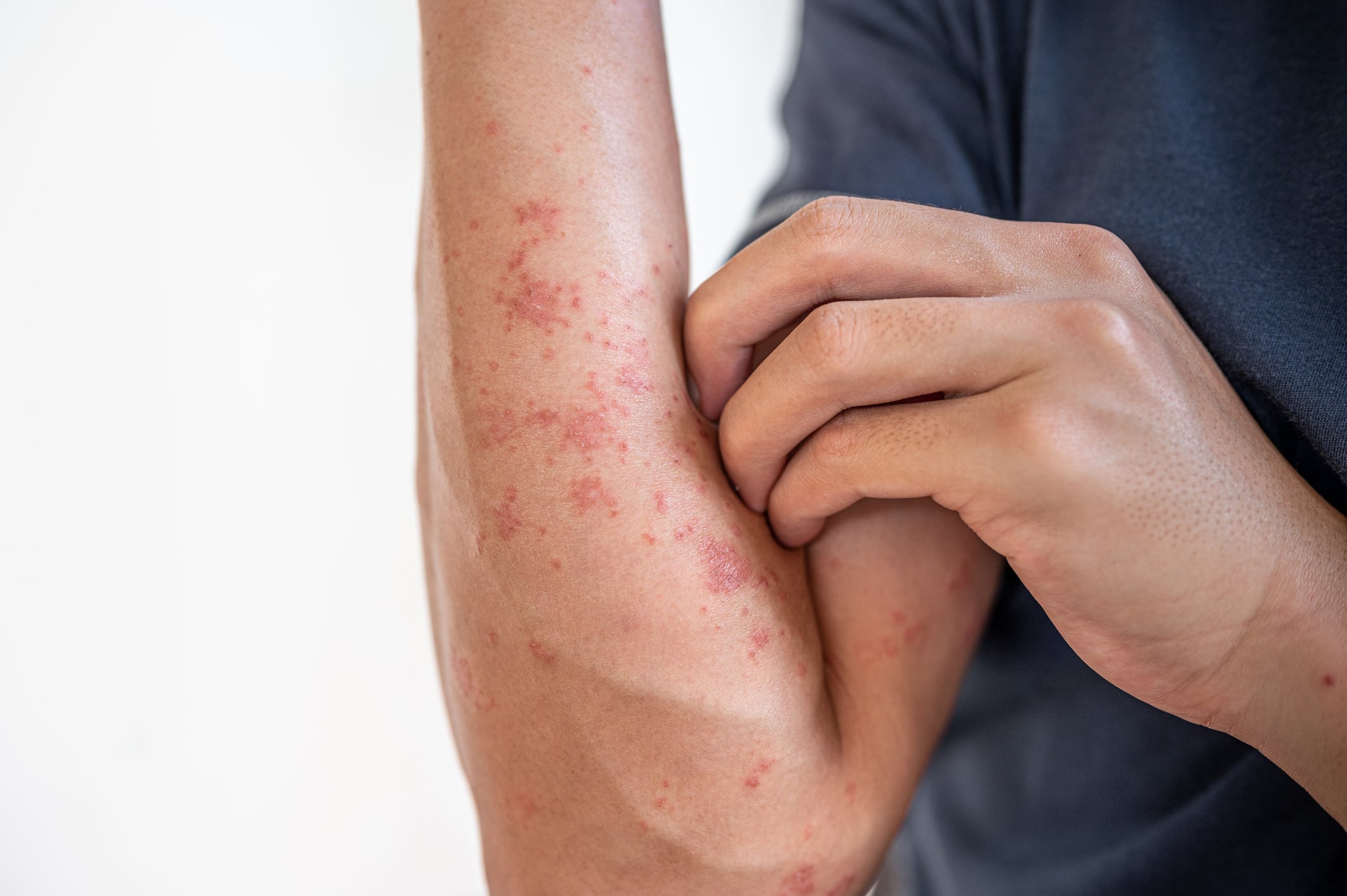
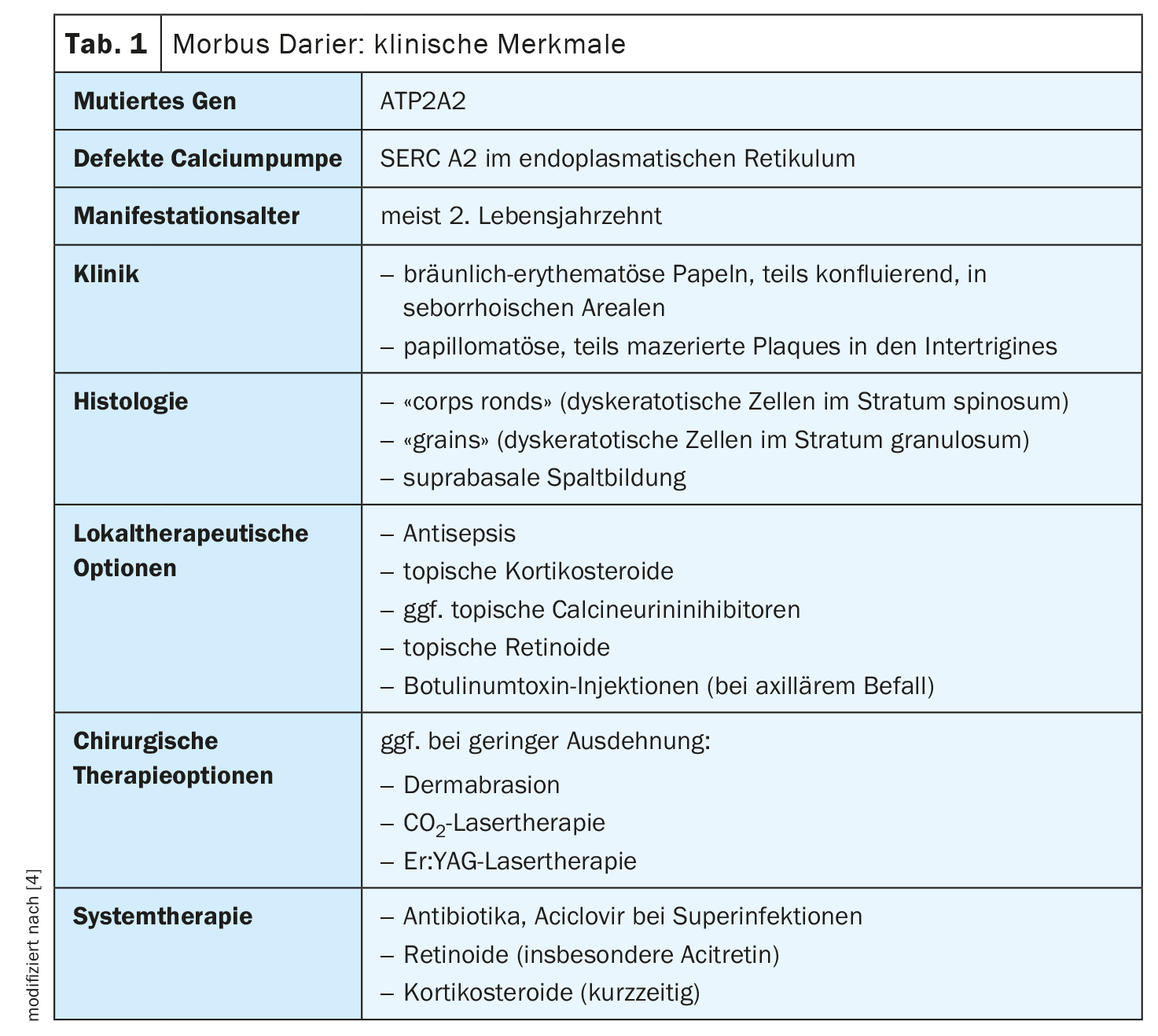
Darier’s disease is one of the autosomal dominant genodermatoses caused by a mutation of the ATP2A2 gene on chromosome 12 [1]. The first description was made by Ferdinand Jean Darier in 1889 [2]. Clinically, dyskeratotic papules manifest, usually in seborrheic and intertriginous areas, which may confluence to form large lesions [3,4]. Longitudinal red and white stripes typically appear on the nails, culminating in a V-shaped notch at the free edge of the nail [4]. Whitish papules may form on the mucous membranes of the cheeks and hard palate [5].

The diagnosis is made clinically on the basis of the papules and is supported by the histopathologic picture [5]:

  • Papillomatosis: Enlargement and coarsening of the papillae of the connective tissue projecting into the epidermis, which secondarily lead to a wavy unevenness of the skin surface via thickening.
  • Acanthosis, hyperkeratosis
  • Focal acantholytic dyskeratosis: premature single-cell keratinization in the form of so-called “corps ronds” in the stratum spinosum and “grains” in the stratum corneum

In the treatment of Darier’s disease, antiseptic measures are essential to prevent superinfection [4]. This includes avoiding trigger factors (heat, friction, sweat) to minimize microbial colonization [6]. Depending on the skin condition, urea-containing topical preparations are useful as keratolytic measures [6]. In addition, topical corticosteroids and systemic therapeutics (e.g., acitretin) are used [6]. Initially, for example, 25 mg acitretin p.o. is administered; this should be reduced to a maintenance dose of 10 mg p.o. during the course of treatment. [6]. Ablative therapies (dermabrasion,CO2 laser, Er:YAG laser) are also effective, but limited by the size of the treatable areas [4].

In order to collect “real life” data on diagnosis, treatment, and disease progression, a prospective clinical registry on Darier’s disease and Hailey-Hailey disease was initiated in Germany under the direction of PD Alexander Zink, MD, TU Munich [6].
Case study

A 53-year-old woman presented to the clinic with a more than ten-year history of keratotic papules [7]. The papules were located on the backs of the hands and feet. The toenails and fingernails were also affected. Skin-colored papules several millimeters in size were seen on the nose, scalp, and ears, clearly demarcated from the healthy skin. Keratotic papules were present on the lower back, including the perineum and vulvar region. Oral lesions manifested as white papules with a central depression. Based on the clinical presentation, possible diagnoses included Darier’s disease, Hailey-Hailey disease, Bazex syndrome, ichthyosiform dermatosis, Langerhans cell histiocytosis, or severe atopic dermatitis. Histopathologic findings on a biopsy revealed the presence of epidermal acanthosis, premature keratosis, and suprabasal acantholysis. The floor of the suprabasal cleft showed an accumulation of dyskeratotic cells. A multidisciplinary team classified a group of dyskeratotic cells reflecting acantholysis and premature keratosis as keratosis follicularis and a diagnosis of Darier’s disease was reached [7].


Literature:

  1. Haber RN, Dib NG: Management of Darier disease: A review of the literature and update. Indian J Dermatol Venereol Leprol 2021; 87: 14-21.
  2. Wikiderm, www.wikiderm.de/resources/pdf/Darier,%20Morbus.pdf,(last accessed 04/11/2023).
  3. Morelló-Vicente A, et al: Treatment of refractory facial Darier’s disease with photodynamic daylight therapy. JDDG 2022; 20(12): 1633-1635.
  4. Rogner DF, et al: Darier’s disease and Hailey-Hailey disease: status 2021. JDDG 2021; 19(10): 1478-502.
  5. “Darier’s Disease,” https://flexikon.doccheck.com/de/Morbus_Darier,(last accessed Apr. 11, 2023).
  6. “German clinical registry: therapy and medical care of patients with Darier’s disease and Hailey-Hailey,” 2019, version 1.0, www.derma-allergie.med.tum.de/fileadmin/user_upload/MDHH_
    Register_Study_Protocol.pdf
    , (last accessed 04/11/2023).
  7. Ferizi M, et al: A Rare Clinical Presentation of Darier’s Disease. Case Reports in Dermatological Medicine 2013, Article ID 419797 , www.hindawi.com/journals/cridm/2013/419797,(last accessed 04/11/2023).

DERMATOLOGY PRACTICE 2023; 33(2): 24

Autoren
  • Mirjam Peter, M.Sc.
Publikation
  • DERMATOLOGIE PRAXIS
Related Topics
  • antiseptic
  • ATP2A2
  • Cornification disorder
  • Darier's disease hereditary
  • Dyskeratosis
  • keratolytic
  • Measures
  • mutation
  • Rare skin diseases
  • Treatment
Previous Article
  • Translational medicine

Psoriasis – from immunopathogenesis to successful therapy

  • Allergology and clinical immunology
  • Dermatology and venereology
  • Rheumatology
  • RX
  • Studies
View Post
Next Article
  • Functional heart complaints

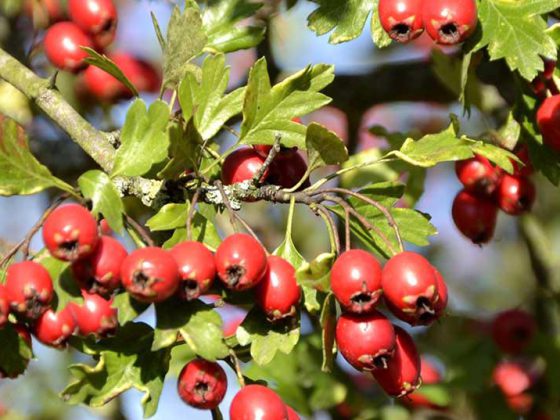
Hawthorn extract to improve the state of mind

  • Cardiology
  • Education
  • General Internal Medicine
  • Pharmaceutical medicine
  • RX
  • Studies
View Post
You May Also Like
View Post
  • 11 min
  • Peristomal skin health

Focus on preventive care options

    • RX
    • Cases
    • CME continuing education
    • Dermatology and venereology
    • Gastroenterology and Hepatology
    • Infectiology
    • Physical medicine and rehabilitation
    • Prevention and health care
    • Surgery
View Post
  • 5 min
  • Mental Health with GLP-1 RAs

Benefits of Semaglutide and Liraglutide

    • RX
    • Education
    • Endocrinology and Diabetology
    • General Internal Medicine
    • Nutrition
    • Psychiatry and psychotherapy
    • Studies
View Post
  • 4 min
  • Bronchiolitis obliterans

Out of shape even without popcorn

    • RX
    • Education
    • General Internal Medicine
    • Infectiology
    • Pediatrics
    • Pneumology
    • Studies
View Post
  • 8 min
  • Case study

Guillain-Barré syndrome with a fulminant course

    • RX
    • Cases
    • Education
    • Infectiology
    • Neurology
    • Pharmacology and toxicology
    • Radiology
    • Studies
View Post
  • 5 min
  • Suspicion of neuroborreliosis?

Detection of borrelia-specific CSF parameters provides certainty

    • RX
    • Congress Reports
    • Infectiology
    • Neurology
    • Studies
View Post
  • 12 min
  • The Brain and the Motivation to Eat

Why is it so hard to lose weight?

    • RX
    • CME continuing education
    • Endocrinology and Diabetology
    • General Internal Medicine
    • Nutrition
    • Pharmacology and toxicology
    • Prevention and health care
    • Psychiatry and psychotherapy
    • Studies
View Post
  • 12 min
  • Global Recommendation, Swissmedic Approval, and SL Limitation

WHO Guidelines on GLP-1 for Obesity

    • RX
    • Cardiology
    • Education
    • Endocrinology and Diabetology
    • General Internal Medicine
    • Nutrition
    • Pharmacology and toxicology
    • Prevention and health care
    • Studies
View Post
  • 7 min
  • Obesity in Children and Adolescents

Gene-Environment Interactions: Polygenic or Monogenic Determinants?

    • RX
    • Education
    • General Internal Medicine
    • Genetics
    • Nutrition
    • Pediatrics
  • IBD matters

    Zum Thema
Top CME content
  • 1
    Focus on preventive care options
  • 2
    Inflammation as a Treatment Goal in Its Own Right
  • 3
    Personalized Treatment Before a Planned Pregnancy
  • 4
    Current State of Knowledge and New Therapeutic Approaches
  • 5
    Why is it so hard to lose weight?

Newsletter

Sign up and stay up to date

Subscribe
Medizinonline Medizinonline
  • Contact
  • General terms and conditions
  • Imprint

Input your search keywords and press Enter.