Medizinonline Medizinonline
  • News
    • News
    • Market & Medicine
  • Patients
    • Disease patterns
    • Diagnostics
    • Therapy
  • Partner Content
    • Diabetes
      • Dia-Month Club – Type 2 Diabetes
      • Diabetes in Motion
      • Diabetes Podcasts
    • Gastroenterology
      • IBD matters
    • Oncology
      • Swiss Oncology in motion
    • Orthopedics
      • Osteoporosis in motion
  • Departments
    • Allergology and clinical immunology
    • General Internal Medicine
    • Anesthesiology
    • Angiology
    • Surgery
    • Dermatology and venereology
    • Endocrinology and Diabetology
    • Nutrition
    • Gastroenterology and Hepatology
    • Genetics
    • Geriatrics
    • Gynecology
    • Hematology
    • Infectiology
    • Cardiology
    • Nephrology
    • Neurology
    • Emergency and intensive care medicine
    • Nuclear Medicine
    • Oncology
    • Ophthalmology
    • ORL
    • Orthopedics
    • Pediatrics
    • Pharmacology and toxicology
    • Pharmaceutical medicine
    • Phlebology
    • Physical medicine and rehabilitation
    • Pneumology
    • Prevention and health care
    • Psychiatry and psychotherapy
    • Radiology
    • Forensic Medicine
    • Rheumatology
    • Sports Medicine
    • Traumatology and trauma surgery
    • Tropical and travel medicine
    • Urology
    • Dentistry
  • CME & Congresses
    • CME continuing education
    • Congress Reports
    • Congress calendar
  • Practice
    • Noctimed
    • Practice Management
    • Jobs
    • Interviews
  • Log In
  • Register
  • My account
  • Contact
  • Publications
  • Contact
  • Deutsch
  • English
  • Français
  • Italiano
  • Português
  • Español
Subscribe
Medizinonline Medizinonline
  • News
    • News
    • Market & Medicine
  • Patienten
    • Krankheitsbilder
    • Diagnostik
    • Therapie
  • Partner Content
    • Diabetes
      • Dia-Month Club – Type 2 Diabetes
      • Diabetes in Motion
      • Diabetes Podcasts
    • Gastroenterology
      • IBD matters
    • Oncology
      • Swiss Oncology in motion
    • Orthopedics
      • Osteoporosis in motion
    • Phytotherapie
    • Rheumatology
  • Departments
    • Fachbereiche 1-13
      • Allergology and clinical immunology
      • General Internal Medicine
      • Anesthesiology
      • Angiology
      • Surgery
      • Dermatology and venereology
      • Endocrinology and Diabetology
      • Nutrition
      • Gastroenterology and Hepatology
      • Genetics
      • Geriatrics
      • Gynecology
      • Hematology
    • Fachbereiche 14-26
      • Infectiology
      • Cardiology
      • Nephrology
      • Neurology
      • Emergency and intensive care medicine
      • Nuclear Medicine
      • Oncology
      • Ophthalmology
      • ORL
      • Orthopedics
      • Pediatrics
      • Pharmacology and toxicology
      • Pharmaceutical medicine
    • Fachbereiche 26-38
      • Phlebology
      • Physical medicine and rehabilitation
      • Phytotherapy
      • Pneumology
      • Prevention and health care
      • Psychiatry and psychotherapy
      • Radiology
      • Forensic Medicine
      • Rheumatology
      • Sports Medicine
      • Traumatology and trauma surgery
      • Tropical and travel medicine
      • Urology
      • Dentistry
  • CME & Congresses
    • CME continuing education
    • Congress Reports
    • Congress calendar
  • Practice
    • Noctimed
    • Practice Management
    • Jobs
    • Interviews
Login

Sie haben noch keinen Account? Registrieren

  • Symptomatic vertebral body hemangioma with neurological complaints

Minimally invasive interventional therapy

    • Cardiology
    • Cases
    • Neurology
    • RX
  • 2 minute read

Case Report: In a 30-year-old female patient with lower extremity sensory disturbances, an MRI examination revealed multiple, vascular, tumor-like vertebral body lesions in the upper thoracic spine that corresponded to vertebral body hemangiomas.

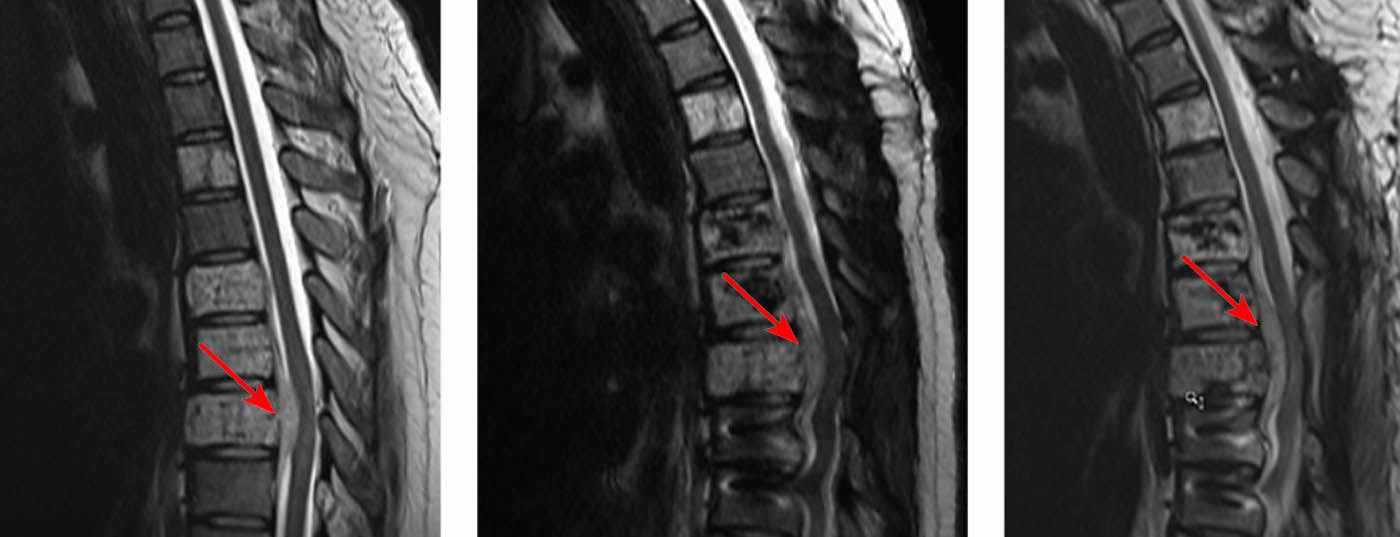
Hemangiomas are venous malformations. At BWK 7, this showed extraosseous paravertebral and intraspinal extradural extension of the hemangioma. This caused narrowing of the spinal canal with compression of the myelon and centromedullary edema (Fig. 1a).
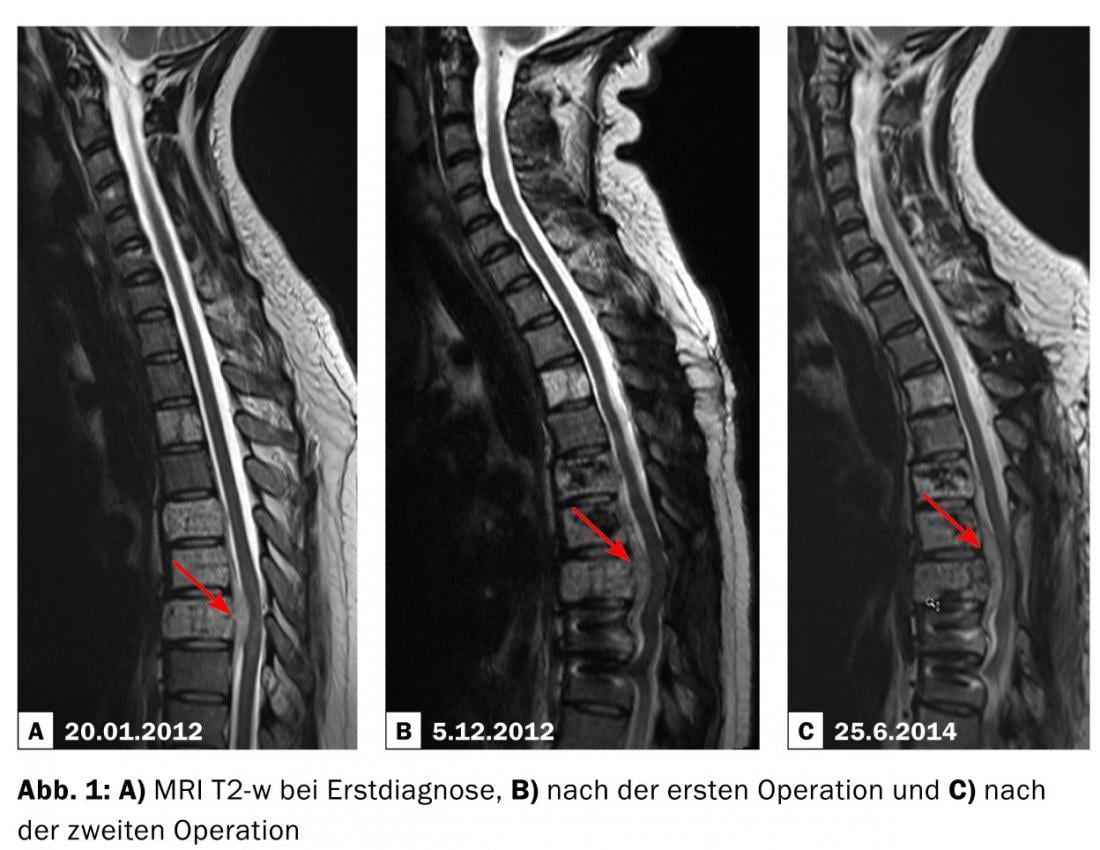
The patient underwent two surgeries at an out-of-town hospital, where dorsal decompression with stabilization via transpedicular screw fixation was performed (Fig. 1b) . Partial resection of the extraosseous hemangioma was not performed.

In the course, however, the symptoms worsened again with progressive neurological symptoms. In a follow-up MRI, a size progression of the intraspinal extradural hemangioma part was visible (Fig. 1c). This resulted in increasing myelon compression despite dorsal decompression.

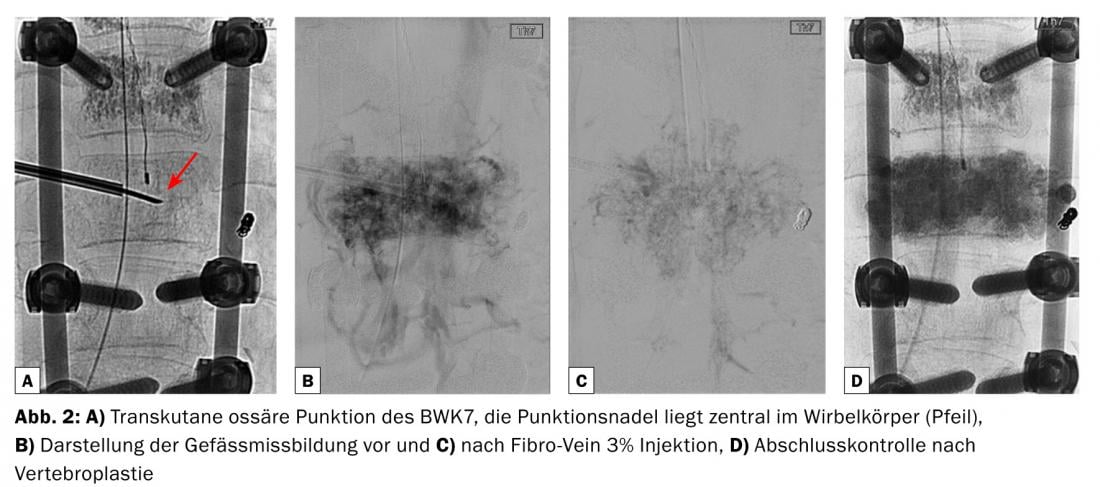
Interventional procedure: After an interdisciplinary discussion, it was decided to perform interventional therapy. Under intubation anesthesia, a transcutaneous puncture of BWK7 was performed (Fig. 2a) and after analysis of the vascular supply and especially the venous outflow of the intra- and paraosseous vascular malformation (Fig.  2b ), sclerotherapy was performed (Fig. 2c) . For this purpose, a sclerosing agent was injected (Fibro-Vein 3%), which leads to degeneration of the venous caverns via thrombosis. Vertebroplasty was performed at the same session, and bone graft substitute (DBX-DePuySynthes) was injected to stabilize the vertebral body (Fig. 2d). Periprocedurally, the patient received high-dose steroid therapy.
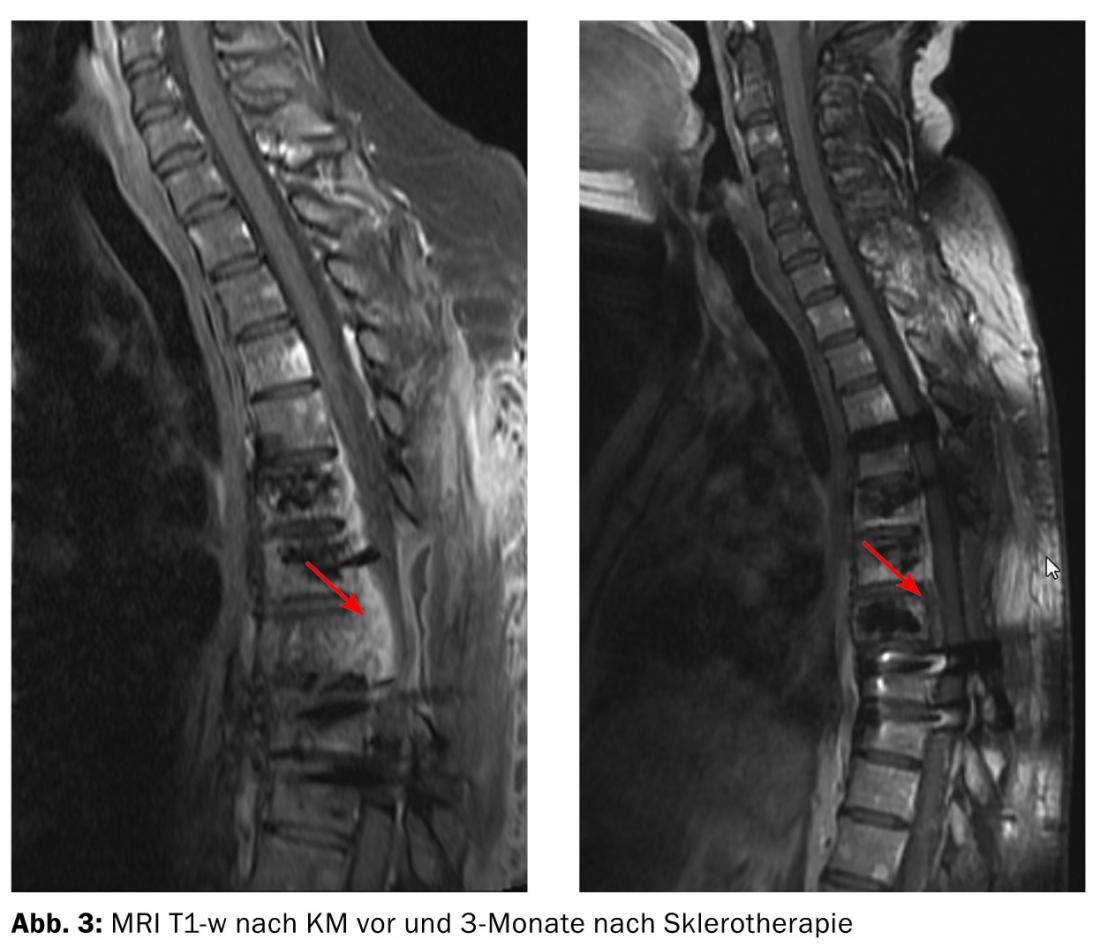
The 3-month follow-up showed a significant volume reduction of the intraspinal portion of the vascular malformation by more than 50% (Fig. 3). Myelon compression had completely regressed and a significant improvement in neurological symptoms had occurred.
SUMMARY ASSESSMENT: Vertebral hemangiomas are the most common benign avascular bone lesions of the spine often of dysembryogenetic or hamartous origin. They are usually incidental findings and do not require therapy. However, they may exhibit significant extraosseous aggressive growth and lead to neurologic symptoms, as in the previously described case. Minimally invasive interventional therapy of these venous vascular malformations represents an essential part in the treatment concept and should be considered in the therapy.

Kiriaki Kollia, MD
PD Dr. med. Zsolt Kulcsar
Prof. Dr. med. Isabel Wanke
Sophia L. Göricke, M.D.


InFo NEUROLOGY & PSYCHIATRY 2014; 12(6): 38-39.

Publikation
  • InFo NEUROLOGIE & PSYCHIATRIE
Related Topics
  • Bone lesion
  • BWK7
  • Edema
  • Myelon compression
  • Puncture
  • Resection
  • Spinal canal
  • Vertebral body hemangioma
Previous Article
  • Generalized anxiety disorder

Is GAD too rarely recognized?

  • Congress Reports
  • News
  • Psychiatry and psychotherapy
  • RX
View Post
Next Article
  • Meningiomas

Therapeutic options for recurrent or metastatic tumors

  • Congress Reports
  • Neurology
  • Oncology
  • RX
  • Studies
View Post
You May Also Like
View Post
  • 12 min
  • Current evidence, risk classes and new counseling options

Hormonal contraception and cardiovascular risk

    • Cardiology
    • Education
    • Gynecology
    • Neurology
    • Pharmacology and toxicology
    • RX
    • Studies
View Post
  • 4 min
  • Acute otitis media: self-limiting course vs. "red flags"

In which cases are antibiotics necessary?

    • Congress Reports
    • General Internal Medicine
    • Infectiology
    • ORL
    • Pediatrics
    • RX
View Post
  • 6 min
  • Prurigo nodularis: evidence-based treatment

Targeted therapy options on the rise

    • Allergology and clinical immunology
    • Dermatology and venereology
    • Education
    • Pharmacology and toxicology
    • RX
    • Studies
View Post
  • 13 min
  • MACE risk, heart failure incidence and all-cause mortality

Metabolic syndrome as a cardiovascular risk factor

    • Cardiology
    • Education
    • Endocrinology and Diabetology
    • General Internal Medicine
    • RX
    • Studies
View Post
  • 9 min
  • Glaucoma in old age: slowing down progression

IOP lowering is currently the only evidence-based treatment

    • Education
    • General Internal Medicine
    • Ophthalmology
    • Prevention and health care
    • RX
    • Studies
View Post
  • 7 min
  • Vector-borne infections with skin manifestations

Arboviruses and leishmaniasis in Europe

    • Congress Reports
    • Infectiology
    • Prevention and health care
    • RX
    • Studies
    • Tropical and travel medicine
View Post
  • 6 min
  • Multimorbidity and functional capacity in old age

Clarify individual health status and reduce risks

    • Congress Reports
    • General Internal Medicine
    • Geriatrics
    • Neurology
    • Orthopedics
    • Physical medicine and rehabilitation
    • Prevention and health care
    • Rheumatology
    • RX
View Post
  • 6 min
  • Tick season: danger from early summer meningoencephalitis

TBE vaccination recommended for adults and children aged 3 and over

    • Education
    • Infectiology
    • Neurology
    • Prevention and health care
    • RX
    • Studies
  • IBD matters

    Zum Thema
Top CME content
  • 1
    Do special amino acids lead to success?
  • 2
    Current status of PAT
  • 3
    Surgical wound complications
  • 4
    Do special amino acids lead to success?
  • 5
    Functional limb preservation between infection control, vascular medicine and resurfacing

Newsletter

Sign up and stay up to date

Subscribe
Medizinonline Medizinonline
  • Contact
  • General terms and conditions
  • Imprint

Input your search keywords and press Enter.