Medizinonline Medizinonline
  • News
    • News
    • Market & Medicine
  • Patients
    • Disease patterns
    • Diagnostics
    • Therapy
  • Partner Content
    • Dermatology
      • Atopic dermatitis and psoriasis news
    • Diabetes
      • Dia-Month Club – Type 2 Diabetes
      • Diabetes in Motion
      • Diabetes Podcasts
    • Gastroenterology
      • IBD matters
    • Oncology
      • Swiss Oncology in motion
    • Orthopedics
      • Osteoporosis in motion
  • Departments
    • Allergology and clinical immunology
    • General Internal Medicine
    • Anesthesiology
    • Angiology
    • Surgery
    • Dermatology and venereology
    • Endocrinology and Diabetology
    • Nutrition
    • Gastroenterology and Hepatology
    • Genetics
    • Geriatrics
    • Gynecology
    • Hematology
    • Infectiology
    • Cardiology
    • Nephrology
    • Neurology
    • Emergency and intensive care medicine
    • Nuclear Medicine
    • Oncology
    • Ophthalmology
    • ORL
    • Orthopedics
    • Pediatrics
    • Pharmacology and toxicology
    • Pharmaceutical medicine
    • Phlebology
    • Physical medicine and rehabilitation
    • Pneumology
    • Prevention and health care
    • Psychiatry and psychotherapy
    • Radiology
    • Forensic Medicine
    • Rheumatology
    • Sports Medicine
    • Traumatology and trauma surgery
    • Tropical and travel medicine
    • Urology
    • Dentistry
  • CME & Congresses
    • CME continuing education
    • Congress Reports
    • Congress calendar
  • Practice
    • Noctimed
    • Practice Management
    • Jobs
    • Interviews
  • Log In
  • Register
  • My account
  • Contact
  • Publications
  • Contact
  • Deutsch
  • English
  • Français
  • Italiano
  • Português
  • Español
Subscribe
Medizinonline Medizinonline
  • News
    • News
    • Market & Medicine
  • Patienten
    • Krankheitsbilder
    • Diagnostik
    • Therapie
  • Partner Content
    • Dermatology
      • Atopic dermatitis and psoriasis news
    • Diabetes
      • Dia-Month Club – Type 2 Diabetes
      • Diabetes in Motion
      • Diabetes Podcasts
    • Gastroenterology
      • IBD matters
    • Oncology
      • Swiss Oncology in motion
    • Orthopedics
      • Osteoporosis in motion
    • Phytotherapie
    • Rheumatology
  • Departments
    • Fachbereiche 1-13
      • Allergology and clinical immunology
      • General Internal Medicine
      • Anesthesiology
      • Angiology
      • Surgery
      • Dermatology and venereology
      • Endocrinology and Diabetology
      • Nutrition
      • Gastroenterology and Hepatology
      • Genetics
      • Geriatrics
      • Gynecology
      • Hematology
    • Fachbereiche 14-26
      • Infectiology
      • Cardiology
      • Nephrology
      • Neurology
      • Emergency and intensive care medicine
      • Nuclear Medicine
      • Oncology
      • Ophthalmology
      • ORL
      • Orthopedics
      • Pediatrics
      • Pharmacology and toxicology
      • Pharmaceutical medicine
    • Fachbereiche 26-38
      • Phlebology
      • Physical medicine and rehabilitation
      • Phytotherapy
      • Pneumology
      • Prevention and health care
      • Psychiatry and psychotherapy
      • Radiology
      • Forensic Medicine
      • Rheumatology
      • Sports Medicine
      • Traumatology and trauma surgery
      • Tropical and travel medicine
      • Urology
      • Dentistry
  • CME & Congresses
    • CME continuing education
    • Congress Reports
    • Congress calendar
  • Practice
    • Noctimed
    • Practice Management
    • Jobs
    • Interviews
Login

Sie haben noch keinen Account? Registrieren

  • COVID-19 study

New method identifies T cells

    • Education
    • General Internal Medicine
    • Infectiology
    • News
    • RX
    • Studies
  • 3 minute read

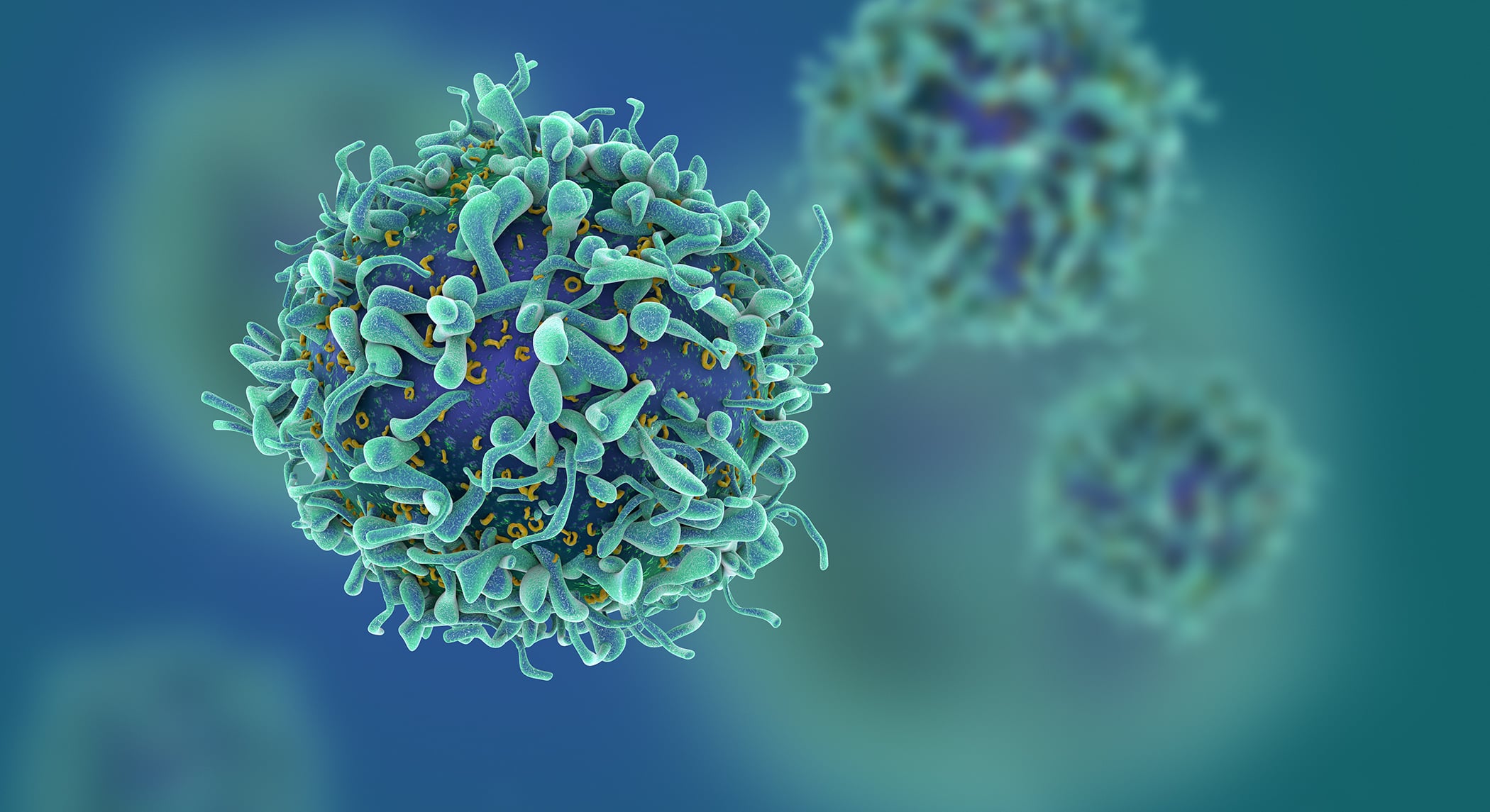
T cells play a crucial role in fighting coronavirus and preventing severe disease progression. They recognize and combat the virus directly in the infected cells. Munich researchers have precisely typed the T cells that respond to SARS-CoV-2 and described them at different stages of the disease.

T cells play an important role in the human immune system. The blood cells originate in the bone marrow and travel from there through the bloodstream to the thymus gland in the sternum. Here they form receptors on their surface with which they recognize and combat structures foreign to the body. In addition, T cells stimulate the formation of B cells, which produce antibodies against viruses. Virus-specific immune responses of T cells can still be detected in the blood for months or years.

To be protected against SARS-CoV-2 or not to suffer a severe course of the disease, the T cells are important. “We were particularly interested in how many of these specific T cells there are in the body of the sick person, what quality they have to respond to the pathogens, and how long-lived they are,” says Dr. Kilian Schober of the Institute of Medical Microbiology, Immunology and Hygiene at the Technical University of Munich (TUM).

“PROFILE” of a T cell fighting SARS-CoV-2.

An interdisciplinary team from TUM, Helmholtz Zentrum München and Ludwig-Maximilians-Universität München has now succeeded in developing a new method to find T cell receptors that react to SARS-CoV-2. The team collected blood from severely ill Covid 19 patients and divided it into two pools. The researchers stimulated one pool with the viral antigen and not the other. This allowed the identification of those T cells that respond to the virus and the characterization of a precise phenotype.

In this way, we now know what the T cells that have recently seen the antigen against the virus look like. Similar T cells were detected not only in the blood but also in the respiratory tract of the patients. In this way, it was possible to distinguish whether the cells are still in the active “hot stage” or have already returned to the resting state, i.e. “cold” – i.e. whether the patient is still experiencing the infection or has already overcome it.


The findings from this study are of great importance because SARS-CoV-2-specific T cells can now be classified in different organs (blood or lung), in different states of activation (antigen seen recently or more recently), and in different disease contexts (severely ill/virus-positive or mildly ill/virus-negative).  The scientists speculate that the technique could also likely be used in the future to check how many protective T cells are present after a vaccination.

In addition, T cells from healthy individuals could be remodeled to respond to SARS-CoV-2 for the first time. “So it may be possible to equip patients’ T cells with receptors to fight the virus more effectively,” Dr. Schober said. This is the first step towards adoptive T-cell therapy for severely diseased Covid 19 patients. The method could also be applicable to other diseases such as autoimmune and tumor diseases to better characterize T cell responses

Source: Technical University of Munich (D)


Literature:

  1. Fischer DS, Ansari M, Wagner KI, et al: Single-cell RNA sequencing reveals ex vivo signatures of SARS-CoV-2-reactive T cells through ‘reverse phenotyping’. Nature Communications 2021; 12: 4515; doi: 10.1038/s41467-021-24730-4.
Autoren
  • Jens Dehn
Publikation
  • InFo PNEUMOLOGIE & ALLERGOLOGIE
Related Topics
  • Coronavirus
  • covid-19
  • immune system
  • Infectious disease
  • SARS-CoV-2 vaccination
  • T cells
Previous Article
  • Depression in old age

Pharmacotherapy as an important pillar of treatment

  • Congress Reports
  • General Internal Medicine
  • Geriatrics
  • Pharmacology and toxicology
  • Psychiatry and psychotherapy
  • RX
View Post
Next Article
  • Local therapy of burn wounds

Infection control is essential

  • Dermatology and venereology
  • Education
  • Infectiology
  • Prevention and health care
  • RX
  • Traumatology and trauma surgery
View Post
You May Also Like
View Post
  • 5 min
  • From symptom to diagnosis

Pneumology – Covid-19: a review

    • Cases
    • Education
    • Infectiology
    • Pneumology
    • Prevention and health care
    • Radiology
    • RX
View Post
  • 6 min
  • Abdominal aortic aneurysms in primary care

Risk-stratified screening and prophylaxis

    • Angiology
    • Congress Reports
    • Prevention and health care
    • Radiology
    • RX
    • Studies
    • Surgery
View Post
  • 9 min
  • Cardiology

Minimally invasive – the quiet triumph of modern heart surgery

    • Cardiology
    • CME continuing education
    • RX
    • Studies
    • Surgery
View Post
  • 0 min
  • Plastic surgery and reconstructive microsurgery for DFS

Functional limb preservation between infection control, vascular medicine and resurfacing

    • Angiology
    • CME continuing education
    • Endocrinology and Diabetology
    • General Internal Medicine
    • Geriatrics
    • Physical medicine and rehabilitation
    • RX
    • Surgery
View Post
  • 6 min
  • Age-related neurocognitive disorders

Neuroprotective effects of Ginkgo biloba extract

    • Education
    • Geriatrics
    • Neurology
    • Pharmaceutical medicine
    • Phytotherapy
    • RX
    • Studies
View Post
  • 6 min
    • Education
    • Endocrinology and Diabetology
    • Pneumology
    • Psychiatry and psychotherapy
    • RX
    • Studies

How origin and place of residence promote CF-associated diabetes

View Post
  • 10 min
  • Patients with leg swelling

DVT and other common DDs with peripheral edema

    • Angiology
    • Cardiology
    • Congress Reports
    • Geriatrics
    • RX
View Post
  • 8 min
  • "smarter medicine": Top 5 list for headache treatment

Recommendations of the Swiss Headache Society

    • Dentistry
    • General Internal Medicine
    • Neurology
    • Practice Management
    • RX
    • Studies
  • IBD matters

    Zum Thema
Top CME content
  • 1
    Functional limb preservation between infection control, vascular medicine and resurfacing
  • 2
    Minimally invasive – the quiet triumph of modern heart surgery
  • 3
    HPV prevention, screening innovation and sentinel lymph node biopsy
  • 4
    Clinical care from birth to adulthood
  • 5
    Multidisciplinary teams in oncology

Newsletter

Sign up and stay up to date

Subscribe
Medizinonline Medizinonline
  • Contact
  • General terms and conditions
  • Imprint

Input your search keywords and press Enter.