Medizinonline Medizinonline
  • News
    • News
    • Market & Medicine
  • Patients
    • Disease patterns
    • Diagnostics
    • Therapy
  • Partner Content
    • Dermatology
      • Atopic dermatitis and psoriasis news
    • Diabetes
      • Dia-Month Club – Type 2 Diabetes
      • Diabetes in Motion
      • Diabetes Podcasts
    • Gastroenterology
      • IBD matters
    • Oncology
      • Swiss Oncology in motion
    • Orthopedics
      • Osteoporosis in motion
  • Departments
    • Allergology and clinical immunology
    • General Internal Medicine
    • Anesthesiology
    • Angiology
    • Surgery
    • Dermatology and venereology
    • Endocrinology and Diabetology
    • Nutrition
    • Gastroenterology and Hepatology
    • Genetics
    • Geriatrics
    • Gynecology
    • Hematology
    • Infectiology
    • Cardiology
    • Nephrology
    • Neurology
    • Emergency and intensive care medicine
    • Nuclear Medicine
    • Oncology
    • Ophthalmology
    • ORL
    • Orthopedics
    • Pediatrics
    • Pharmacology and toxicology
    • Pharmaceutical medicine
    • Phlebology
    • Physical medicine and rehabilitation
    • Pneumology
    • Prevention and health care
    • Psychiatry and psychotherapy
    • Radiology
    • Forensic Medicine
    • Rheumatology
    • Sports Medicine
    • Traumatology and trauma surgery
    • Tropical and travel medicine
    • Urology
    • Dentistry
  • CME & Congresses
    • CME continuing education
    • Congress Reports
    • Congress calendar
  • Practice
    • Noctimed
    • Practice Management
    • Jobs
    • Interviews
  • Log In
  • Register
  • My account
  • Contact
  • Publications
  • Contact
  • Deutsch
  • English
  • Français
  • Italiano
  • Português
  • Español
Subscribe
Medizinonline Medizinonline
  • News
    • News
    • Market & Medicine
  • Patienten
    • Krankheitsbilder
    • Diagnostik
    • Therapie
  • Partner Content
    • Dermatology
      • Atopic dermatitis and psoriasis news
    • Diabetes
      • Dia-Month Club – Type 2 Diabetes
      • Diabetes in Motion
      • Diabetes Podcasts
    • Gastroenterology
      • IBD matters
    • Oncology
      • Swiss Oncology in motion
    • Orthopedics
      • Osteoporosis in motion
    • Phytotherapie
    • Rheumatology
  • Departments
    • Fachbereiche 1-13
      • Allergology and clinical immunology
      • General Internal Medicine
      • Anesthesiology
      • Angiology
      • Surgery
      • Dermatology and venereology
      • Endocrinology and Diabetology
      • Nutrition
      • Gastroenterology and Hepatology
      • Genetics
      • Geriatrics
      • Gynecology
      • Hematology
    • Fachbereiche 14-26
      • Infectiology
      • Cardiology
      • Nephrology
      • Neurology
      • Emergency and intensive care medicine
      • Nuclear Medicine
      • Oncology
      • Ophthalmology
      • ORL
      • Orthopedics
      • Pediatrics
      • Pharmacology and toxicology
      • Pharmaceutical medicine
    • Fachbereiche 26-38
      • Phlebology
      • Physical medicine and rehabilitation
      • Phytotherapy
      • Pneumology
      • Prevention and health care
      • Psychiatry and psychotherapy
      • Radiology
      • Forensic Medicine
      • Rheumatology
      • Sports Medicine
      • Traumatology and trauma surgery
      • Tropical and travel medicine
      • Urology
      • Dentistry
  • CME & Congresses
    • CME continuing education
    • Congress Reports
    • Congress calendar
  • Practice
    • Noctimed
    • Practice Management
    • Jobs
    • Interviews
Login

Sie haben noch keinen Account? Registrieren

  • Cardiology Update

Renal denervation as safe and effective hypertension control

    • Angiology
    • Cardiology
    • Congress Reports
    • RX
  • 3 minute read

The cardiology seminar at Medidays focused on three topics: blood pressure control, myocardial disease, and triple therapy for atrial fibrillation (AF) and stenting. In the treatment of resistant hypertension, renal sympathetic denervation has proven to be effective and safe, according to Prof. Thomas F. Lüscher, MD. Christiane Gruner, MD, went into more detail about the diagnostic pathways in hypertrophic cardiomyopathy. Finally, Jan Steffel, MD, referred to the potential of dual rather than triple therapy in VCF.

Prof. Dr. med. Thomas F. Lüscher, Clinic Director of Cardiology at the University Hospital Zurich, spoke in his lecture about hypertension treatment and pointed out that, in addition to increasing age, blood pressure is an important risk factor for stroke. Lowering blood pressure is associated with a reduced incidence of such events: “The incidence of cerebral strokes can be reduced by about 50%, and that of heart attacks by about 25%,” says Prof. Lüscher. This is not the only reason why arterial hypertension is a serious health problem worldwide, since, despite a variety of possible lifestyle interventions and pharmacological approaches internationally, the control of blood pressure is not satisfactory.

Renal sympathetic denervation

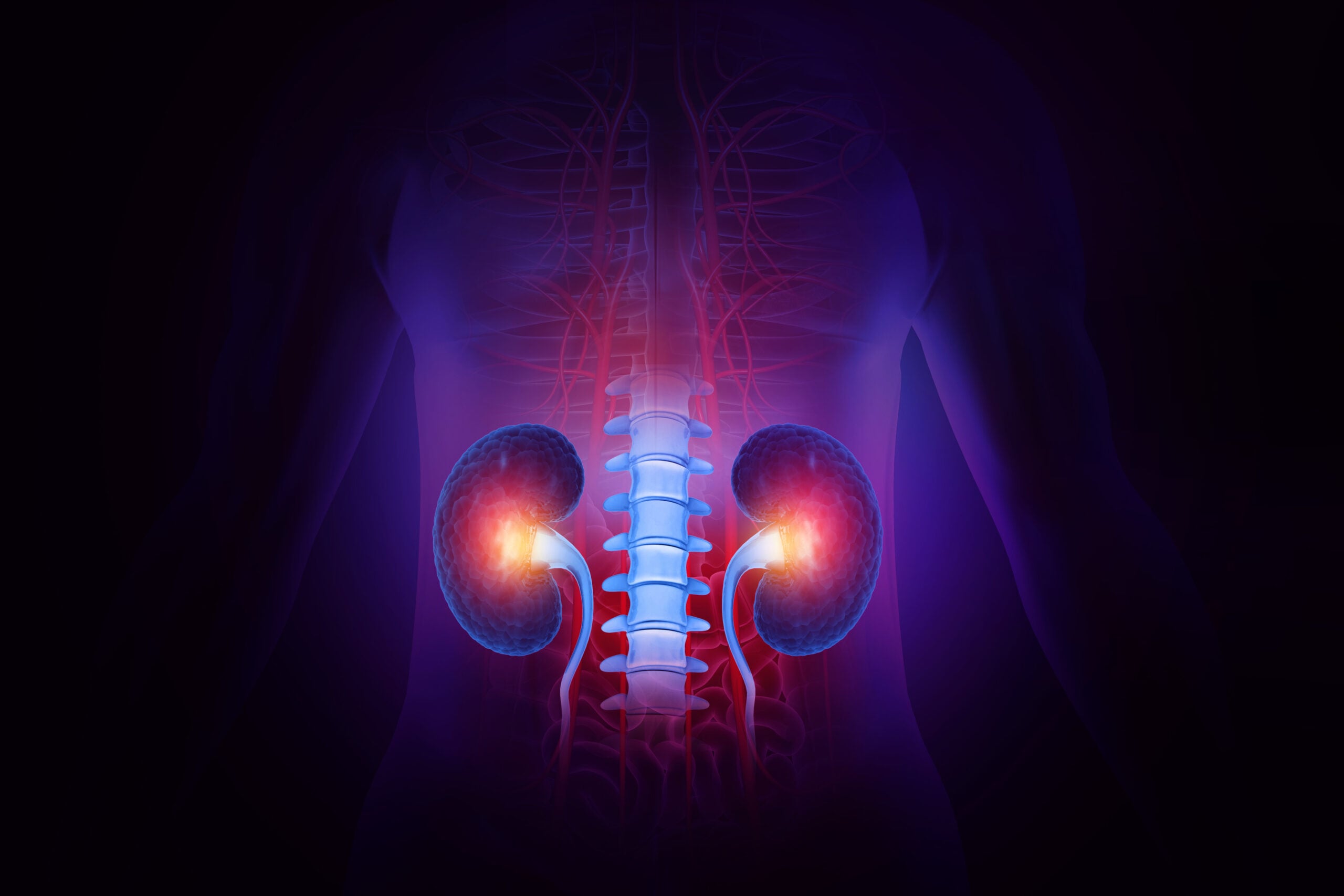
“The kidneys play a central role in long-term blood pressure regulation through efferent and afferent nerve fibers. It was discovered early on that surgical and pharmacological blockade of renal nerves can lead to reduced blood pressure. However, such an approach was also associated with an increase in noticeable side effects,” said Prof. Lüscher.

Catheter-based renal denervation represents a new therapeutic option to decrease the increased renal sympathetic nerve activity and tissue levels of norepinephrine (Table 1).
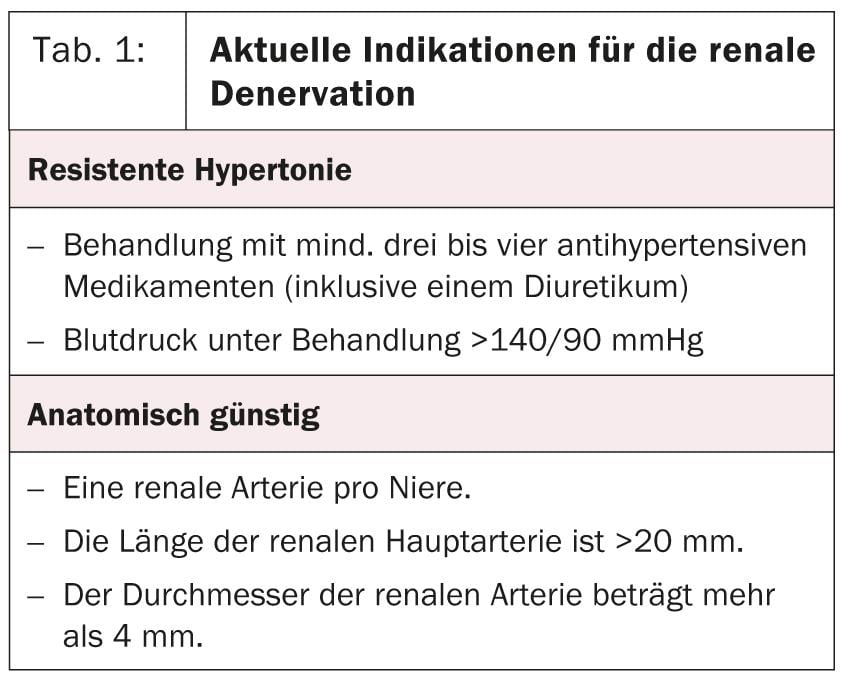
This was shown to be a safe and very effective strategy to control blood pressure in patients with resistant hypertension. Specifically, renal nerve ablation decreases blood pressure by 30 mmHg. “The reduction is not associated with changes in renal function or orthostatic hypotension. In contrast, renal denervation leads to an improvement in glucose metabolism,” Prof. Lüscher explained.

It should be investigated whether this treatment is a therapeutic option also for patients without resistant hypertension. Furthermore, it seems to have potential in the therapy of other diseases characterized by increased sympathetic activation (Table 2).

Complications

In the Simplicity HTN1 study, one patient suffered a renal artery dissection, and another developed a pseudoaneurysm at the femoral approach. Symplicity HTN2 demonstrated the development of an underlying arteriosclerotic lesion in a patient undergoing renal denervation but did not require treatment. “So the procedure has minimal complication rates,” summarizes Prof. Lüscher.

Cardiomyopathy

Dr. Christiane Gruner, MD, of the University Hospital Zurich, addressed the procedure and follow-up of myocardial diseases. Hypertrophic cardiomyopathy (HCM) is the most common inherited cardiomyopathy. It is defined by left ventricular hypertrophy (LVH) without dilatation and excluding other causes of LVH. Clinically, it usually presents at diagnosis as chest pain, shortness of breath, palpitations, cerebral apoplexy, syncope, or as a pathologic ECG. Family screening by ECG and echocardiography is useful in any case.

A reliable diagnosis can only be made by a multimodal approach using the following components: Anamnesis (individual/family), echocardiography, ECG and cardiovascular magnetic resonance imaging.

“Cardiac follow-up (ECG, echocardiography, Holter ECG, exercise stress test) should be performed once a year, and a cardiac MRI should be performed every three to five years to ensure optimal follow-up,” Dr. Gruner said.

In HCM, VHF is an associated problem in about 20% of cases. In this case, oral anticoagulation must be given in addition to beta-blockers, calcium antagonists, or amiodarone.

Triple therapy for atrial fibrillation

PD Dr. med. Jan Steffel from the University Hospital Zurich pointed out the problems regarding triple therapy (vitamin K antagonists, [VKA] + Aspirin® + clopidogrel/prasugrel/ticagrelor) in VCF and stenting: There are almost no data from randomized clinical trials; furthermore, the variety of clinical scenarios and patient-specific constellations (compliance, genetic variations, etc.) is large.

“In addition, triple therapy increases the risk of severe bleeding enormously: the so-called WOEST study investigated the occurrence of such bleeding as a primary endpoint and came to the conclusion that this can be significantly reduced by using a two-drug combination instead of a three-drug combination, i.e. by omitting Aspirin®. Whether the efficacy in preventing thrombotic events remains the same is not yet confirmed, as this secondary endpoint would need to be substantiated with further data. However, new evidence suggests that dual therapy is safe and effective, and the findings of the WOEST study point in this direction,” Dr. Steffel concluded.

Source: “Cardiology Update”, Seminar at Medidays, September 2-6, 2013, Zurich.

CARDIOVASC 2013; 12(6): 30-31

Autoren
  • Lena Geltenbort
Publikation
  • CARDIOVASC
Related Topics
  • Age
  • Atrial fibrillation
  • Blood pressure
  • cardiology update
  • HCM
  • heart muscle disease
  • heavy bleeding
  • Hypertension
  • hypertrophic cardiomyopathy
  • Lifestyle
  • metabolic syndrome
  • MRI
  • renal denervation
  • Risk
  • simplicity HTN1
  • sympathetic
  • Triple Therapy
  • WOEST
Previous Article
  • Interview on thematic aspects of nephrology.

Early detection of hypertension is essential in the prevention of nephropathy

  • Cardiology
  • Interviews
  • Nephrology
  • RX
View Post
Next Article
  • Metastatic colorectal carcinoma

Determination of mutational RAS status is important in mCRC

  • Congress Reports
  • Gastroenterology and Hepatology
  • Oncology
  • RX
View Post
You May Also Like
View Post
  • 7 min
  • Plastic surgery and reconstructive microsurgery for DFS

Functional limb preservation between infection control, vascular medicine and resurfacing

    • Angiology
    • CME continuing education
    • Endocrinology and Diabetology
    • General Internal Medicine
    • Geriatrics
    • Physical medicine and rehabilitation
    • RX
    • Surgery
View Post
  • 14 min
  • Adrenogenital syndrome

Clinical care from birth to adulthood

    • CME continuing education
    • Endocrinology and Diabetology
    • Nephrology
    • Pediatrics
    • RX
    • Studies
View Post
  • 14 min
  • New approvals, current study data and ADC development

Antibody-drug conjugates in gynecologic oncology

    • Education
    • Gynecology
    • Oncology
    • RX
    • Studies
View Post
  • 5 min
  • From symptom to diagnosis

Pneumology – Covid-19: a review

    • Cases
    • Education
    • Infectiology
    • Pneumology
    • Prevention and health care
    • Radiology
    • RX
View Post
  • 6 min
  • Abdominal aortic aneurysms in primary care

Risk-stratified screening and prophylaxis

    • Angiology
    • Congress Reports
    • Prevention and health care
    • Radiology
    • RX
    • Studies
    • Surgery
View Post
  • 9 min
  • Cardiology

Minimally invasive – the quiet triumph of modern heart surgery

    • Cardiology
    • CME continuing education
    • RX
    • Studies
    • Surgery
View Post
  • 6 min
  • Age-related neurocognitive disorders

Neuroprotective effects of Ginkgo biloba extract

    • Education
    • Geriatrics
    • Neurology
    • Pharmaceutical medicine
    • Phytotherapy
    • RX
    • Studies
View Post
  • 6 min
    • Education
    • Endocrinology and Diabetology
    • Pneumology
    • Psychiatry and psychotherapy
    • RX
    • Studies

How origin and place of residence promote CF-associated diabetes

  • IBD matters

    Zum Thema
Top CME content
  • 1
    Functional limb preservation between infection control, vascular medicine and resurfacing
  • 2
    Minimally invasive – the quiet triumph of modern heart surgery
  • 3
    HPV prevention, screening innovation and sentinel lymph node biopsy
  • 4
    Clinical care from birth to adulthood
  • 5
    Multidisciplinary teams in oncology

Newsletter

Sign up and stay up to date

Subscribe
Medizinonline Medizinonline
  • Contact
  • General terms and conditions
  • Imprint

Input your search keywords and press Enter.