Medizinonline Medizinonline
  • News
    • News
    • Market & Medicine
  • Patients
    • Disease patterns
    • Diagnostics
    • Therapy
  • Partner Content
    • Diabetes
      • Dia-Month Club – Type 2 Diabetes
      • Diabetes in Motion
      • Diabetes Podcasts
    • Gastroenterology
      • IBD matters
    • Oncology
      • Swiss Oncology in motion
    • Orthopedics
      • Osteoporosis in motion
  • Departments
    • Allergology and clinical immunology
    • General Internal Medicine
    • Anesthesiology
    • Angiology
    • Surgery
    • Dermatology and venereology
    • Endocrinology and Diabetology
    • Nutrition
    • Gastroenterology and Hepatology
    • Genetics
    • Geriatrics
    • Gynecology
    • Hematology
    • Infectiology
    • Cardiology
    • Nephrology
    • Neurology
    • Emergency and intensive care medicine
    • Nuclear Medicine
    • Oncology
    • Ophthalmology
    • ORL
    • Orthopedics
    • Pediatrics
    • Pharmacology and toxicology
    • Pharmaceutical medicine
    • Phlebology
    • Physical medicine and rehabilitation
    • Pneumology
    • Prevention and health care
    • Psychiatry and psychotherapy
    • Radiology
    • Forensic Medicine
    • Rheumatology
    • Sports Medicine
    • Traumatology and trauma surgery
    • Tropical and travel medicine
    • Urology
    • Dentistry
  • CME & Congresses
    • CME continuing education
    • Congress Reports
    • Congress calendar
  • Practice
    • Noctimed
    • Practice Management
    • Jobs
    • Interviews
  • Log In
  • Register
  • My account
  • Contact
  • Publications
  • Contact
  • Deutsch
  • English
  • Français
  • Italiano
  • Português
  • Español
Subscribe
Medizinonline Medizinonline
  • News
    • News
    • Market & Medicine
  • Patienten
    • Krankheitsbilder
    • Diagnostik
    • Therapie
  • Partner Content
    • Diabetes
      • Dia-Month Club – Type 2 Diabetes
      • Diabetes in Motion
      • Diabetes Podcasts
    • Gastroenterology
      • IBD matters
    • Oncology
      • Swiss Oncology in motion
    • Orthopedics
      • Osteoporosis in motion
    • Phytotherapie
    • Rheumatology
  • Departments
    • Fachbereiche 1-13
      • Allergology and clinical immunology
      • General Internal Medicine
      • Anesthesiology
      • Angiology
      • Surgery
      • Dermatology and venereology
      • Endocrinology and Diabetology
      • Nutrition
      • Gastroenterology and Hepatology
      • Genetics
      • Geriatrics
      • Gynecology
      • Hematology
    • Fachbereiche 14-26
      • Infectiology
      • Cardiology
      • Nephrology
      • Neurology
      • Emergency and intensive care medicine
      • Nuclear Medicine
      • Oncology
      • Ophthalmology
      • ORL
      • Orthopedics
      • Pediatrics
      • Pharmacology and toxicology
      • Pharmaceutical medicine
    • Fachbereiche 26-38
      • Phlebology
      • Physical medicine and rehabilitation
      • Phytotherapy
      • Pneumology
      • Prevention and health care
      • Psychiatry and psychotherapy
      • Radiology
      • Forensic Medicine
      • Rheumatology
      • Sports Medicine
      • Traumatology and trauma surgery
      • Tropical and travel medicine
      • Urology
      • Dentistry
  • CME & Congresses
    • CME continuing education
    • Congress Reports
    • Congress calendar
  • Practice
    • Noctimed
    • Practice Management
    • Jobs
    • Interviews
Login

Sie haben noch keinen Account? Registrieren

  • Non-melanocytic skin cancer

Risk stratification as a basis for targeted intervention

    • Congress Reports
    • Dermatology and venereology
    • Oncology
    • RX
    • Studies
  • 3 minute read

Cutaneous squamous cell carcinoma (SCC) is the second most common skin cancer after basal cell carcinoma (BCC), and the third most common skin tumor is malignant melanoma. The etiology of skin cancer is multifactorial. To identify high-risk groups for non-melanocytic skin cancer (NMSC), researchers have developed several approaches. In addition to genetic predisposition, these include acquisition of environmental noxious agents – long-term exposure to ultraviolet (UV) radiation has been shown to be associated with increased risk of actinic keratoses and skin cancer.

Genetic determinants of skin cancer development include MC1R gene variants in addition to light skin type, according to studies. The melanocortin-1 receptor (MC1R) is a receptor protein that regulates melanogenesis and thus skin and hair color in humans. Polymorphisms of MC1R play a role in non-melanocytic skin cancer (NMSC) and malignant melanoma. Tagliabue et al. were able to show that individuals carrying at least one MC1R variant were at increased risk for BCC and SCC, as well as for NMSC overall [1]. Veronique del Marmol, MD, Erasme Hospital, Université Libre de Bruxelles (Belgium) pointed out that corresponding MC1R gene variants may not only occur in fair-skinned individuals [2]. That a light eye color is associated with a higher risk of SCC and BCC is evident from a large-scale prospective study (n=35 662) [3]. In contrast, no corresponding statistical association was identified regarding melanocytic skin cancer.
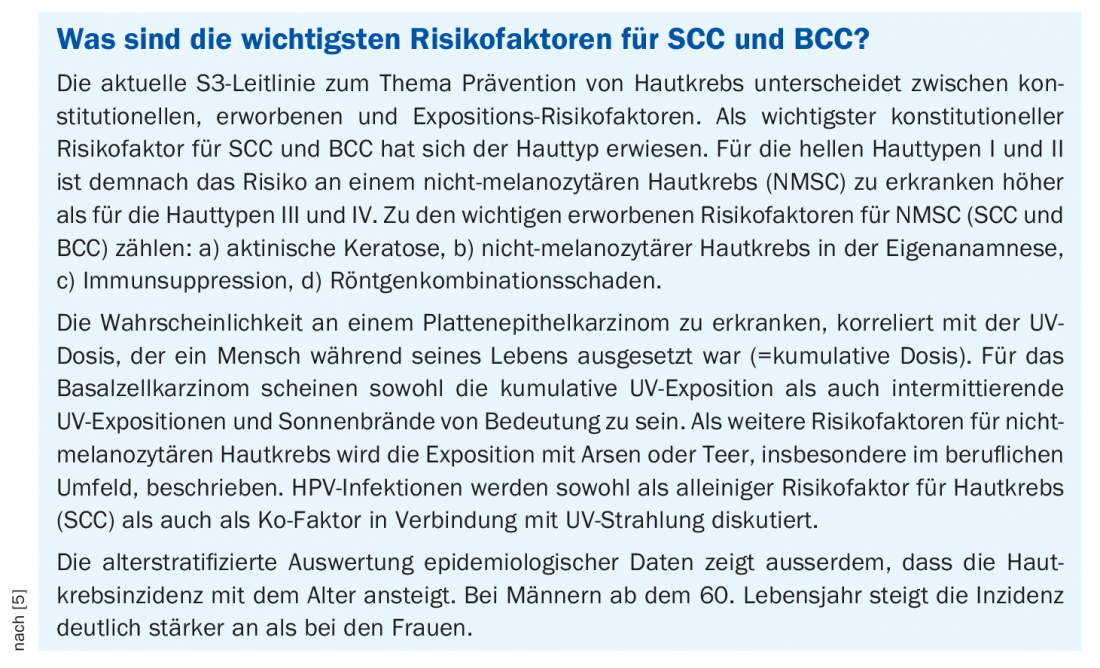


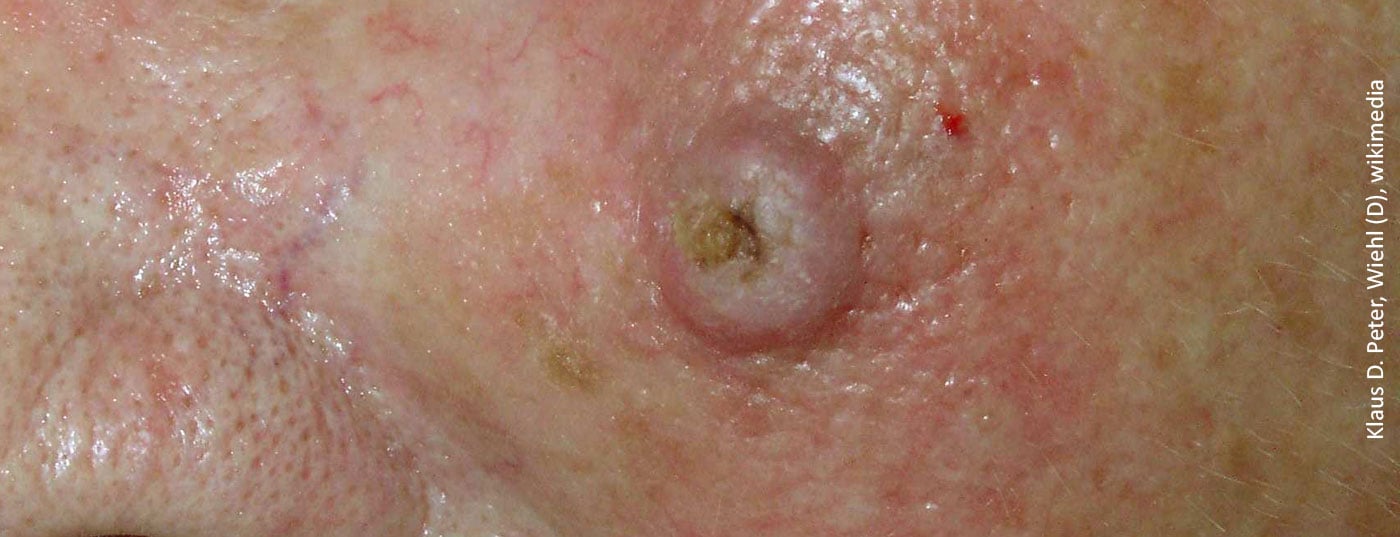
The most important environmental risk factor for SCC and BCC is UV radiation exposure – especially UVB [4]. Not only sunlight, but also tanning beds contribute to an increased risk of skin cancer. Obviously, the cumulative amount of sun exposure over a lifetime plays an important role. According to the study, people with a light skin type who work outdoors or spend a lot of time in the sun in their free time are particularly at risk of skin cancer. Reduction of risk factors is the primary goal of primary prevention of skin cancer [5]. These include exposure prophylaxis and appropriate sun protection. Early detection is located at the level of secondary prevention.


Risk prediction models for squamous cell and basal cell carcinomas.

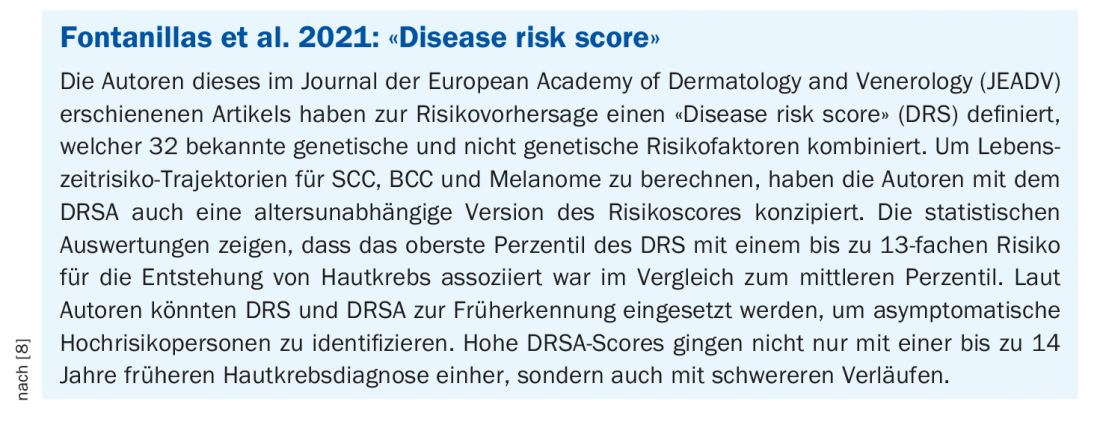
“Reliable risk stratification tools are needed to identify patients most likely to benefit from clinical interventions,” explained Dr. Del Marmol [2]. In the TRoPICS study, a risk prediction model was developed for SCC and BCC [6]. For this purpose, five risk categories were formed based on questionnaire data from individuals who had registered for skin cancer screening. It was found that the proportion of diagnosed SCC and BCC in the highest risk classification was 24%, while in the lowest it was only 1%, this difference proved to be significant (p<0.001). Another example of a predictive tool is the QSkin study, which is based on a dataset from a prospective Australian cohort study (n=38 726) [7]. Predictive factors were determined by stepwise logistic regression models. The factors with the strongest effects were >20 skin cancer precursors removed, >50 skin lesions destroyed, age ≥70 years, and fair skin color. Fontanillas et al. propose a different approach, they have designed a risk prediction score [8] (box).

Congress: EADO 2022


Literature:

  1. Tagliabue E, et al: M-SKIP Study Group. MC1R gene variants and non-melanoma skin cancer: a pooled-analysis from the M-SKIP project. Br J Cancer 2015; 113(2): 354-363.
  2. “Epidemiology and prevention of skin cancer,” Symposium 3, Veronique del Marmol, MD, European Association of Dermato-Oncology, Apr. 21, 2022.
  3. Yueyaou L, et al: Eye color and the risk of skin cancer. Cancer Causes & Control 2022; 33: 109-116.
  4. Choquet H, et al: Genetic and environmental factors underlying keratinocyte carcinoma risk. JCI Insight 2020; 5(10): e134783.
  5. S3 guideline: prevention of skin cancer, version 2.1 – September 2021, AWMF register number: 032/052OL, www.awmf.org, (last accessed 28.06.2022).
  6. Shetty A, et al: Clinical utility of skin cancer and melanoma risk scores for population screening. TRoPICS study. J Eur Acad Dermatol Venereol 2021; 35(5): 1094-1098.
  7. Whiteman DC, et al; QSkin Study. A Model to Predict the Risk of Keratinocyte Carcinomas. J Invest Dermatol 2016; 136(6): 1247-1254.
  8. Fontanillas P, et al: Disease risk scores for skin cancers. Nat Commun 2021; 12(1): 160.


HAUSARZT PRAXIS 2022; 17(7): 22
InFo ONCOLOGY & HEMATOLOGY 2022; 10(4): 27.

Autoren
  • Mirjam Peter, M.Sc.
Publikation
  • HAUSARZT PRAXIS
Related Topics
  • basal cell carcinoma
  • Skin cancer
  • squamous cell carcinoma
Previous Article
  • Quality assurance

Stays in psychiatric hospitals are satisfactory

  • News
  • Prevention and health care
  • Psychiatry and psychotherapy
  • RX
  • Studies
View Post
Next Article
  • Acne vulgaris

Impact of acne on quality of life – results of a survey study.

  • Dermatology and venereology
  • Education
  • Psychiatry and psychotherapy
  • RX
  • Studies
View Post
You May Also Like
View Post
  • 7 min
  • H. pylori infection: current study data

Fewer gastric carcinomas and peptic ulcers after eradication

    • RX
    • Gastroenterology and Hepatology
    • General Internal Medicine
    • Infectiology
    • Oncology
    • Studies
View Post
  • 4 min
  • From symptom to diagnosis

Pneumology – tracheal and bronchial calcifications

    • RX
    • Cases
    • Education
    • General Internal Medicine
    • Pneumology
    • Radiology
View Post
  • 3 min
  • Tinea capitis: Current Guidelines and Recommendations

What should be kept in mind when treating adult patients?

    • Dermatology and venereology
    • Education
    • Infectiology
    • Pharmacology and toxicology
    • RX
View Post
  • 7 min
  • Geriatric patients

Micronutrient Intake in Older Adults

    • RX
    • Education
    • General Internal Medicine
    • Geriatrics
    • Nutrition
View Post
  • 7 min
  • Crohn's disease: focus on long-term results

“Top-down” approach or classic step therapy?

    • RX
    • Congress Reports
    • Gastroenterology and Hepatology
    • General Internal Medicine
    • Studies
View Post
  • 4 min
  • SwissDiab Study: New Analysis Published

How are diabetes complications associated with quality of life?

    • RX
    • Endocrinology and Diabetology
    • General Internal Medicine
    • Studies
View Post
  • 6 min
  • Pre-acclimatization on Mount Everest

Exploring the physiological limits

    • RX
    • Congress Reports
    • General Internal Medicine
    • Pneumology
    • Studies
    • Tropical and travel medicine
View Post
  • 5 min
  • Viloxazine for ADHD

A non-stimulating option—but with limited evidence

    • RX
    • Education
    • Neurology
    • Pediatrics
    • Pharmacology and toxicology
    • Psychiatry and psychotherapy
    • Studies
  • IBD matters

    Zum Thema
Top CME content
  • 1
    Current State of Knowledge and New Therapeutic Approaches
  • 2
    Why is it so hard to lose weight?
  • 3
    Functional limb preservation between infection control, vascular medicine and resurfacing
  • 4
    Algorithms, avatars and the unburdened mind
  • 5
    Communication as the key to therapy adherence

Newsletter

Sign up and stay up to date

Subscribe
Medizinonline Medizinonline
  • Contact
  • General terms and conditions
  • Imprint

Input your search keywords and press Enter.