Medizinonline Medizinonline
  • News
    • News
    • Market & Medicine
  • Patients
    • Disease patterns
    • Diagnostics
    • Therapy
  • Partner Content
    • Diabetes
      • Dia-Month Club – Type 2 Diabetes
      • Diabetes in Motion
      • Diabetes Podcasts
    • Gastroenterology
      • IBD matters
    • Oncology
      • Swiss Oncology in motion
    • Orthopedics
      • Osteoporosis in motion
  • Departments
    • Allergology and clinical immunology
    • General Internal Medicine
    • Anesthesiology
    • Angiology
    • Surgery
    • Dermatology and venereology
    • Endocrinology and Diabetology
    • Nutrition
    • Gastroenterology and Hepatology
    • Genetics
    • Geriatrics
    • Gynecology
    • Hematology
    • Infectiology
    • Cardiology
    • Nephrology
    • Neurology
    • Emergency and intensive care medicine
    • Nuclear Medicine
    • Oncology
    • Ophthalmology
    • ORL
    • Orthopedics
    • Pediatrics
    • Pharmacology and toxicology
    • Pharmaceutical medicine
    • Phlebology
    • Physical medicine and rehabilitation
    • Pneumology
    • Prevention and health care
    • Psychiatry and psychotherapy
    • Radiology
    • Forensic Medicine
    • Rheumatology
    • Sports Medicine
    • Traumatology and trauma surgery
    • Tropical and travel medicine
    • Urology
    • Dentistry
  • CME & Congresses
    • CME continuing education
    • Congress Reports
    • Congress calendar
  • Practice
    • Noctimed
    • Practice Management
    • Jobs
    • Interviews
  • Log In
  • Register
  • My account
  • Contact
  • Publications
  • Contact
  • Deutsch
  • English
  • Français
  • Italiano
  • Português
  • Español
Subscribe
Medizinonline Medizinonline
  • News
    • News
    • Market & Medicine
  • Patienten
    • Krankheitsbilder
    • Diagnostik
    • Therapie
  • Partner Content
    • Diabetes
      • Dia-Month Club – Type 2 Diabetes
      • Diabetes in Motion
      • Diabetes Podcasts
    • Gastroenterology
      • IBD matters
    • Oncology
      • Swiss Oncology in motion
    • Orthopedics
      • Osteoporosis in motion
    • Phytotherapie
    • Rheumatology
  • Departments
    • Fachbereiche 1-13
      • Allergology and clinical immunology
      • General Internal Medicine
      • Anesthesiology
      • Angiology
      • Surgery
      • Dermatology and venereology
      • Endocrinology and Diabetology
      • Nutrition
      • Gastroenterology and Hepatology
      • Genetics
      • Geriatrics
      • Gynecology
      • Hematology
    • Fachbereiche 14-26
      • Infectiology
      • Cardiology
      • Nephrology
      • Neurology
      • Emergency and intensive care medicine
      • Nuclear Medicine
      • Oncology
      • Ophthalmology
      • ORL
      • Orthopedics
      • Pediatrics
      • Pharmacology and toxicology
      • Pharmaceutical medicine
    • Fachbereiche 26-38
      • Phlebology
      • Physical medicine and rehabilitation
      • Phytotherapy
      • Pneumology
      • Prevention and health care
      • Psychiatry and psychotherapy
      • Radiology
      • Forensic Medicine
      • Rheumatology
      • Sports Medicine
      • Traumatology and trauma surgery
      • Tropical and travel medicine
      • Urology
      • Dentistry
  • CME & Congresses
    • CME continuing education
    • Congress Reports
    • Congress calendar
  • Practice
    • Noctimed
    • Practice Management
    • Jobs
    • Interviews
Login

Sie haben noch keinen Account? Registrieren

  • Endogenous psychoses

Schizophrenia: As if from another world

    • Education
    • Psychiatry and psychotherapy
    • RX
  • 3 minute read

The mathematician John Forbes Nash suffered from it, the painter Vincent van Gogh probably also – schizophrenia. One of the most common mental illnesses can catapult sufferers into another world at times. With early treatment, there is the possibility of significantly improving the clinical course of this disease, which manifests itself in many ways.

Schizophrenia affects approximately 1% of the population, making it the third most common mental illness worldwide. In most cases, the first symptoms appear between puberty and the age of 35. In phases, the patient’s thinking, perception, feeling, willing and behavior are massively altered. Their experience may be influenced by delusional thoughts and hallucinations. They react and act unpredictably and uncontrollably during a schizophrenic episode. This is an extreme burden not only for the patients themselves, but also for their relatives.

The causes of the disease are not yet fully understood. However, an inherited predisposition plays a major role. About half of the children of ill parents show mental abnormalities and 12% suffer from schizophrenia themselves. However, increased vulnerability to internal and external stimuli, an imbalance of the neurotransmitters dopamine and glutamate, altered brain structures, and environmental factors can also promote the development of endogenous psychosis. The first warning signs appear months or even years before the first acute episode. Those affected suffer from listlessness, sleep or drive disturbances or a depressed mood. Increased sensitivity to light and sound may also indicate the onset of schizophrenia.

Acute and chronic phases of illness

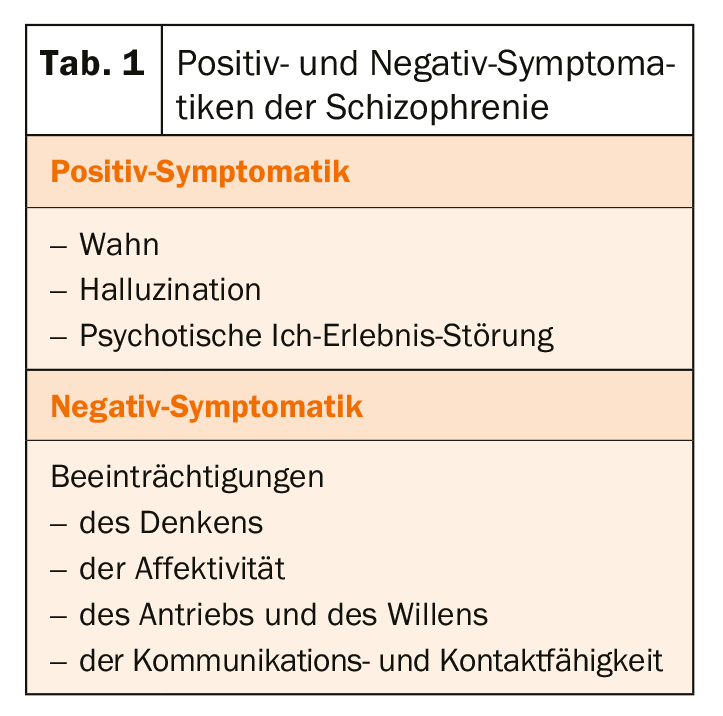
The appearance of the disease is extremely complex and varied. In acute schizophrenia, so-called “positive symptoms” are in the foreground. Patients reject any attribution of being sick at this stage. In the chronic phase, the “negative symptoms” predominate (Table 1) . Schizophrenia is divided into paranoid schizophrenia, hebephrenic schizophrenia and catatonic schizophrenia. However, a clear classification of patients is not always possible. The most common form is paranoid schizophrenia. In the acute phase, delusions and hallucinations are most common. In hebephrenic schizophrenia, thinking, emotions, and drive in particular are severely impaired. In the acute phase, the condition can be confused with bipolar disorder, as the mood can be both euphoric and depressed. For catatonic schizophrenia, mainly psychomotor disorders are typical. However, it rarely occurs nowadays.


Positively influence the course of the disease

Although not curable, schizophrenia is readily treatable today. Therapy management is based on an individually tailored combination of pharmacological measures, psychotherapy and other therapeutic procedures. Especially in the acute phase, the symptoms must be alleviated by means of effective medication. The first effective drugs were antipsychotics. They intervene in the metabolism of neurotransmitters and reduce states of tension and anxiety, delusions and hallucinations. Atypical neuroleptics such as risperidone, clozapine, olanzapine, amisulpride, quetiapine, ziprasidone or aripiprazole are a further development of the classic neuroleptics, have a better effect with fewer side effects. Patients who are depressed at the same time are often prescribed an additional antidepressant. They can positively influence mood, drive and performance. Since many patients suffer from severe anxiety during an acute episode, the short-term use of sedatives may be useful.


Further reading:

  • www.neurologen-und-psychiater-im-netz.org/psychiatrie-psychosomatik-psychotherapie/stoerungen-erkrankungen/schizophrenie-und-schizophrene-psychosen/therapie/ (last accessed on 28.03.2020)
  • www.gesundheitsinformation.de/schizophrenie.3300.de.html (last accessed on 28.03.2020)
  • www.rki.de/DE/Content/Gesundheitsmonitoring/Gesundheitsberichterstattung/GBEDownloadsT/Schizophrenie.pdf?__blob=publicationFile (last accessed on 28.03.2020)
  • www.psychosoziale-gesundheit.net/psychiatrie/schizophrenie.html (last accessed on 28.03.2020)
  • www.gesundheitsforschung-bmbf.de/de/schizophrenie-wissenschaftler-entratseln-muster-im-gehirn-mit-neuroimaging-erstmals-3058.php (last accessed on 28.03.2020)


InFo NEUROLOGY & PSYCHIATRY 2020; 18(3): 24.

Autoren
  • Leoni Burggraf
Publikation
  • InFo NEUROLOGIE & PSYCHIATRIE
Related Topics
  • Schizophrenia
  • Therapy management
Previous Article
  • Pain Management

Tumor pain – a therapeutic challenge that affects everyone

  • Education
  • Oncology
  • Pharmacology and toxicology
  • RX
View Post
Next Article
  • Diabetes Cases

Management of intolerance to various antidiabetic drugs.

  • Endocrinology and Diabetology
  • Partner Content
  • RX
  • Training with partner
View Post
You May Also Like
View Post
  • 6 min
  • Secondary prevention after ACS: individually optimized lipid management

Trend towards early combination therapy and new strategies for lowering Lp(a)

    • RX
    • Cardiology
    • Congress Reports
    • General Internal Medicine
    • Studies
View Post
  • 27 min
  • Pediatric Brain Tumors

Psychiatry versus Neuro-Oncology: Diagnostic Pitfalls

    • RX
    • CME continuing education
    • Neurology
    • Oncology
    • Pediatrics
    • Psychiatry and psychotherapy
    • Studies
View Post
  • 13 min
  • What the latest studies on the entire EF spectrum mean for clinical practice

Heart Failure – The 2026 Evidence Update

    • RX
    • Cardiology
    • Education
    • Endocrinology and Diabetology
    • Studies
View Post
  • 5 min
  • Acute ischemic stroke

Alteplase and Tenecteplase Are on the Same Level

    • RX
    • Education
    • Emergency and intensive care medicine
    • Neurology
    • Pharmacology and toxicology
    • Studies
View Post
  • 5 min
  • CKD in People with Type 2 Diabetes: Evidence-Based, Optimized Treatment

SGLT-2 inhibitors and GLP-1 receptor agonists: significant improvement in renal outcomes

    • RX
    • Education
    • Endocrinology and Diabetology
    • General Internal Medicine
    • Nephrology
    • Studies
View Post
  • 2 min
  • Wearables: screening via smartwatch?

New study on atrial fibrillation in high-risk patients

    • RX
    • Cardiology
    • Practice Management
    • Prevention and health care
    • Studies
View Post
  • 11 min
  • Peristomal skin health

Focus on preventive care options

    • RX
    • Cases
    • CME continuing education
    • Dermatology and venereology
    • Gastroenterology and Hepatology
    • Infectiology
    • Physical medicine and rehabilitation
    • Prevention and health care
    • Surgery
View Post
  • 13 min
  • Planning a Family, Pregnancy, and Breastfeeding

Update on Anti-Rheumatic Medications

    • RX
    • CME continuing education
    • General Internal Medicine
    • Gynecology
    • Pharmacology and toxicology
    • Rheumatology
    • Studies
Landingpage Fachinfo Landingpage Button
  • IBD matters

    Zum Thema
Top CME content
  • 1
    Update on Anti-Rheumatic Medications
  • 2
    Psychiatry versus Neuro-Oncology: Diagnostic Pitfalls
  • 3
    Focus on preventive care options
  • 4
    Inflammation as a Treatment Goal in Its Own Right
  • 5
    Personalized Treatment Before a Planned Pregnancy

Newsletter

Sign up and stay up to date

Subscribe
Medizinonline Medizinonline
  • Contact
  • General terms and conditions
  • Imprint

Input your search keywords and press Enter.