Medizinonline Medizinonline
  • News
    • News
    • Market & Medicine
  • Patients
    • Disease patterns
    • Diagnostics
    • Therapy
  • Partner Content
    • Diabetes
      • Dia-Month Club – Type 2 Diabetes
      • Diabetes in Motion
      • Diabetes Podcasts
    • Gastroenterology
      • IBD matters
    • Oncology
      • Swiss Oncology in motion
    • Orthopedics
      • Osteoporosis in motion
  • Departments
    • Allergology and clinical immunology
    • General Internal Medicine
    • Anesthesiology
    • Angiology
    • Surgery
    • Dermatology and venereology
    • Endocrinology and Diabetology
    • Nutrition
    • Gastroenterology and Hepatology
    • Genetics
    • Geriatrics
    • Gynecology
    • Hematology
    • Infectiology
    • Cardiology
    • Nephrology
    • Neurology
    • Emergency and intensive care medicine
    • Nuclear Medicine
    • Oncology
    • Ophthalmology
    • ORL
    • Orthopedics
    • Pediatrics
    • Pharmacology and toxicology
    • Pharmaceutical medicine
    • Phlebology
    • Physical medicine and rehabilitation
    • Pneumology
    • Prevention and health care
    • Psychiatry and psychotherapy
    • Radiology
    • Forensic Medicine
    • Rheumatology
    • Sports Medicine
    • Traumatology and trauma surgery
    • Tropical and travel medicine
    • Urology
    • Dentistry
  • CME & Congresses
    • CME continuing education
    • Congress Reports
    • Congress calendar
  • Practice
    • Noctimed
    • Practice Management
    • Jobs
    • Interviews
  • Log In
  • Register
  • My account
  • Contact
  • Publications
  • Contact
  • Deutsch
  • English
  • Français
  • Italiano
  • Português
  • Español
Subscribe
Medizinonline Medizinonline
  • News
    • News
    • Market & Medicine
  • Patienten
    • Krankheitsbilder
    • Diagnostik
    • Therapie
  • Partner Content
    • Diabetes
      • Dia-Month Club – Type 2 Diabetes
      • Diabetes in Motion
      • Diabetes Podcasts
    • Gastroenterology
      • IBD matters
    • Oncology
      • Swiss Oncology in motion
    • Orthopedics
      • Osteoporosis in motion
    • Phytotherapie
    • Rheumatology
  • Departments
    • Fachbereiche 1-13
      • Allergology and clinical immunology
      • General Internal Medicine
      • Anesthesiology
      • Angiology
      • Surgery
      • Dermatology and venereology
      • Endocrinology and Diabetology
      • Nutrition
      • Gastroenterology and Hepatology
      • Genetics
      • Geriatrics
      • Gynecology
      • Hematology
    • Fachbereiche 14-26
      • Infectiology
      • Cardiology
      • Nephrology
      • Neurology
      • Emergency and intensive care medicine
      • Nuclear Medicine
      • Oncology
      • Ophthalmology
      • ORL
      • Orthopedics
      • Pediatrics
      • Pharmacology and toxicology
      • Pharmaceutical medicine
    • Fachbereiche 26-38
      • Phlebology
      • Physical medicine and rehabilitation
      • Phytotherapy
      • Pneumology
      • Prevention and health care
      • Psychiatry and psychotherapy
      • Radiology
      • Forensic Medicine
      • Rheumatology
      • Sports Medicine
      • Traumatology and trauma surgery
      • Tropical and travel medicine
      • Urology
      • Dentistry
  • CME & Congresses
    • CME continuing education
    • Congress Reports
    • Congress calendar
  • Practice
    • Noctimed
    • Practice Management
    • Jobs
    • Interviews
Login

Sie haben noch keinen Account? Registrieren

  • Senna Laxatives

Sloth tree bark

    • Gastroenterology and Hepatology
    • General Internal Medicine
    • News
    • Pharmaceutical medicine
    • RX
  • 3 minute read

A laxative extract consisting of anthraquinone-containing ingredients is obtained from the bark of the rot tree, Rhamnus frangula. However, its effect is weaker than that of the other anthraquinone laxatives. Nevertheless, negative prejudices were widespread for a long time.

A member of the buckthorn family (Rhamnaceae), the black alder tree has two botanical names used synonymously: Rhamnus frangula and Frangula alnus. However, based on the genus name (Rhamnus), Rhamnus frangula is the more common. The German term includes the adjective “faul”. And indeed, the bark of the tree has a slight smell of rot.

Appearance and occurrence

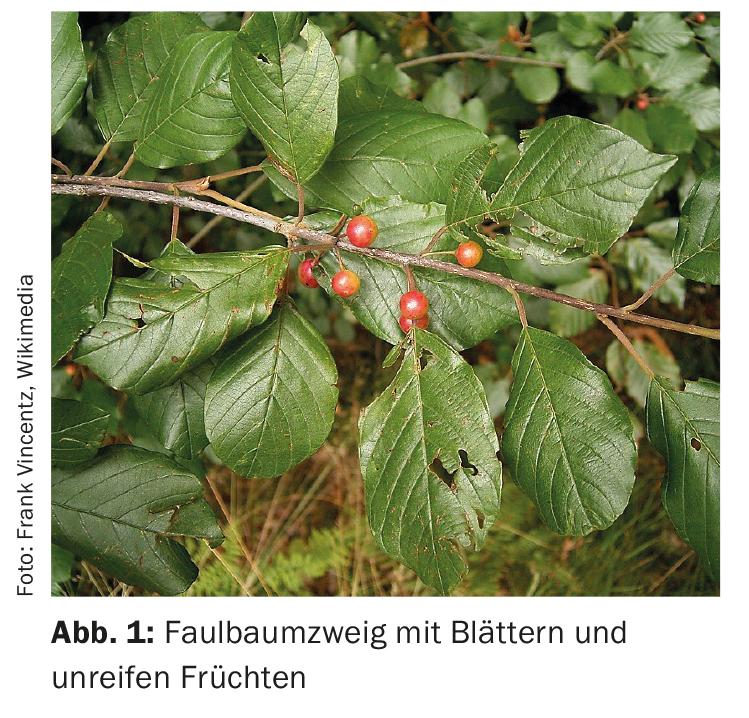
Contrary to its name, the rot tree is not a true tree, but a branched shrub that is usually two to four meters high ( Fig. 1) . Very rarely it grows into a real sapling, but then it can reach a height of up to eight meters. Its range is in subcontinental climates in Europe and extends to western Siberia. It is also common in North Africa (Morocco). Its preferred soils are moist. In addition to Rhamnus frangula, there is also the American sloth tree, Rhamnus purshianus.


Versatile use

The wood of the rotting tree is processed into a high-quality charcoal, which is characterized by a low ash content. That is why in earlier times this charcoal was used to make black powder, the first explosive of firearms.


Ingredients

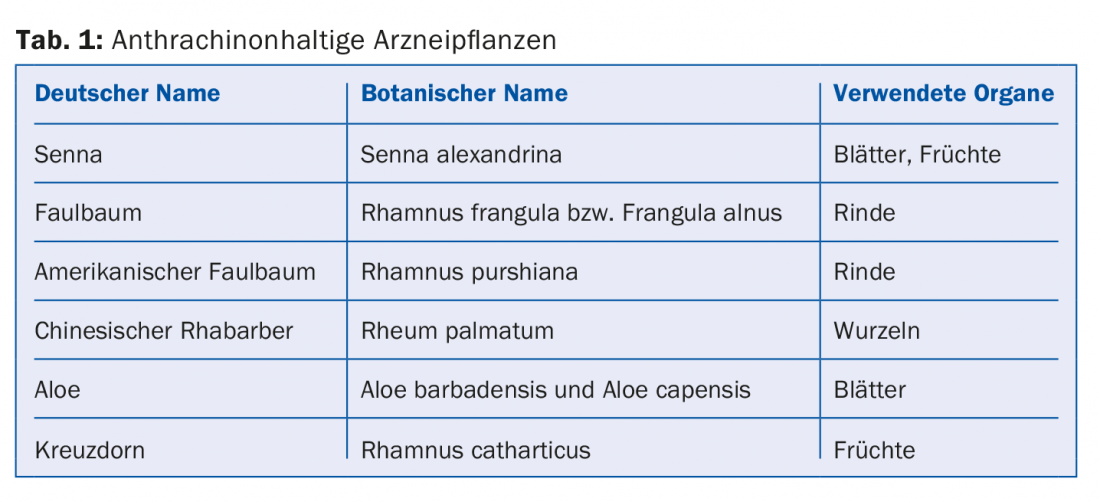
Tannins and anthranoids, also called anthraquinones, are found in the bark of sloth tree. Anthraquinones are anthracene derivatives, and numerous variants of their basic chemical structure (Fig. 2) exist, some of which are characteristic of anthraquinone-containing plants in which they are found (Table 1).

In alder, these characteristic anthraquinones are glucofrangulin A and B, frangulin A and B, and various frangulaemodine glycosides such as frangulaemodine-8-O-β-D-glucoside. Corresponding anthraquinones, e.g., cascarosides such as cascaroside A, are found in the American alder.


Effect

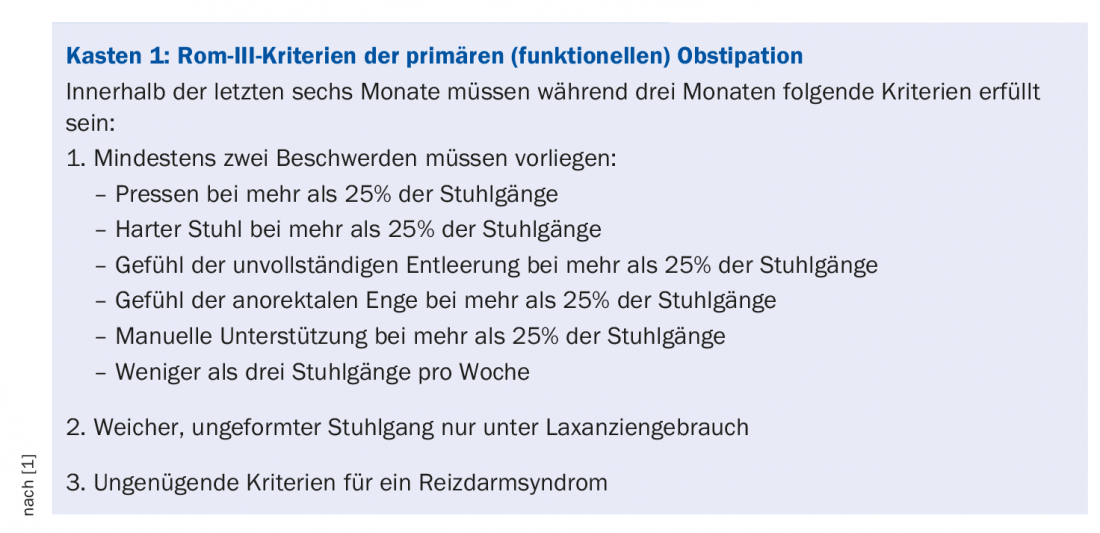
Anthraquinones have a laxative effect and are therefore used against constipation (box 1). The mechanism of action is based on their antiresorptive effect, i.e. they lead to reduced reabsorption of sodium from the intestinal volume and thus also of water. However, they also have a secretagogue effect by promoting the influx of fluid into the intestine. This causes increasing filling of the colon and soft feces. In the corresponding medicinal plants, anthraquinones are bound to sugars as glycosides. This splits off in the colon, which is why the anthraquinones only act in the colon. Since some of the anthraquinones are excreted in the urine, it may have a dark coloration.

In contrast to other anthraquinone-containing medicinal plants, these active ingredients are predominantly present in oxidized form in alder buckthorn. That is why its effect is somewhat milder than that of other similar medicinal plants.

In contrast, the anthraquinones of the American alder, like the other anthraquinones, have a rather strong effect and not as mild as the glucofrangulins.


Stubborn prejudices

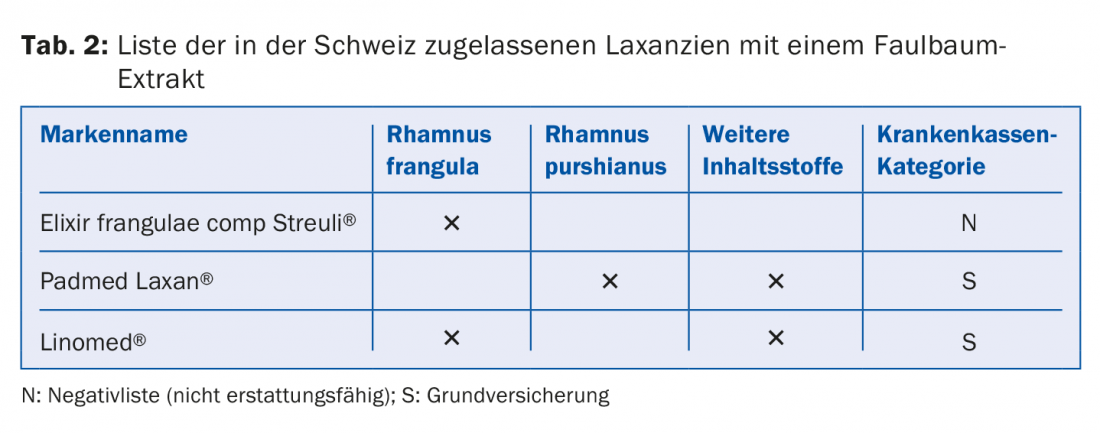
For a long time, anthraquinone-containing laxatives were considered overly effective and even dangerous if used persistently. Corresponding preparations have also been associated by experts with severe side effects such as intestinal irritation and habituation, non-physiological loss of fluids or electrolytes, and sometimes even colon cancer. Accordingly, individuals who requested an anthraquinone-containing laxative from pharmacies (Table 2) were made aware of the presumed dangers for years and thus discouraged from taking it. This approach continued into the new millennium, although a commission of experts had already countered it in 1999: the “Expert Forum on Constipation and Laxatives” had drawn up a consensus paper under the leadership of Prof. Dr. Gerhart Hitzenberger, Vienna. In it, the authors address the dangers of anthraquinone-containing laxatives so often mentioned, writing, “When a laxative is dosed to excrete stool of physiologic, that is, soft, non-liquid consistency, there is no risk of nonphysiologic fluid and electrolyte loss or intestinal damage, even with chronic treatment” [2]. However, although anthraquinone-containing laxatives had thus been rehabilitated by science, the aforementioned prejudices persist to some extent to this day.

Contraindications to anthraquinone laxatives include ileus, inflammatory bowel disease, abdominal pain of unknown cause, and pregnancy and lactation. The drug is not suitable for children under 12 years of age.


Summary

The medicinal plant alder buckthorn, Rhamnus frangula or Frangula alnus, belongs to the anthraquinone-containing medicinal plants, which have a high laxative effect and – contrary to widespread prejudices – also a good tolerance. Within this drug class, the anthraquinones of the alfalfa tree have a rather weaker effect and are very well suited for the treatment of constipation according to the Rome III criteria.

Literature:

  1. Rome Foundation: Guidelines – Rome III Diagnostic Criteria for Functional Gastro-intestinal Disorders. J Gastrointestin Liver Dis 2006; 15(3): 307-312.
  2. Hitzenberger G, et al: Expert forum: Obstipation and laxatives, Praxis 1999; 88: 1269-1274.


HAUSARZT PRAXIS 2018; 13(7): 6-8

Autoren
  • Dr. pharm. Christoph Bachmann
Publikation
  • HAUSARZT PRAXIS
Related Topics
  • FAULBAUM
  • hawthorn
  • rhamnus frangula
  • senna laxatives
Previous Article
  • Internal diseases in pregnancy

Hypertension, diabetes and obesity – what should you know?

  • Cardiology
  • Education
  • Endocrinology and Diabetology
  • General Internal Medicine
  • Gynecology
  • Partner Content
  • RX
View Post
Next Article
  • 20th Continuing Education Conference of the College of Family Medicine (KHM), Lucerne

Bitter images: Gallbladder disease

  • Congress Reports
  • Gastroenterology and Hepatology
  • Oncology
  • RX
View Post
You May Also Like
View Post
  • 4 min
  • Ozanimod for relapsing-remitting multiple sclerosis

Signs of improved tolerability with prolonged treatment

    • RX
    • Education
    • Neurology
    • Pharmacology and toxicology
    • Studies
View Post
  • 8 min
  • When basal cell carcinomas prove difficult to treat

Reaching the goal with innovative therapy strategies

    • RX
    • Cases
    • Congress Reports
    • Dermatology and venereology
    • Oncology
    • Studies
    • Surgery
View Post
  • 5 min
  • Irritable Bowel Syndrome

IBS or endometriosis?

    • RX
    • Education
    • Gastroenterology and Hepatology
    • General Internal Medicine
    • Gynecology
    • Studies
View Post
  • 6 min
  • Type 2 diabetes: sarcopenia and frailty

How can the breakdown of skeletal muscles be stopped?

    • RX
    • Congress Reports
    • Endocrinology and Diabetology
    • General Internal Medicine
    • Geriatrics
    • Nutrition
    • Orthopedics
    • Sports Medicine
View Post
  • 4 min
  • Cholangiocarcinoma

Modern molecular diagnostics and targeted therapy options

    • RX
    • Education
    • Gastroenterology and Hepatology
    • Oncology
    • Studies
View Post
  • 6 min
  • Treatment resistant depression

Esketamine nasal spray as monotherapy? New for treatment-resistant depression

    • RX
    • Education
    • General Internal Medicine
    • ORL
    • Pharmacology and toxicology
    • Psychiatry and psychotherapy
    • Studies
View Post
  • 6 min
  • Analysis of SNVCS data from the period 2005-2022

TBE vaccination for children and adolescents in Switzerland

    • RX
    • Education
    • General Internal Medicine
    • Infectiology
    • Neurology
    • Pediatrics
    • Prevention and health care
View Post
  • 4 min
  • Tuberculosis

Detecting diabetes in TB patients early and efficiently

    • RX
    • Education
    • Endocrinology and Diabetology
    • Infectiology
    • Pneumology
    • Studies
Landingpage Fachinfo Landingpage Button
  • IBD matters

    Zum Thema
Top CME content
  • 1
    Communication as the key to therapy adherence
  • 2
    Solutions to the malnutrition dilemma
  • 3
    Solutions to the malnutrition dilemma
  • 4
    Focus on preventive care options
  • 5
    Fertility preservation from gonads to genomes to genoids

Newsletter

Sign up and stay up to date

Subscribe
Medizinonline Medizinonline
  • Contact
  • General terms and conditions
  • Imprint

Input your search keywords and press Enter.