Medizinonline Medizinonline
  • News
    • News
    • Market & Medicine
  • Patients
    • Disease patterns
    • Diagnostics
    • Therapy
  • Partner Content
    • Diabetes
      • Dia-Month Club – Type 2 Diabetes
      • Diabetes in Motion
      • Diabetes Podcasts
    • Gastroenterology
      • IBD matters
    • Oncology
      • Swiss Oncology in motion
    • Orthopedics
      • Osteoporosis in motion
  • Departments
    • Allergology and clinical immunology
    • General Internal Medicine
    • Anesthesiology
    • Angiology
    • Surgery
    • Dermatology and venereology
    • Endocrinology and Diabetology
    • Nutrition
    • Gastroenterology and Hepatology
    • Genetics
    • Geriatrics
    • Gynecology
    • Hematology
    • Infectiology
    • Cardiology
    • Nephrology
    • Neurology
    • Emergency and intensive care medicine
    • Nuclear Medicine
    • Oncology
    • Ophthalmology
    • ORL
    • Orthopedics
    • Pediatrics
    • Pharmacology and toxicology
    • Pharmaceutical medicine
    • Phlebology
    • Physical medicine and rehabilitation
    • Pneumology
    • Prevention and health care
    • Psychiatry and psychotherapy
    • Radiology
    • Forensic Medicine
    • Rheumatology
    • Sports Medicine
    • Traumatology and trauma surgery
    • Tropical and travel medicine
    • Urology
    • Dentistry
  • CME & Congresses
    • CME continuing education
    • Congress Reports
    • Congress calendar
  • Practice
    • Noctimed
    • Practice Management
    • Jobs
    • Interviews
  • Log In
  • Register
  • My account
  • Contact
  • Publications
  • Contact
  • Deutsch
  • English
  • Français
  • Italiano
  • Português
  • Español
Subscribe
Medizinonline Medizinonline
  • News
    • News
    • Market & Medicine
  • Patienten
    • Krankheitsbilder
    • Diagnostik
    • Therapie
  • Partner Content
    • Diabetes
      • Dia-Month Club – Type 2 Diabetes
      • Diabetes in Motion
      • Diabetes Podcasts
    • Gastroenterology
      • IBD matters
    • Oncology
      • Swiss Oncology in motion
    • Orthopedics
      • Osteoporosis in motion
    • Phytotherapie
    • Rheumatology
  • Departments
    • Fachbereiche 1-13
      • Allergology and clinical immunology
      • General Internal Medicine
      • Anesthesiology
      • Angiology
      • Surgery
      • Dermatology and venereology
      • Endocrinology and Diabetology
      • Nutrition
      • Gastroenterology and Hepatology
      • Genetics
      • Geriatrics
      • Gynecology
      • Hematology
    • Fachbereiche 14-26
      • Infectiology
      • Cardiology
      • Nephrology
      • Neurology
      • Emergency and intensive care medicine
      • Nuclear Medicine
      • Oncology
      • Ophthalmology
      • ORL
      • Orthopedics
      • Pediatrics
      • Pharmacology and toxicology
      • Pharmaceutical medicine
    • Fachbereiche 26-38
      • Phlebology
      • Physical medicine and rehabilitation
      • Phytotherapy
      • Pneumology
      • Prevention and health care
      • Psychiatry and psychotherapy
      • Radiology
      • Forensic Medicine
      • Rheumatology
      • Sports Medicine
      • Traumatology and trauma surgery
      • Tropical and travel medicine
      • Urology
      • Dentistry
  • CME & Congresses
    • CME continuing education
    • Congress Reports
    • Congress calendar
  • Practice
    • Noctimed
    • Practice Management
    • Jobs
    • Interviews
Login

Sie haben noch keinen Account? Registrieren

  • Type 2 diabetes

“Swiss Diabetes Guide” – digital tool supports physicians in drug selection

    • Education
    • Endocrinology and Diabetology
    • General Internal Medicine
    • Partner Content
    • RX
  • 4 minute read

The treatment options for type 2 diabetes mellitus are very complex. In addition to the large number of new active ingredients on the market, the scientific data base is constantly being expanded. “Swiss Diabetes Guide” is an app for healthcare professionals that offers practice-oriented recommendations on drug therapy for type 2 diabetes based on the recommendations of the Swiss Society of Endocrinology and Diabetology (SGED).

The scientific evidence base for optimal drug treatment of type 2 diabetes mellitus is immense, but implementation in the “real world” setting is proving to be extremely complex. In the past decade, numerous new antidiabetic drugs have entered the market, which have demonstrated an excellent benefit-risk profile in clinical trials. However, as shown by a large survey conducted in the USA (“National Health and Nutrition Examination Survey”), about half of type 2 diabetics do not reach the primary treatment goal (HbA1c <7.0%) despite antidiabetic medication [1].


Lack of adherence impairs therapeutic success

Lack of medication adherence has been cited as one of the reasons for missing treatment goals [1,2]. The German National Health Care Guideline for Type 2 Diabetes, which will be published in 2021, also refers to the non-adherence problem and the associated increased risk of secondary complications, which is well documented in the literature [3,4,9]. Patient-tailored therapy seems to be a relevant factor for drug adherence. According to the authors of the guideline, clinical experience shows that treatment goals are too rarely adapted to the individual patient’s situation [3]. Relevant aspects mentioned include the change in quality of life due to the type of therapy (e.g., injection therapy vs. oral medication), individual life situation, and resources [3]. Complex drug prescriptions and adverse drug reactions may have a negative impact on adherence, in addition to other factors such as poor patient education, lack of disease understanding, or insufficient patient-doctor trust [2]. But the factor of “clinical inertia” should not be underestimated either. A systematic review  reported that the median time from identification of an above-target HbA1c level to intensification of therapy was over one year, and another data source reported that, on average, over seven years elapsed before ineffective oral antidiabetic therapies were supplemented with insulin [2,5,10].


Solution approach: digital tool for personalized diabetes management

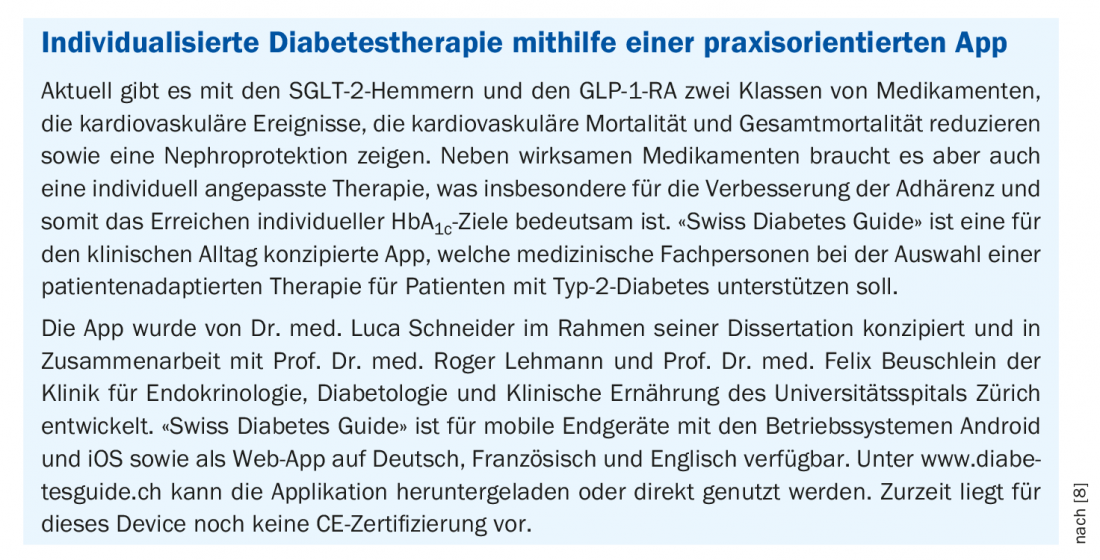
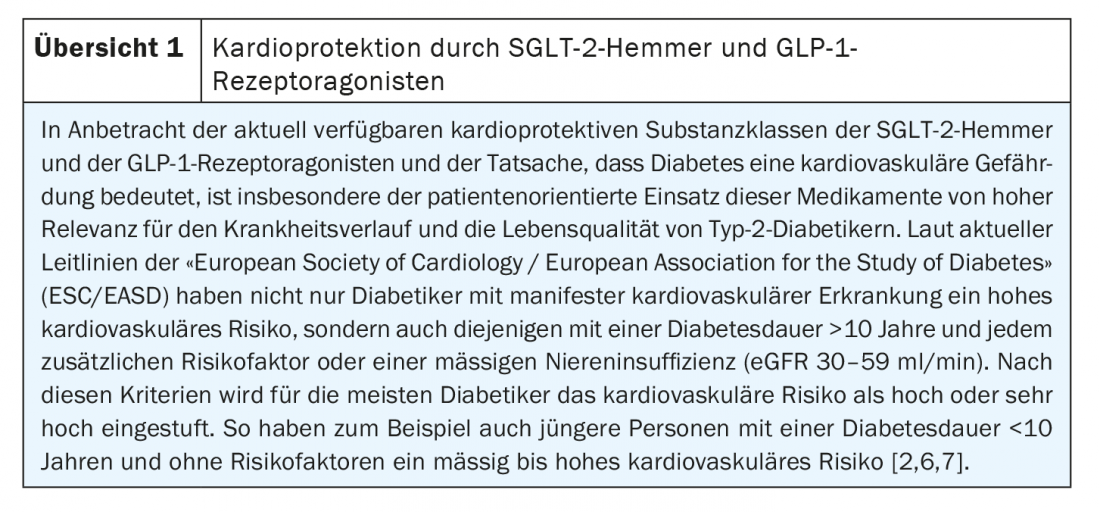
In summary, the goal is to identify the therapy that is most optimally tailored to individual conditions from the plethora of available drug treatment options. Against this background, an app (“Swiss Diabetes Guide”) was developed to serve as a decision support tool for personalized antidiabetic therapy in daily clinical practice (box) [2]. For this purpose, various treatment-relevant parameters are recorded, including preferences of the patients and the treating physicians. From a medical perspective, consideration of existing insulin deficiency (e.g., polydipsia, polyuria, ketonuria, weight loss) and comorbidities such as renal function impairment, obesity, cardiovascular disease, and heart failure (review 1) is central. The treatment suggestions generated by the “Swiss Diabetes Guide” app are evidence-based and based on the recommendations of the SGED and the most important clinical characteristics of the patients [8]. The target group is medical professionals in Switzerland. Recommendations are generated directly on the user’s device, so no Internet connection is required and the application does not collect or store any personal data. For all information on the individual preparations approved in Switzerland, the “Arzneimittel-Informationspublikationssystem” (AIPS) of Swissmedic was accessed. Currently, this application does not have the official status of a medical product, accordingly, this application is not CE certified, but this is being sought.


Literature:

  1. Edelman SV, Polonsky WH: Type 2 Diabetes in the Real World: The Elusive Nature of Glycemic Control. Diabetes Care 2017; 40(11): 1425-1432.
  2. Schneider L, Lehmann R: Decision support for personalized therapy in type 2 diabetes mellitus. “Swiss Diabetes Guide. Swiss Med Forum 2021; 21(1516): 251-256.
  3. National guideline on care, type 2 diabetes, partial publication of the long version, 2nd edition, version 1 AWMF registry no. nvl-001, www.awmf.org/uploads/tx_szleitlinien/nvl-001l_S3_Typ_2_Diabetes_2021-03.pdf, (last accessed May 12, 2021).
  4. Petrak F, et al: Motivation and diabetes – time for a paradigm shift?: – A position paper – Diabetology and Metabolism 2019; 14(03): 193-203.
  5. Khunti K, et al: Clinical inertia in people with type 2 diabetes: a retrospective cohort study of more than 80,000 people. Diabetes Care 2013; 36(11): 3411-3417.
  6. Mach F, et al: 2019 ESC/EAS Guidelines for the management of dyslipidaemias: lipid modification to reduce cardiovascular risk. Eur Heart J 2020; 41(1): 111-188.
  7. Cosentino F, et al: 2019 ESC Guidelines on diabetes, pre-diabetes, and cardiovascular diseases developed in collaboration with the EASD. Eur Heart J 2020; 41(2): 255-323.
  8. Lehmann R, et al: Recommendations of the Swiss Society of Endocrinology and Diabetology (SGED/SSED) for the treatment of type 2 diabetes mellitus (2020). 2020; www.sgedssed.ch/diabetologie/sged-empfehlungen-diabetologie, (last accessed 12.05.2021).
  9. Cramer JA: A systematic review of adherence with medications for diabetes. Diabetes Care 2004; 27(5): 1218-1224.


HAUSARZT PRAXIS 2021; 16(7): 47

Autoren
  • Mirjam Peter, M.Sc.
Publikation
  • HAUSARZT PRAXIS
Related Topics
  • Adherence
  • App
  • cardiovascular risk
  • digital tool
  • Doctors
  • Drug selection
  • GLP-1
  • GLP-1 RA
  • SGED
  • SGLT-2
  • SGLT-2 inhibitors
  • Swiss Diabetes Guide
  • Therapy target
  • Type 2 diabetes
  • University Hospital Zurich
Previous Article
  • New study on patient participation

Should sufferers attend tumor conferences?

  • Oncology
  • RX
View Post
Next Article
  • Molecular precision oncology

What are the benefits of cancer genome sequencing for children with cancer?

  • Oncology
  • RX
View Post
You May Also Like
View Post
  • 38 min
  • Psychological dependence on AI assistants, smartphones and short videos

Algorithms, avatars and the unburdened mind

    • RX
    • CME continuing education
    • Neurology
    • Pediatrics
    • Prevention and health care
    • Psychiatry and psychotherapy
    • Studies
View Post
  • 8 min
  • Psychooncology

Communication as the key to therapy adherence

    • CME continuing education
    • Practice Management
    • RX
View Post
  • 12 min
  • The Brain and the Motivation to Eat

Why is it so hard to lose weight?

    • RX
    • CME continuing education
    • Endocrinology and Diabetology
    • General Internal Medicine
    • Nutrition
    • Pharmacology and toxicology
    • Prevention and health care
    • Psychiatry and psychotherapy
    • Studies
View Post
  • 5 min
  • Omaveloxolone for Friedreich's Ataxia

Efficacy and Safety Studied Over 6 Years

    • Neurology
    • Congress Reports
    • Endocrinology and Diabetology
    • RX
    • Studies
View Post
  • 6 min
  • Psoriasis: therapy with biologics and TYK-2-i

Progress assessments based on current long-term and real-world data

    • RX
    • Congress Reports
    • Dermatology and venereology
    • Pharmacology and toxicology
    • Rheumatology
    • Studies
View Post
  • 4 min
  • Hypertension: the most important facts for daily practice

Early dual antihypertensive therapy is usually indicated

    • RX
    • Cardiology
    • Congress Reports
    • General Internal Medicine
View Post
  • 4 min
  • Escitalopram for anxiety disorders

Positive effect, but no immediate improvement in symptoms

    • RX
    • Education
    • Neurology
    • Pharmacology and toxicology
    • Psychiatry and psychotherapy
    • Studies
View Post
  • 4 min
  • Helicobacter pylori infection

Simplified dual therapy beats quadruple regimen

    • RX
    • Education
    • Gastroenterology and Hepatology
    • General Internal Medicine
    • Infectiology
    • Studies
  • IBD matters

    Zum Thema
Top CME content
  • 1
    Why is it so hard to lose weight?
  • 2
    Algorithms, avatars and the unburdened mind
  • 3
    Communication as the key to therapy adherence
  • 4
    Communication as the key to therapy adherence
  • 5
    Solutions to the malnutrition dilemma

Newsletter

Sign up and stay up to date

Subscribe
Medizinonline Medizinonline
  • Contact
  • General terms and conditions
  • Imprint

Input your search keywords and press Enter.