Medizinonline Medizinonline
  • News
    • News
    • Market & Medicine
  • Patients
    • Disease patterns
    • Diagnostics
    • Therapy
  • Partner Content
    • Diabetes
      • Dia-Month Club – Type 2 Diabetes
      • Diabetes in Motion
      • Diabetes Podcasts
    • Gastroenterology
      • IBD matters
    • Oncology
      • Swiss Oncology in motion
    • Orthopedics
      • Osteoporosis in motion
  • Departments
    • Allergology and clinical immunology
    • General Internal Medicine
    • Anesthesiology
    • Angiology
    • Surgery
    • Dermatology and venereology
    • Endocrinology and Diabetology
    • Nutrition
    • Gastroenterology and Hepatology
    • Genetics
    • Geriatrics
    • Gynecology
    • Hematology
    • Infectiology
    • Cardiology
    • Nephrology
    • Neurology
    • Emergency and intensive care medicine
    • Nuclear Medicine
    • Oncology
    • Ophthalmology
    • ORL
    • Orthopedics
    • Pediatrics
    • Pharmacology and toxicology
    • Pharmaceutical medicine
    • Phlebology
    • Physical medicine and rehabilitation
    • Pneumology
    • Prevention and health care
    • Psychiatry and psychotherapy
    • Radiology
    • Forensic Medicine
    • Rheumatology
    • Sports Medicine
    • Traumatology and trauma surgery
    • Tropical and travel medicine
    • Urology
    • Dentistry
  • CME & Congresses
    • CME continuing education
    • Congress Reports
    • Congress calendar
  • Practice
    • Noctimed
    • Practice Management
    • Jobs
    • Interviews
  • Log In
  • Register
  • My account
  • Contact
  • Publications
  • Contact
  • Deutsch
  • English
  • Français
  • Italiano
  • Português
  • Español
Subscribe
Medizinonline Medizinonline
  • News
    • News
    • Market & Medicine
  • Patienten
    • Krankheitsbilder
    • Diagnostik
    • Therapie
  • Partner Content
    • Diabetes
      • Dia-Month Club – Type 2 Diabetes
      • Diabetes in Motion
      • Diabetes Podcasts
    • Gastroenterology
      • IBD matters
    • Oncology
      • Swiss Oncology in motion
    • Orthopedics
      • Osteoporosis in motion
    • Phytotherapie
    • Rheumatology
  • Departments
    • Fachbereiche 1-13
      • Allergology and clinical immunology
      • General Internal Medicine
      • Anesthesiology
      • Angiology
      • Surgery
      • Dermatology and venereology
      • Endocrinology and Diabetology
      • Nutrition
      • Gastroenterology and Hepatology
      • Genetics
      • Geriatrics
      • Gynecology
      • Hematology
    • Fachbereiche 14-26
      • Infectiology
      • Cardiology
      • Nephrology
      • Neurology
      • Emergency and intensive care medicine
      • Nuclear Medicine
      • Oncology
      • Ophthalmology
      • ORL
      • Orthopedics
      • Pediatrics
      • Pharmacology and toxicology
      • Pharmaceutical medicine
    • Fachbereiche 26-38
      • Phlebology
      • Physical medicine and rehabilitation
      • Phytotherapy
      • Pneumology
      • Prevention and health care
      • Psychiatry and psychotherapy
      • Radiology
      • Forensic Medicine
      • Rheumatology
      • Sports Medicine
      • Traumatology and trauma surgery
      • Tropical and travel medicine
      • Urology
      • Dentistry
  • CME & Congresses
    • CME continuing education
    • Congress Reports
    • Congress calendar
  • Practice
    • Noctimed
    • Practice Management
    • Jobs
    • Interviews
Login

Sie haben noch keinen Account? Registrieren

  • Acute spinning vertigo, "hearing loss" and facial nerve palsy

What is the cause?

    • Cases
    • Neurology
    • Radiology
    • RX
  • 2 minute read

Introduction: Torsional vertigo is one of the most common acute neurological symptoms seen in emergency departments. We present a case example of the value of imaging techniques in determining the cause.

Case report: The 76-year-old, very spry patient was on vacation in Italy when he awoke acutely with severe spinning dizziness lasting for hours. Briefly, he also noticed obliquely displaced double vision, but this could not be objectified during the acute on-site examination. Persistently, he complained of almost complete hearing loss in the left ear. The wife also noticed that he moved the left side of his face less well and he spoke a little more slurred. At the local hospital, a CCT assessed as unremarkable was performed and no further measures were taken apart from bed rest. From the previous history, a biological aortic valve replacement in 2011 and oral anticoagulation with Marcoumar for atrial fibrillation with constant setting in the target range of INR 2.0 – 3.0 are worth mentioning. Otherwise, the routine laboratory was unremarkable and the patient was afebrile.

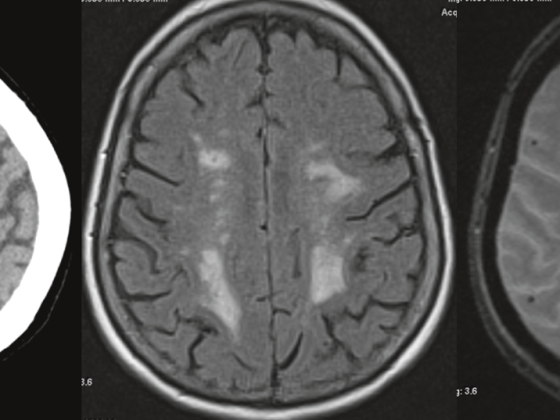
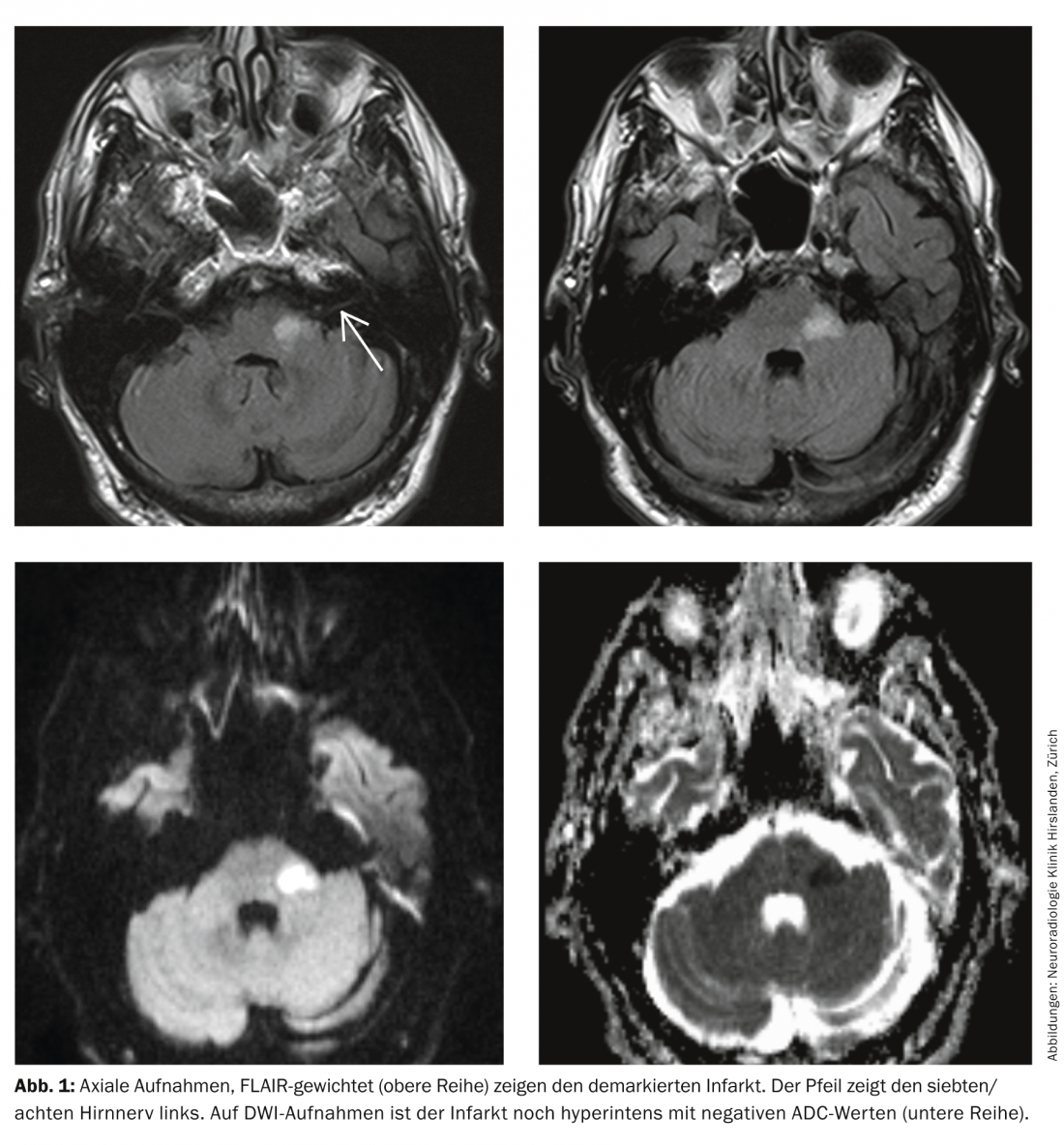
Less than a week after the event, the patient was repatriated. Clinical-neurological findings included stance and gait ataxia with mild left limb ataxia, oculomotor function that was unremarkable except for gross saccades during rapid gaze to the left, as well as incomplete (peripheral) facial nerve palsy on the left and severe hypacusis on the left, which was also objectified by ORL. On immediate MRI imaging, we found a subacute infarct in the left pons/middle cerebellar peduncle correlating with the neurologic findings, which reached the exit zone of the seventh and eighth cranial nerves in the inferior region (Fig. 1).
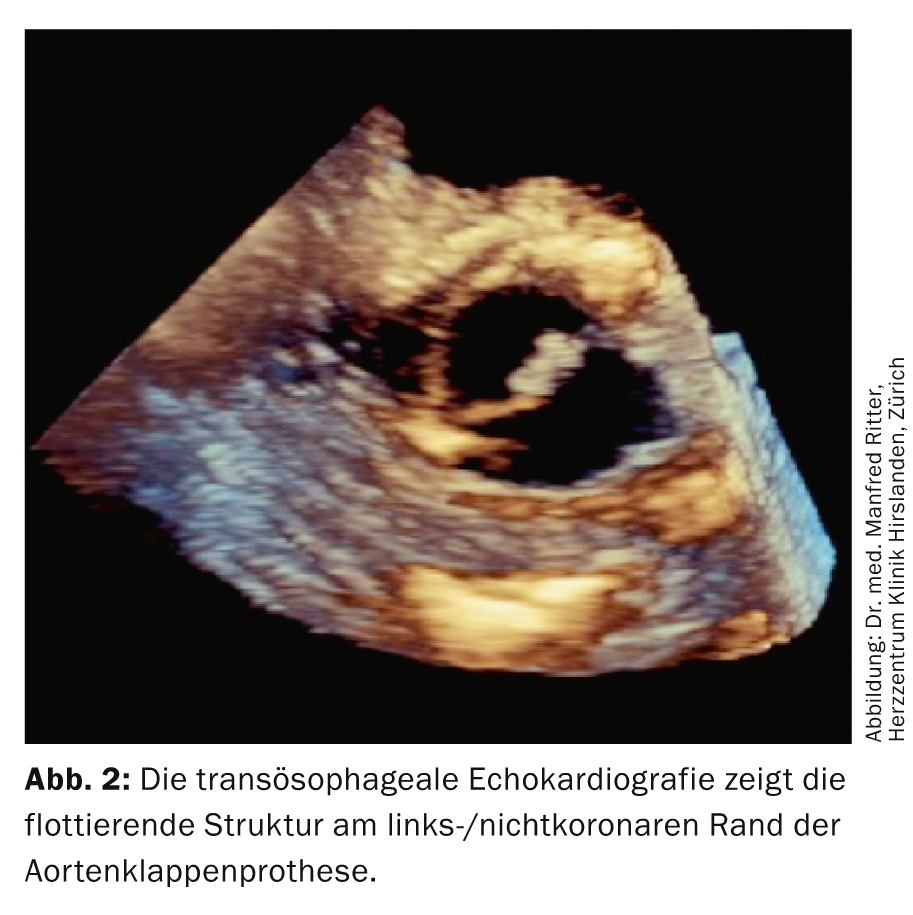
With an unremarkable vascular status, transesophageal echocardiography revealed a floating structure on the aortic valve prosthesis as the cause of the cerebral infarction, with positive blood cultures (gram-positive cocci) confirming the suspicion of valve endocarditis (Fig. 2) . Under antibiotic therapy, the finding was no longer detectable in short-term TEE monitoring. The further clinical course was without complications, the hypacusis remained unchanged, but the patient could be mobilized well.
Discussion: Acute spinning vertigo in combination with other neurological symptoms must suggest brainstem ischemia and be clarified as soon as possible by MRI.
This is true even in the absence of symptoms on the part of the long tracts. In our case, this would have enabled the rapid initiation of therapy. Our patient had the rare combination of facial nerve palsy and acute, severe hearing loss, which is understandable because of the infarct topography in the area of the entrance or exit zone from the seventh and eighth cranial nerves. 

Achim Mallmann, MD
Manfred Ritter, MD
Prof. Dr. med. Stephan Wetzel

InFo NEUROLOGY & PSYCHIATRY 2014; 12(3): 24-24.

Publikation
  • InFo NEUROLOGIE & PSYCHIATRIE
Related Topics
  • Anticoagulation
  • CCT
  • Double images
  • Facial Paresis
  • Gram positive cocci
  • Hearing loss
  • Rotational vertigo
  • TEE Control
  • Valve endocarditis
Previous Article
  • Doping

What to do if you have to take medication due to illness?

  • News
  • Pharmacology and toxicology
  • Physical medicine and rehabilitation
  • RX
View Post
Next Article
  • Cerebral microangiopathy and vascular dementia.

Small vessels with great significance

  • Education
  • Geriatrics
  • Psychiatry and psychotherapy
  • RX
View Post
You May Also Like
View Post
  • 8 min
  • Proteins in wound healing

Do special amino acids lead to success?

    • CME continuing education
    • Dermatology and venereology
    • Endocrinology and Diabetology
    • Nutrition
    • RX
    • Studies
View Post
  • 4 min
  • HER2+ early breast cancer

DESTINY-Breast11 – neoadjuvant T-DXd without anthracyclines

    • Education
    • Gynecology
    • Oncology
    • RX
    • Studies
View Post
  • 3 min
  • Lavender aromatherapy

Take away the fear of the dentist

    • Dentistry
    • Education
    • Pharmaceutical medicine
    • Phytotherapy
    • Psychiatry and psychotherapy
    • RX
    • Studies
View Post
  • 4 min
  • Digital dermatology: innovative project examples

AI and eHealth tools in HS care

    • Dermatology and venereology
    • General Internal Medicine
    • Practice Management
    • Prevention and health care
    • RX
    • Studies
View Post
  • 5 min
  • Mantle cell lymphoma

Recurrence after BTK inhibition – prognostic factors and treatment options

    • Education
    • Hematology
    • Oncology
    • RX
View Post
  • 3 min
  • Dementia risk with type 2 diabetes

SGLT2 inhibitors with advantages vs. DPP4 inhibitors

    • Education
    • Endocrinology and Diabetology
    • Geriatrics
    • Neurology
    • Pharmacology and toxicology
    • Psychiatry and psychotherapy
    • RX
    • Studies
View Post
  • 15 min
  • T helper 1 cells

Differentiation and activation of Th1 cells – a multi-omics approach

    • RX
    • CME continuing education
    • General Internal Medicine
    • Genetics
    • Prevention and health care
View Post
  • 4 min
  • Cannabis for schizophrenia

CBD pre-treatment could exacerbate side effects

    • Education
    • Pharmacology and toxicology
    • Phytotherapy
    • Psychiatry and psychotherapy
    • RX
    • Studies
  • IBD matters

    Zum Thema
Top CME content
  • 1
    Communication as the key to therapy adherence
  • 2
    Solutions to the malnutrition dilemma
  • 3
    Solutions to the malnutrition dilemma
  • 4
    Focus on preventive care options
  • 5
    Fertility preservation from gonads to genomes to genoids

Newsletter

Sign up and stay up to date

Subscribe
Medizinonline Medizinonline
  • Contact
  • General terms and conditions
  • Imprint

Input your search keywords and press Enter.