Medizinonline Medizinonline
  • News
    • News
    • Market & Medicine
  • Patients
    • Disease patterns
    • Diagnostics
    • Therapy
  • Partner Content
    • Diabetes
      • Dia-Month Club – Type 2 Diabetes
      • Diabetes in Motion
      • Diabetes Podcasts
    • Gastroenterology
      • IBD matters
    • Oncology
      • Swiss Oncology in motion
    • Orthopedics
      • Osteoporosis in motion
  • Departments
    • Allergology and clinical immunology
    • General Internal Medicine
    • Anesthesiology
    • Angiology
    • Surgery
    • Dermatology and venereology
    • Endocrinology and Diabetology
    • Nutrition
    • Gastroenterology and Hepatology
    • Genetics
    • Geriatrics
    • Gynecology
    • Hematology
    • Infectiology
    • Cardiology
    • Nephrology
    • Neurology
    • Emergency and intensive care medicine
    • Nuclear Medicine
    • Oncology
    • Ophthalmology
    • ORL
    • Orthopedics
    • Pediatrics
    • Pharmacology and toxicology
    • Pharmaceutical medicine
    • Phlebology
    • Physical medicine and rehabilitation
    • Pneumology
    • Prevention and health care
    • Psychiatry and psychotherapy
    • Radiology
    • Forensic Medicine
    • Rheumatology
    • Sports Medicine
    • Traumatology and trauma surgery
    • Tropical and travel medicine
    • Urology
    • Dentistry
  • CME & Congresses
    • CME continuing education
    • Congress Reports
    • Congress calendar
  • Practice
    • Noctimed
    • Practice Management
    • Jobs
    • Interviews
  • Log In
  • Register
  • My account
  • Contact
  • Publications
  • Contact
  • Deutsch
  • English
  • Français
  • Italiano
  • Português
  • Español
Subscribe
Medizinonline Medizinonline
  • News
    • News
    • Market & Medicine
  • Patienten
    • Krankheitsbilder
    • Diagnostik
    • Therapie
  • Partner Content
    • Diabetes
      • Dia-Month Club – Type 2 Diabetes
      • Diabetes in Motion
      • Diabetes Podcasts
    • Gastroenterology
      • IBD matters
    • Oncology
      • Swiss Oncology in motion
    • Orthopedics
      • Osteoporosis in motion
    • Phytotherapie
    • Rheumatology
  • Departments
    • Fachbereiche 1-13
      • Allergology and clinical immunology
      • General Internal Medicine
      • Anesthesiology
      • Angiology
      • Surgery
      • Dermatology and venereology
      • Endocrinology and Diabetology
      • Nutrition
      • Gastroenterology and Hepatology
      • Genetics
      • Geriatrics
      • Gynecology
      • Hematology
    • Fachbereiche 14-26
      • Infectiology
      • Cardiology
      • Nephrology
      • Neurology
      • Emergency and intensive care medicine
      • Nuclear Medicine
      • Oncology
      • Ophthalmology
      • ORL
      • Orthopedics
      • Pediatrics
      • Pharmacology and toxicology
      • Pharmaceutical medicine
    • Fachbereiche 26-38
      • Phlebology
      • Physical medicine and rehabilitation
      • Phytotherapy
      • Pneumology
      • Prevention and health care
      • Psychiatry and psychotherapy
      • Radiology
      • Forensic Medicine
      • Rheumatology
      • Sports Medicine
      • Traumatology and trauma surgery
      • Tropical and travel medicine
      • Urology
      • Dentistry
  • CME & Congresses
    • CME continuing education
    • Congress Reports
    • Congress calendar
  • Practice
    • Noctimed
    • Practice Management
    • Jobs
    • Interviews
Login

Sie haben noch keinen Account? Registrieren

  • Parkinson's disease

What to do when fluctuations occur?

    • Education
    • Neurology
    • RX
  • 2 minute read

Effect fluctuations are a common phenomenon in the course of Parkinson’s disease. This results in late complications such as on-off phenomena or dyskinesias. So far, they cannot be prevented, but they can be reduced.

Complex neurotransmitter disorders are causally responsible for Parkinson’s disease. At the beginning, the loss of dopaminergic neurons was in the foreground, but today we know that other neurons such as cholinergic, adrenergic or glutamatergic neurons are also affected.

It is therefore hardly surprising that L-dopa treatment is initially effective. However, fluctuations may occur over time. Due to the short half-life of L-dopa, continuous stimulation of cerebral dopamine receptors can no longer be guaranteed. As a consequence of the progressive demise of dopaminergic nigro-striatal neurons, striatal dopamine storage capacity continues to decline.

Not everything that looks like fluctuation is actually a

As a first step, it should be checked whether these are actually variations in effect. Often, gastrointestinal paresis, absorption impairment in the duodenum, or poor adherence are also behind the symptoms. If all differential diagnostic aspects can be excluded, therapy optimization is needed to reduce the effects of fluctuations.
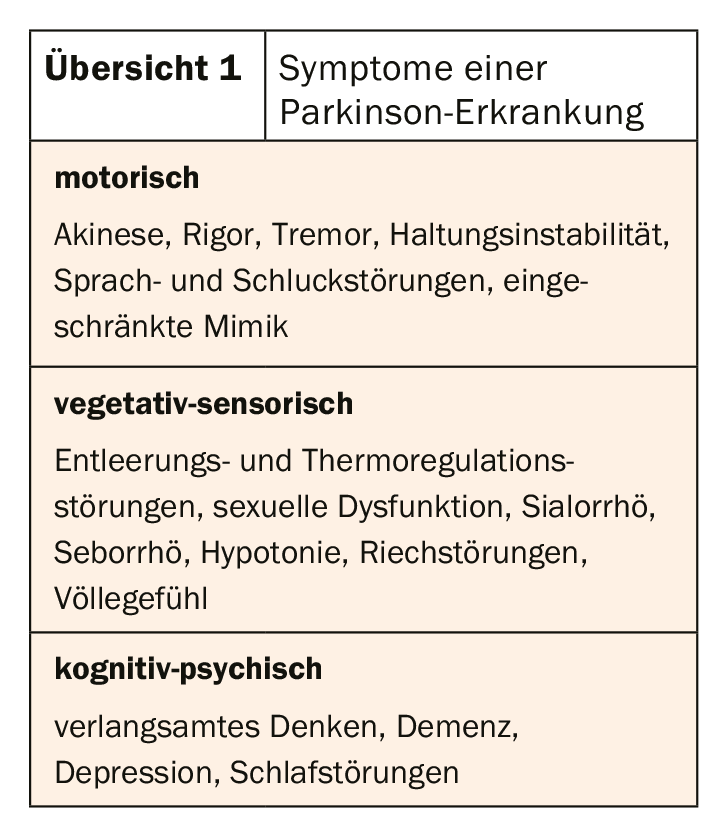


Counteract the development of motor complications

Initially, dopamine agonists are popular, especially in patients younger than 65 years and without psychoorganic disorders. Because dopamine agonists have a longer half-life than L-dopa, the pulsatile effect is less. Nevertheless, dyskinesias and wearing-offs cannot be avoided in the long run. Research is therefore currently being conducted into new substances with a stronger affinity for the dopamine receptor D1.

Another option for adjusting therapy is the administration of catechol-O-methyltransferase (COMT) inhibitors. They inhibit another degradation pathway of L-dopa via O-methylation upstream of the blood-brain barrier. This increases the bioavailability of L-dopa and dopamine. COMT inhibitors prolong on and reduce off times, but exacerbate dyskinesias and are often associated with severe diarrhea and discoloration of the urine.

In addition to L-dopa, monoamine oxidase B (MAO-B) inhibitors may also be administered. Dopamine is oxidized in the brain by monoamine oxidase-B to DOPAC and then degraded to homovanillic acid.With a dual mechanism of action, the selective and reversible inhibitor blocks with monoaminooxidase-B on the one hand an important enzyme for dopamine degradation in the brain and at the same time inhibits the presynaptic sodium/calcium influx in glutamatergic neurons. This additionally reduces the excess glutamatergic activity and thus the occurrence of dyskinesias.


L-dopa late syndrome under control

  • Many patients with PD develop fluctuations after months or years of successful treatment with levodopa.
  • A major cause is the pulsatile effect of dopaminergic treatment.
  • Characteristic is a frequent change between good and bad mobility (on/off phases).
  • Complications may include treatment-induced dyskinesia.
  • Therapeutic approaches aim to provide dopaminergic stimulation as continuously as possible.
  • Combined administration of L-dopa with dopamine agonists, COMT inhibitors, or MAO-B inhibitors has been shown to be effective.
  • Patients with long off-times and dyskenisia in particular benefit from a dual mechanism of action.


InFo NEUROLOGY & PSYCHIATRY 2019; 17(4): 24.

Autoren
  • Leoni Burggraf
Publikation
  • InFo NEUROLOGIE & PSYCHIATRIE
Related Topics
  • dyskinesia
  • Impact fluctuations
  • L-Dopa
  • Neurotransmitter
  • Parkinson's
  • Parkinson's disease
Previous Article
  • Mediastinal tumors

Thymus tumor detection and state-of-the-art treatment

  • Education
  • Oncology
  • RX
View Post
Next Article
  • Hematologic neoplasms

Differentiated diagnostics for effective results

  • Congress Reports
  • Hematology
  • Oncology
  • RX
  • Studies
View Post
You May Also Like
View Post
  • 11 min
  • Cardiometabolism

Retatrutid and the TRIUMPH Program: The Triple Agonist on the Horizon

    • RX
    • Cardiology
    • Education
    • Endocrinology and Diabetology
    • General Internal Medicine
    • Nutrition
    • Prevention and health care
    • Studies
View Post
  • 7 min
  • Pediatric Retinoblastoma

The Tumor Microenvironment and Modern Eye-Sparing Therapies

    • RX
    • Education
    • Oncology
    • Ophthalmology
    • Pediatrics
View Post
  • 3 min
  • Adherence and management in asthma and COPD

Better to listen to the pharmacist

    • RX
    • Education
    • General Internal Medicine
    • Pharmacology and toxicology
    • Pneumology
    • Studies
View Post
  • 14 min
  • Focus Update 2026

Echocardiography in Cardio-Oncology

    • RX
    • Cardiology
    • Education
    • Oncology
    • Radiology
    • Studies
View Post
  • 4 min
  • Physical activity with IBD

Sport is not murder, but it doesn’t help either

    • RX
    • Education
    • Gastroenterology and Hepatology
    • General Internal Medicine
    • Sports Medicine
    • Studies
View Post
  • 3 min
  • White and Black Skin Cancer

Biology and Modern Therapeutic Approaches

    • RX
    • Dermatology and venereology
    • Education
    • Oncology
    • Prevention and health care
    • Studies
    • Surgery
View Post
  • 5 min
  • Highlights from the AAD Annual Meeting

Atopic Dermatitis: Interesting News on Drug Candidates in Phase III

    • RX
    • Allergology and clinical immunology
    • Congress Reports
    • Dermatology and venereology
    • Studies
View Post
  • 6 min
  • Autoimmune Liver Diseases

Innovative Treatment Approaches for PBC, PSC, and AIH: What’s New?

    • RX
    • Congress Reports
    • Gastroenterology and Hepatology
    • General Internal Medicine
    • Studies
  • IBD matters

    Zum Thema
Top CME content
  • 1
    Update on Anti-Rheumatic Medications
  • 2
    Psychiatry versus Neuro-Oncology: Diagnostic Pitfalls
  • 3
    Focus on preventive care options
  • 4
    Inflammation as a Treatment Goal in Its Own Right
  • 5
    Personalized Treatment Before a Planned Pregnancy

Newsletter

Sign up and stay up to date

Subscribe
Medizinonline Medizinonline
  • Contact
  • General terms and conditions
  • Imprint

Input your search keywords and press Enter.