Medizinonline Medizinonline
  • News
    • News
    • Market & Medicine
  • Patients
    • Disease patterns
    • Diagnostics
    • Therapy
  • Partner Content
    • Diabetes
      • Dia-Month Club – Type 2 Diabetes
      • Diabetes in Motion
      • Diabetes Podcasts
    • Gastroenterology
      • IBD matters
    • Oncology
      • Swiss Oncology in motion
    • Orthopedics
      • Osteoporosis in motion
  • Departments
    • Allergology and clinical immunology
    • General Internal Medicine
    • Anesthesiology
    • Angiology
    • Surgery
    • Dermatology and venereology
    • Endocrinology and Diabetology
    • Nutrition
    • Gastroenterology and Hepatology
    • Genetics
    • Geriatrics
    • Gynecology
    • Hematology
    • Infectiology
    • Cardiology
    • Nephrology
    • Neurology
    • Emergency and intensive care medicine
    • Nuclear Medicine
    • Oncology
    • Ophthalmology
    • ORL
    • Orthopedics
    • Pediatrics
    • Pharmacology and toxicology
    • Pharmaceutical medicine
    • Phlebology
    • Physical medicine and rehabilitation
    • Pneumology
    • Prevention and health care
    • Psychiatry and psychotherapy
    • Radiology
    • Forensic Medicine
    • Rheumatology
    • Sports Medicine
    • Traumatology and trauma surgery
    • Tropical and travel medicine
    • Urology
    • Dentistry
  • CME & Congresses
    • CME continuing education
    • Congress Reports
    • Congress calendar
  • Practice
    • Noctimed
    • Practice Management
    • Jobs
    • Interviews
  • Log In
  • Register
  • My account
  • Contact
  • Publications
  • Contact
  • Deutsch
  • English
  • Français
  • Italiano
  • Português
  • Español
Subscribe
Medizinonline Medizinonline
  • News
    • News
    • Market & Medicine
  • Patienten
    • Krankheitsbilder
    • Diagnostik
    • Therapie
  • Partner Content
    • Diabetes
      • Dia-Month Club – Type 2 Diabetes
      • Diabetes in Motion
      • Diabetes Podcasts
    • Gastroenterology
      • IBD matters
    • Oncology
      • Swiss Oncology in motion
    • Orthopedics
      • Osteoporosis in motion
    • Phytotherapie
    • Rheumatology
  • Departments
    • Fachbereiche 1-13
      • Allergology and clinical immunology
      • General Internal Medicine
      • Anesthesiology
      • Angiology
      • Surgery
      • Dermatology and venereology
      • Endocrinology and Diabetology
      • Nutrition
      • Gastroenterology and Hepatology
      • Genetics
      • Geriatrics
      • Gynecology
      • Hematology
    • Fachbereiche 14-26
      • Infectiology
      • Cardiology
      • Nephrology
      • Neurology
      • Emergency and intensive care medicine
      • Nuclear Medicine
      • Oncology
      • Ophthalmology
      • ORL
      • Orthopedics
      • Pediatrics
      • Pharmacology and toxicology
      • Pharmaceutical medicine
    • Fachbereiche 26-38
      • Phlebology
      • Physical medicine and rehabilitation
      • Phytotherapy
      • Pneumology
      • Prevention and health care
      • Psychiatry and psychotherapy
      • Radiology
      • Forensic Medicine
      • Rheumatology
      • Sports Medicine
      • Traumatology and trauma surgery
      • Tropical and travel medicine
      • Urology
      • Dentistry
  • CME & Congresses
    • CME continuing education
    • Congress Reports
    • Congress calendar
  • Practice
    • Noctimed
    • Practice Management
    • Jobs
    • Interviews
Login

Sie haben noch keinen Account? Registrieren

  • Neuropathic pain

With nerve regeneration comes chronic pain

    • Neurology
    • RX
    • Studies
  • 3 minute read

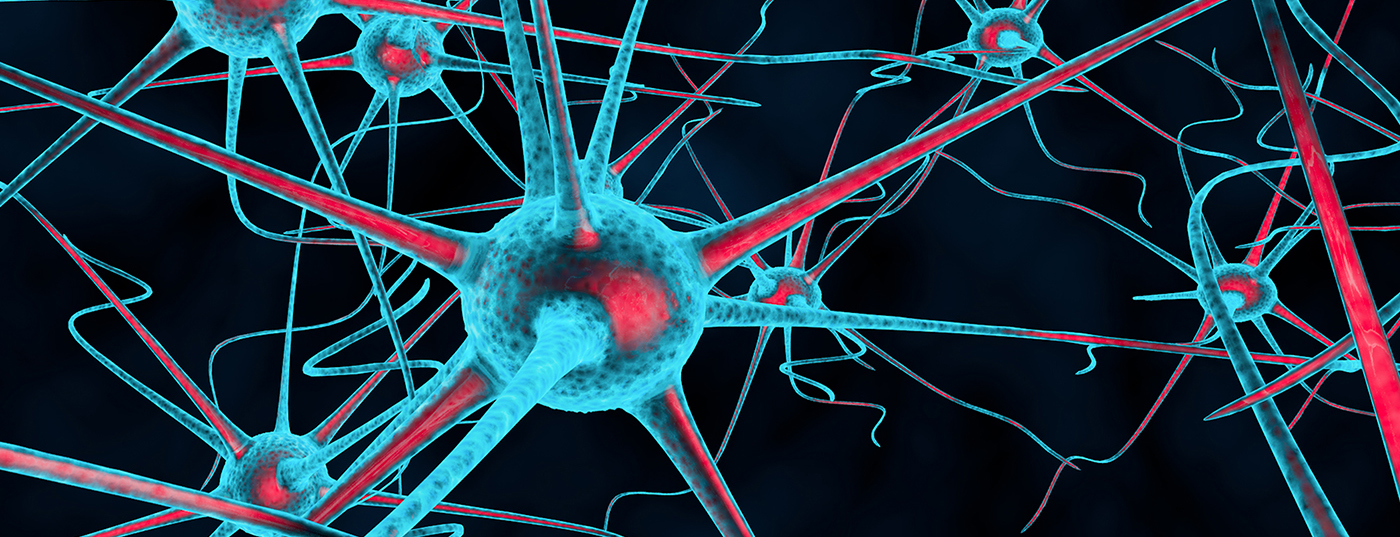
Even healed nerve injuries often leave chronic pain and hypersensitivity to gentle touch. Scientists at the Institute of Pharmacology and the Institute of Anatomy and Cell Biology at the Medical Faculty of Heidelberg (MFHD) have now shown in animal experiments that faulty “circuitry” of the pain receptors (nociceptors) leads to a previously unstudied form of so-called neuropathic pain. They occur only in the course of regeneration of nerve connections as the injury heals.

Neuropathic pain, which an interdisciplinary research group investigated as part of the Heidelberg Collaborative Research Center (SFB) 1158 “From Nociception to Chronic Pain”, occurs after traumatic injuries such as bruising: In this case, not all fibers of a nerve supplying the skin, for example, are damaged; in addition, there are still intact fibers whose connection to the skin continues to exist. “So far, only the reactions of the nerve fibers that remain intact to the injury have been studied: In them, there is a sensitization of the pain sensation. In contrast, the fate of the damaged nerves in the course of regenerative processes has hardly been studied so far. Surprisingly, the research fields of regeneration and pain have so far been poorly linked. It is precisely at this interface that we have conducted our research,” explains senior author Professor Dr. Rohini Kuner, director of the Department of Molecular Pharmacology at the Institute of Pharmacology and spokesperson for SFB 1158.

Wrongly “wired” pain receptors are the cause of chronic pain

In chronic pain, a distinction is made between nociceptive and neuropathic pain. Nociceptive pain originates in tissue injury, neuropathic pain in damage to the nerve fibers themselves. Nerve trauma or bruising, in which injured and intact nerve fibers are in direct contact, is particularly prone to the development of chronic neuropathic pain. The new results now show that the chronic pain is not caused by the actual injury, but is due to faulty nerve regeneration as well as faulty restoration of the nerve supply, known as reinnervation.

While the tactile nerve fibers that transmit touch stimuli to the spinal cord and brain do not regenerate or regenerate slowly after injury – hence the initial numbness – the pain-conducting fibers are able to do so more quickly. They take the place of capped touch sensors in the skin instead of sensory fibers. As a result, every tactile stimulus now acts like a pain stimulus – even a gentle caress or the feel of clothing on the skin can then cause pain. “The cause of the pain is a wrong wiring of sensors and occurs accordingly only after some time, when the connection is established. This form of chronic pain is therefore the direct consequence of the reinnervation of the sensors by pain-conducting fibers at the same time as the reinnervation of the tactile nerve fibers fails to occur. This connection was previously completely unknown,” says first author Dr. Vijayan Gangadharan.

“Our results answer the long-standing question of how complex neuropathic pain in patients occurs, for example, after nerve crush injuries. They bridge the gap between the fields of regeneration and chronic pain and reveal the importance of neuronal aberrations during the healing process,” adds Prof. Kuner. Currently, there is no treatment option to specifically alleviate or prevent this form of chronic pain. In the future, the interdisciplinary team will therefore address the question of how the injured tactile fibers can be stimulated to regenerate so that the loss of balance between touch and painful sensations does not occur in the first place.
 

Original publication:

Gangadharan, V., Zheng, H., Taberner, F.J. et al. Neuropathic pain caused by miswiring and abnormal end organ targeting. Nature (2022). https://doi.org/10.1038/s41586-022-04777-z

Previous Article
  • Pediatric pneumology

Growing up after lung transplantation

  • CME continuing education
  • Education
  • General Internal Medicine
  • Pediatrics
  • Pneumology
  • RX
  • Studies
  • Surgery
View Post
Next Article
  • Vulvar and vaginal carcinoma

Update: precancerous lesions, classification and therapy

  • Congress Reports
  • Gynecology
  • Oncology
  • RX
  • Studies
View Post
You May Also Like
View Post
  • 14 min
  • Seborrheic Dermatitis in Adults and Adolescents

Current State of Knowledge and New Therapeutic Approaches

    • RX
    • CME continuing education
    • Dermatology and venereology
    • Studies
View Post
  • 7 min
  • Plastic surgery and reconstructive microsurgery for DFS

Functional limb preservation between infection control, vascular medicine and resurfacing

    • RX
    • Angiology
    • CME continuing education
    • Dermatology and venereology
    • Endocrinology and Diabetology
    • General Internal Medicine
    • Geriatrics
    • Physical medicine and rehabilitation
    • Surgery
View Post
  • 7 min
  • Orthobiologics for knee osteoarthritis

PRP and hyaluronic acid injections as building blocks in a multimodal concept

    • RX
    • Congress Reports
    • General Internal Medicine
    • Orthopedics
    • Rheumatology
    • Sports Medicine
    • Studies
    • Surgery
View Post
  • 3 min
  • Soft tissue sarcomas of the lower extremity

Diagnostics, subtypes and treatment options

    • RX
    • Education
    • Oncology
View Post
  • 38 min
  • Psychological dependence on AI assistants, smartphones and short videos

Algorithms, avatars and the unburdened mind

    • RX
    • CME continuing education
    • Neurology
    • Pediatrics
    • Prevention and health care
    • Psychiatry and psychotherapy
    • Studies
View Post
  • 8 min
  • Psychooncology

Communication as the key to therapy adherence

    • CME continuing education
    • Practice Management
    • RX
View Post
  • 12 min
  • The Brain and the Motivation to Eat

Why is it so hard to lose weight?

    • RX
    • CME continuing education
    • Endocrinology and Diabetology
    • General Internal Medicine
    • Nutrition
    • Pharmacology and toxicology
    • Prevention and health care
    • Psychiatry and psychotherapy
    • Studies
View Post
  • 5 min
  • Omaveloxolone for Friedreich's Ataxia

Efficacy and Safety Studied Over 6 Years

    • Neurology
    • Congress Reports
    • Endocrinology and Diabetology
    • RX
    • Studies
  • IBD matters

    Zum Thema
Top CME content
  • 1
    Current State of Knowledge and New Therapeutic Approaches
  • 2
    Why is it so hard to lose weight?
  • 3
    Functional limb preservation between infection control, vascular medicine and resurfacing
  • 4
    Algorithms, avatars and the unburdened mind
  • 5
    Communication as the key to therapy adherence

Newsletter

Sign up and stay up to date

Subscribe
Medizinonline Medizinonline
  • Contact
  • General terms and conditions
  • Imprint

Input your search keywords and press Enter.