Medizinonline Medizinonline
  • News
    • News
    • Market & Medicine
  • Patients
    • Disease patterns
    • Diagnostics
    • Therapy
  • Partner Content
    • Dermatology
      • Atopic dermatitis and psoriasis news
    • Diabetes
      • Dia-Month Club – Type 2 Diabetes
      • Diabetes in Motion
      • Diabetes Podcasts
    • Gastroenterology
      • IBD matters
    • Oncology
      • Swiss Oncology in motion
    • Orthopedics
      • Osteoporosis in motion
  • Departments
    • Allergology and clinical immunology
    • General Internal Medicine
    • Anesthesiology
    • Angiology
    • Surgery
    • Dermatology and venereology
    • Endocrinology and Diabetology
    • Nutrition
    • Gastroenterology and Hepatology
    • Genetics
    • Geriatrics
    • Gynecology
    • Hematology
    • Infectiology
    • Cardiology
    • Nephrology
    • Neurology
    • Emergency and intensive care medicine
    • Nuclear Medicine
    • Oncology
    • Ophthalmology
    • ORL
    • Orthopedics
    • Pediatrics
    • Pharmacology and toxicology
    • Pharmaceutical medicine
    • Phlebology
    • Physical medicine and rehabilitation
    • Pneumology
    • Prevention and health care
    • Psychiatry and psychotherapy
    • Radiology
    • Forensic Medicine
    • Rheumatology
    • Sports Medicine
    • Traumatology and trauma surgery
    • Tropical and travel medicine
    • Urology
    • Dentistry
  • CME & Congresses
    • CME continuing education
    • Congress Reports
    • Congress calendar
  • Practice
    • Noctimed
    • Practice Management
    • Jobs
    • Interviews
  • Log In
  • Register
  • My account
  • Contact
  • Publications
  • Contact
  • Deutsch
  • English
  • Français
  • Italiano
  • Português
  • Español
Subscribe
Medizinonline Medizinonline
  • News
    • News
    • Market & Medicine
  • Patienten
    • Krankheitsbilder
    • Diagnostik
    • Therapie
  • Partner Content
    • Dermatology
      • Atopic dermatitis and psoriasis news
    • Diabetes
      • Dia-Month Club – Type 2 Diabetes
      • Diabetes in Motion
      • Diabetes Podcasts
    • Gastroenterology
      • IBD matters
    • Oncology
      • Swiss Oncology in motion
    • Orthopedics
      • Osteoporosis in motion
    • Phytotherapie
    • Rheumatology
  • Departments
    • Fachbereiche 1-13
      • Allergology and clinical immunology
      • General Internal Medicine
      • Anesthesiology
      • Angiology
      • Surgery
      • Dermatology and venereology
      • Endocrinology and Diabetology
      • Nutrition
      • Gastroenterology and Hepatology
      • Genetics
      • Geriatrics
      • Gynecology
      • Hematology
    • Fachbereiche 14-26
      • Infectiology
      • Cardiology
      • Nephrology
      • Neurology
      • Emergency and intensive care medicine
      • Nuclear Medicine
      • Oncology
      • Ophthalmology
      • ORL
      • Orthopedics
      • Pediatrics
      • Pharmacology and toxicology
      • Pharmaceutical medicine
    • Fachbereiche 26-38
      • Phlebology
      • Physical medicine and rehabilitation
      • Phytotherapy
      • Pneumology
      • Prevention and health care
      • Psychiatry and psychotherapy
      • Radiology
      • Forensic Medicine
      • Rheumatology
      • Sports Medicine
      • Traumatology and trauma surgery
      • Tropical and travel medicine
      • Urology
      • Dentistry
  • CME & Congresses
    • CME continuing education
    • Congress Reports
    • Congress calendar
  • Practice
    • Noctimed
    • Practice Management
    • Jobs
    • Interviews
Login

Sie haben noch keinen Account? Registrieren

  • Leukemic cutaneous T-cell lymphoma (L-CTCL)

Sézary syndrome and mycosis fungoides: STAT5 as a therapeutic target?

    • Congress Reports
    • Dermatology and venereology
    • Genetics
    • Hematology
    • Oncology
    • RX
    • Studies
  • 2 minute read

As the disease progresses, the tumor cells in leukemic variants of cutaneous T-cell lymphomas spread not only in the skin but also in the blood and lymph nodes. Although an increasing number of extensive sequencing studies point to genetic variations, the driver mutations are not yet known. A new study has identified STAT5 as a potential therapeutic target.

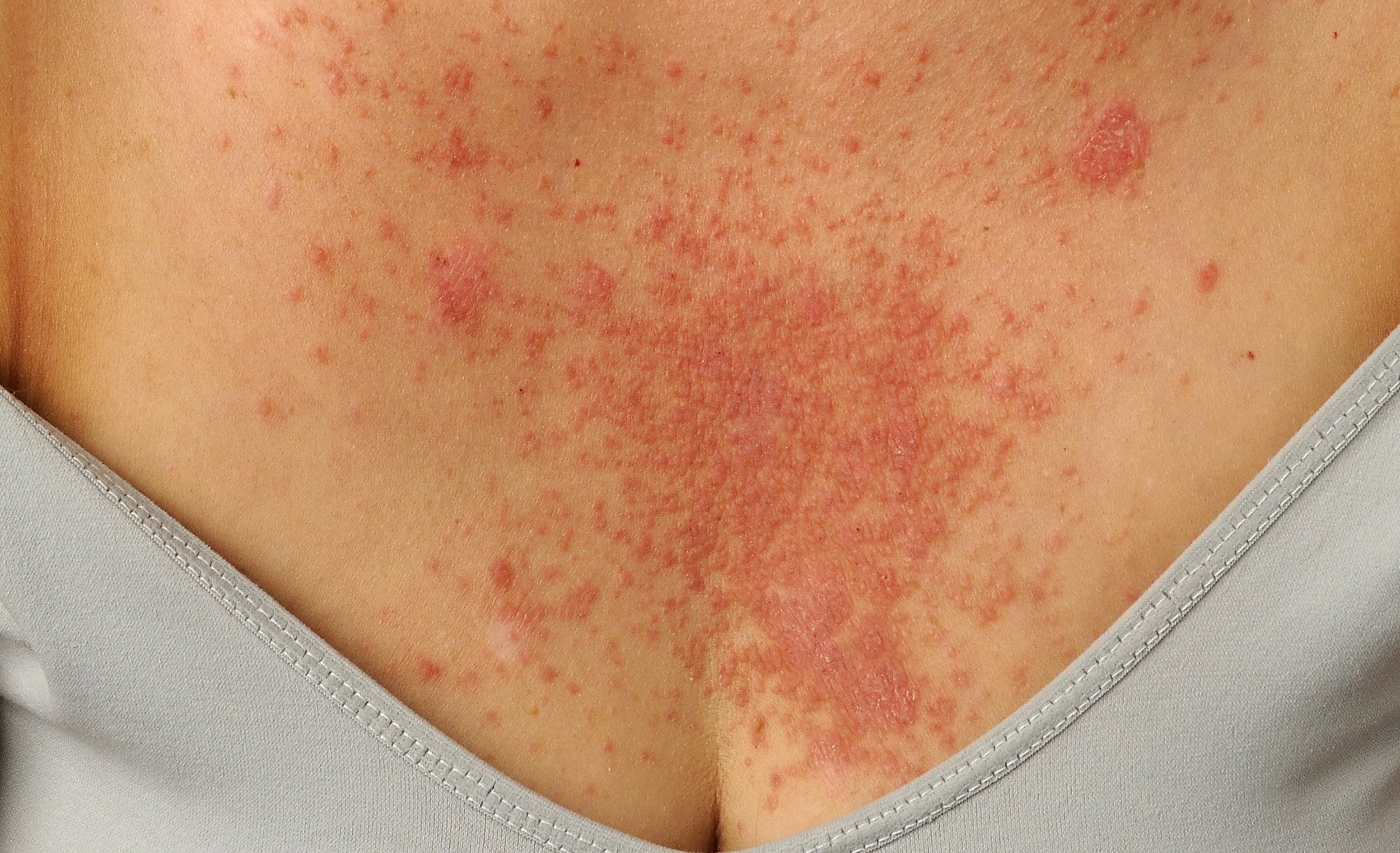
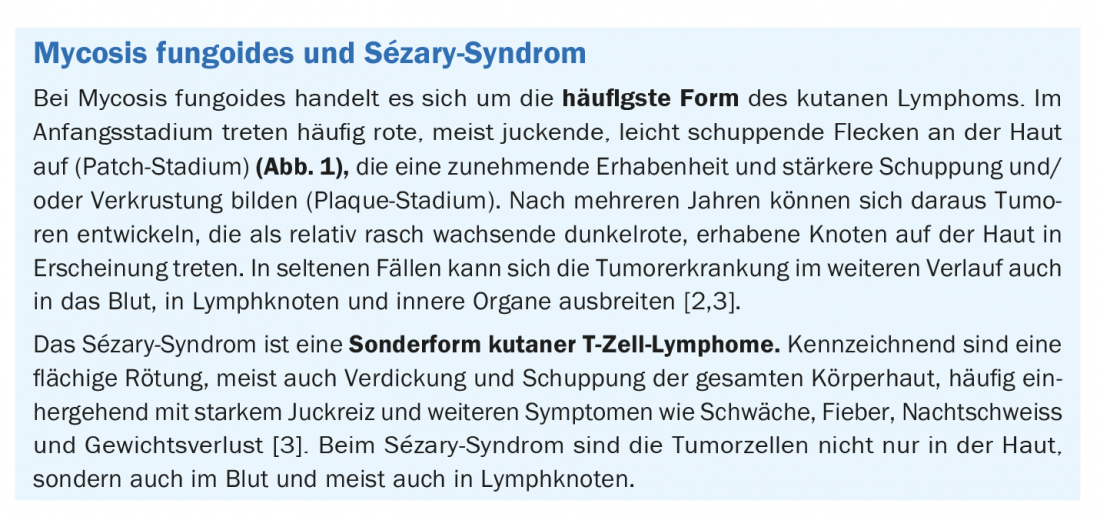
Cutaneous T-cell lymphomas (CTCL) are a group of non-Hodgkin’s lymphomas that originate from T cells and primarily affect the skin. Mycosis fungoides (Fig. 1) is the most common form and accounts for about half of all cases. Sézary syndrome is an erythrodermatous cutaneous T-cell lymphoma, mainly affecting people over 50 years of age. Both Sézary syndrome and mycosis fungoides are leukemic variants of cutaneous T-cell lymphomas (L-CTCL). So far, the etiology is not yet clear. Although abnormalities with an increase in genetic material on chromosome 17q encoding STAT3/5 genes have been reported in over 50% of CTCL patients, it is unclear whether this results in increased oncogenic STAT3 and/or STAT5 activity and whether it is a potential therapeutic target. STAT3 and STAT5 are transcription factors for the transformation of blood cells, i.e. a kind of genetic light switch capable of turning genes on and off.


High sensitivity to STAT5 inhibition

At this year’s ADF Annual Meeting, a scientific study was presented integrating pharmacological interference studies and cancer genome sequencing to find out more about  functional consequences of chromosome arm 17q abnormalities and the possible efficacy of JAK-STAT blockade [1]. To this end, whole genome and primary cell sequencing was performed in a cohort of 4 patients with Sézary syndrome and 2 patients with advanced leukemic mycosis fungoides. Genomic analyses revealed increased chromosome 17q copy number in 5 of 6 patients, which correlated with an increase in STAT3/5 mRNA expression and protein levels. Immunohistochemical analysis of the skin biopsies, which showed STAT5 activation, supported these findings.


IQDMA – a little-studied STAT5 inhibitor in focus

Functional in vitro studies of various JAK and STAT inhibitors showed that CTCL cell lines and skin samples from patients exhibited high sensitivity to STAT5 inhibitors. IQDMA, a poorly studied inhibitor of STAT5 signaling showed particular selectivity for L-CTCL single samples with chromosome 17q gain and is currently being investigated using an in vivo transplantation model for potential efficacy in inhibiting lymphoma growth in skin.

In conclusion, 17q gains are characteristic of L-CTCL in advanced stages and STAT5 in particular appears to act as a therapeutic target. Further preclinical development of specific STAT5 inhibitors and their clinical validation may eventually contribute to new options for the treatment of L-CTCL.

Congress: Arbeitsgemeinschaft Dermatologische Forschung 2021


Literature:

  1. Dey S, et al: STAT5 is a therapeutically targetable vulnerability in leukemic cutaneous T-cell lymphoma. P205, Translational Research ADF Dermatology Awards, ADF Annual Meeting 3/6/2021.
  2. Deutsche Leukämie- & Lymphomhilfe, DLH-Informationsblatt Haut- Lymphome (DLH info 70 III/2019), www.leukaemie-hilfe.de (last accessed 17.05.2021).
  3. German Cancer Society, www.krebsgesellschaft.de/onko-internetportal (last accessed May 17, 2021).
  4. Porto AC, et al: Mycosis fungoides: reflectance confocal microscopy and its role in the diagnosis. Appl Cancer Res 2018; 38 (10), https://link.springer.com/article/10.1186/s41241-018-0061-0


DERMATOLOGIE PRAXIS 2021; 31(3): 39 (published 6/1/21, ahead of print).

Autoren
  • Mirjam Peter, M.Sc.
Publikation
  • DERMATOLOGIE PRAXIS
Related Topics
  • Hodgkin
Previous Article
  • Management of dyslipidemia

Lipid-lowering agents for secondary prophylaxis also effective in elderly patients

  • Cardiology
  • Congress Reports
  • Endocrinology and Diabetology
  • General Internal Medicine
  • Geriatrics
  • RX
  • Studies
View Post
Next Article
  • Monoclonal Gammopathy of Unclear Significance (MGUS)

Identification of patients at risk

  • Congress Reports
  • Hematology
  • Oncology
  • RX
View Post
You May Also Like
View Post
  • 8 min
  • Benefits, limits and safety aspects

Phytotherapy for cardiovascular diseases

    • Cardiology
    • Education
    • Endocrinology and Diabetology
    • General Internal Medicine
    • Nutrition
    • Pharmaceutical medicine
    • Phytotherapy
    • RX
    • Studies
View Post
  • 6 min
  • Results of the FOREST HCM study

Symptomatic obstructive hypertrophic cardiomyopathy

    • Cardiology
    • Education
    • RX
    • Studies
View Post
  • 9 min
  • Neuroprotection, resilience and cognitive health in old age

Longevity & Brain

    • Education
    • General Internal Medicine
    • Geriatrics
    • Neurology
    • Prevention and health care
    • RX
    • Studies
View Post
  • 6 min
  • Obesity as a chronic disease: an interdisciplinary perspective

Neurobiological mechanisms of obesity

    • Congress Reports
    • General Internal Medicine
    • Nutrition
    • Prevention and health care
    • Psychiatry and psychotherapy
    • RX
    • Studies
View Post
  • 5 min
  • Oncolytic virus in stage II melanoma

Innovative method for predicting therapy response

    • Dermatology and venereology
    • Education
    • Oncology
    • RX
    • Studies
View Post
  • 3 min
  • Phimosis and penile cancer under SGLT2i

Increased risk for men with T2D

    • Congress Reports
    • Endocrinology and Diabetology
    • General Internal Medicine
    • RX
    • Studies
    • Urology
View Post
  • 12 min
  • Diabetic ketoacidosis

Recommendations for action in practice

    • Cases
    • CME continuing education
    • Emergency and intensive care medicine
    • Endocrinology and Diabetology
    • Hematology
    • Nephrology
    • RX
View Post
  • 6 min
  • Migraine: better quality of life thanks to multimodal care

Broader selection of innovative migraine prophylactics and acute therapies

    • Congress Reports
    • Neurology
    • Pharmacology and toxicology
    • RX
    • Studies
  • IBD matters

    Zum Thema
Top CME content
  • 1
    Causes and prevention at work
  • 2
    Yellow nail and Swyer-James syndrome
  • 3
    Recommendations for action in practice
  • 4
    From the β-cell to the center: the versatile role of amylin
  • 5
    Communication as the key to therapy adherence

Newsletter

Sign up and stay up to date

Subscribe
Medizinonline Medizinonline
  • Contact
  • General terms and conditions
  • Imprint

Input your search keywords and press Enter.