Medizinonline Medizinonline
  • News
    • News
    • Market & Medicine
  • Patients
    • Disease patterns
    • Diagnostics
    • Therapy
  • Partner Content
    • Diabetes
      • Dia-Month Club – Type 2 Diabetes
      • Diabetes in Motion
      • Diabetes Podcasts
    • Gastroenterology
      • IBD matters
    • Oncology
      • Swiss Oncology in motion
    • Orthopedics
      • Osteoporosis in motion
  • Departments
    • Allergology and clinical immunology
    • General Internal Medicine
    • Anesthesiology
    • Angiology
    • Surgery
    • Dermatology and venereology
    • Endocrinology and Diabetology
    • Nutrition
    • Gastroenterology and Hepatology
    • Genetics
    • Geriatrics
    • Gynecology
    • Hematology
    • Infectiology
    • Cardiology
    • Nephrology
    • Neurology
    • Emergency and intensive care medicine
    • Nuclear Medicine
    • Oncology
    • Ophthalmology
    • ORL
    • Orthopedics
    • Pediatrics
    • Pharmacology and toxicology
    • Pharmaceutical medicine
    • Phlebology
    • Physical medicine and rehabilitation
    • Pneumology
    • Prevention and health care
    • Psychiatry and psychotherapy
    • Radiology
    • Forensic Medicine
    • Rheumatology
    • Sports Medicine
    • Traumatology and trauma surgery
    • Tropical and travel medicine
    • Urology
    • Dentistry
  • CME & Congresses
    • CME continuing education
    • Congress Reports
    • Congress calendar
  • Practice
    • Noctimed
    • Practice Management
    • Jobs
    • Interviews
  • Log In
  • Register
  • My account
  • Contact
  • Publications
  • Contact
  • Deutsch
  • English
  • Français
  • Italiano
  • Português
  • Español
Subscribe
Medizinonline Medizinonline
  • News
    • News
    • Market & Medicine
  • Patienten
    • Krankheitsbilder
    • Diagnostik
    • Therapie
  • Partner Content
    • Diabetes
      • Dia-Month Club – Type 2 Diabetes
      • Diabetes in Motion
      • Diabetes Podcasts
    • Gastroenterology
      • IBD matters
    • Oncology
      • Swiss Oncology in motion
    • Orthopedics
      • Osteoporosis in motion
    • Phytotherapie
    • Rheumatology
  • Departments
    • Fachbereiche 1-13
      • Allergology and clinical immunology
      • General Internal Medicine
      • Anesthesiology
      • Angiology
      • Surgery
      • Dermatology and venereology
      • Endocrinology and Diabetology
      • Nutrition
      • Gastroenterology and Hepatology
      • Genetics
      • Geriatrics
      • Gynecology
      • Hematology
    • Fachbereiche 14-26
      • Infectiology
      • Cardiology
      • Nephrology
      • Neurology
      • Emergency and intensive care medicine
      • Nuclear Medicine
      • Oncology
      • Ophthalmology
      • ORL
      • Orthopedics
      • Pediatrics
      • Pharmacology and toxicology
      • Pharmaceutical medicine
    • Fachbereiche 26-38
      • Phlebology
      • Physical medicine and rehabilitation
      • Phytotherapy
      • Pneumology
      • Prevention and health care
      • Psychiatry and psychotherapy
      • Radiology
      • Forensic Medicine
      • Rheumatology
      • Sports Medicine
      • Traumatology and trauma surgery
      • Tropical and travel medicine
      • Urology
      • Dentistry
  • CME & Congresses
    • CME continuing education
    • Congress Reports
    • Congress calendar
  • Practice
    • Noctimed
    • Practice Management
    • Jobs
    • Interviews
Login

Sie haben noch keinen Account? Registrieren

  • Infectiology

When are the antiviral drugs used?

    • Allergology and clinical immunology
    • Infectiology
    • Interviews
    • RX
  • 4 minute read

In an interview with HAUSARZT PRAXIS, Prof. Dr. med. Hansjakob Furrer from the University Clinic for Infectiology at the Inselspital Bern provides information on the subject of colds and flu. It distinguishes between the two courses and provides information on the risk of severe complication, e.g., superinfection with bacteria. Furthermore, he discusses the benefits of vaccination and the use of antiviral drugs.

Prof. Furrer, which virus types are responsible for a cold, and which for influenza?

Prof. Furrer:
In influenza, it is the influenza virus that brings a typical clinical picture. In our latitudes, it always comes as an epidemic, of which we know approximately when it starts and how long it lasts, namely about two months.
Various viruses are responsible for the so-called “common cold”, sometimes rhino, metapneumo, adeno or respiratory syncytial viruses (RSV).

They say the common cold comes on slowly and goes quickly, while the flu comes on quickly and goes slowly. Specifically, how do the symptoms and courses of the two infectious diseases differ?
In influenza, the main symptom experienced by those affected is the sudden onset of fever. In addition, they have aching limbs, headache, sore throat and cough. The main symptoms then weaken again after about a week. In a healthy adult or even child, the flu usually recedes without specific treatment. However, more aggressive forms of the virus or patients at risk may develop complications, such as severe pneumonia or meningitis.
In the vast majority of cases, the common cold brings less fever, typically infections of the upper respiratory tract (sore throat, cold, cough, bronchitis). The cold viruses, because they cause inflammation on the mucous membrane, can also lead to more severe infections, as the weakened mucous membrane is more susceptible to bacterial infections in particular. Thus, although the symptoms of the two infectious diseases are similar, the general practitioner can often distinguish the forms: the person with influenza is much sicker and more attacked, and the fever is usually higher.

As you have just mentioned, bacteria take advantage of the situation of the weakened body and can additionally attack organs during severe influenza. What is the risk of inflammation in the brain, gastrointestinal tract, lungs or heart if you are already suffering from a severe flu?
It should be mentioned that the complication of influenza is far from being only bacterial. In particular, virus types that are relatively different from those of past years already carry in themselves a risk of leading to very severe disease or even death.
Bacterial superinfections can occur in all people. It is important that the patient knows how to distinguish the normal course of influenza from such a complication. The family doctor should inform him that if the symptoms become more severe and last longer than usual, for example, severe shortness of breath, signs of pneumonia or sputum of purulent sputum are also added, he will report again.

Which diagnostic methods can be used for influenza detection?
In most cases, no further diagnostic procedures are necessary in addition to the medical history. If they do, amplification methods (with PCR) are currently the best method because of their high sensitivity. They bring fast results, but are relatively expensive.

In the case of the common cold, nasal sprays and painkillers such as paracetamol, ASA or ibuprofen are often used on the patient’s own initiative. What are the advantages and disadvantages of such symptomatic therapy?
In principle, if you use the right drugs, this has only advantages. The only thing that could be considered critical is the fact that many people have lost some confidence in their own defenses. Drinking tea and rest can already achieve a lot and relieve the symptoms. Nevertheless, there is absolutely nothing wrong with aspirin, etc., for symptom relief, as long as you do not have a bleeding tendency or fear interactions with other medications.

Influenza demands tougher therapeutic guns. What are currently the most effective antiviral drugs and when do they need to be taken to stop the viruses from replicating in time?
Particularly at risk from the flu are very young children, partially pregnant women, people with weakened immune systems, and the elderly. Typically, the antiviral flu drugs are used rather rarely in Switzerland, e.g., compared to the U.S., which I think is reasonable. Of course, the drugs, taken at the beginning of the flu, would lead to fever-free again in a majority of people, a day or a day and a half earlier. However, I consider its use to be particularly useful for some of the risk groups mentioned above. In particular, the defense-weakened people benefit from it. Here, administration can also be useful four days after the onset of symptoms, since the flu usually lasts longer and the antiviral effect of the drug lasts as long as the virus replicates.
Active ingredients used in Switzerland
are oseltamivir (Tamiflu®) and zanamivir (Relenza®), which are effective against influenza A and B, respectively. As with all agents against infectious pathogens, large-scale use leads to the development of viral resistance.

What is there to say about this development of resistance?
Of course, the danger exists with all currently used antiviral drugs. However, as long as they are not already widely used in pig and poultry farming in China, the risk that the influenza wave will come a priori already with a resistant virus is rather low. In addition, there is also the development of resistance under ongoing therapy, in people who have to be treated for a longer period of time.

Especially for elderly and chronically ill people prevention and prophylaxis is useful. What medical options and behavioral interventions work?
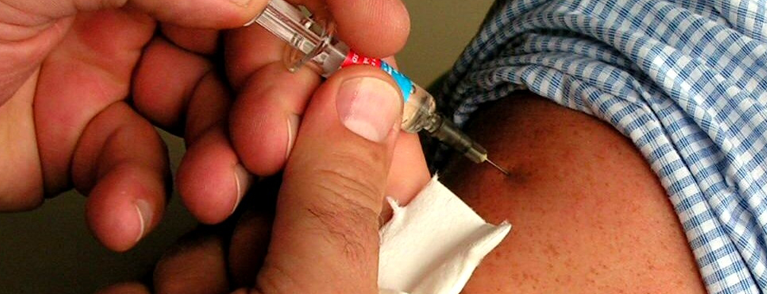
An influenza epidemic spreads worldwide in waves, usually starting in China. Through reports from other countries, we  can roughly estimate how dangerous the epidemic will be in our country. A good and safe prophylaxis is offered by vaccination. It prevents flu with up to 60% probability. If you do catch the disease, it is much milder, similar to a cold. Persons in nursing and health care professions and members of vulnerable risk groups should also avoid transmission to weakened fellow human beings by means of vaccination.

Interview: Andreas Grossmann

HAUSARZT PRAXIS 2014; 9(3): 4

Publikation
  • HAUSARZT PRAXIS
Related Topics
  • antiviral
  • bacterial
  • Cold
  • Defense system
  • fever
  • Flu
  • Infectiology
  • Influenza
  • mucosa
  • Relenza
  • resistance
  • Superinfection
  • Tamiflu
Previous Article
  • Effects of physical activity

Biological adaptations and training theory

  • General Internal Medicine
  • News
  • Orthopedics
  • Prevention and health care
  • RX
  • Sports Medicine
View Post
Next Article
  • Rose root against stress

Amazing effect of a new adaptogenic medicinal plant from the north

  • News
  • Pharmaceutical medicine
  • Pharmacology and toxicology
  • Psychiatry and psychotherapy
  • RX
View Post
You May Also Like
View Post
  • 14 min
  • Heart failure and type 2 diabetes

Oral semaglutide and cardiac decompensation in type 2 diabetes

    • Cardiology
    • Education
    • Endocrinology and Diabetology
    • RX
    • Studies
View Post
  • 7 min
  • Atopic dermatitis as a door opener for an atopic cascade?

AD trajectories: Summary of current findings

    • Allergology and clinical immunology
    • Congress Reports
    • Dermatology and venereology
    • RX
    • Studies
View Post
  • 11 min
  • New evidence on descensus, urinary incontinence and the future of reconstruction

Urogynecology and pelvic floor surgery 2026

    • Education
    • General Internal Medicine
    • Gynecology
    • Physical medicine and rehabilitation
    • RX
    • Studies
    • Surgery
    • Urology
View Post
  • 8 min
  • Proteins in wound healing

Do special amino acids lead to success?

    • CME continuing education
    • Dermatology and venereology
    • Endocrinology and Diabetology
    • Nutrition
    • RX
    • Studies
View Post
  • 5 min
  • Case study

Autosomal recessive polycystic kidney disease: atypical phenotype

    • Cases
    • Education
    • Gastroenterology and Hepatology
    • Genetics
    • Nephrology
    • RX
View Post
  • 12 min
  • Current evidence, risk classes and new counseling options

Hormonal contraception and cardiovascular risk

    • Cardiology
    • Education
    • Gynecology
    • Neurology
    • Pharmacology and toxicology
    • RX
    • Studies
View Post
  • 4 min
  • Acute otitis media: self-limiting course vs. "red flags"

In which cases are antibiotics necessary?

    • Congress Reports
    • General Internal Medicine
    • Infectiology
    • ORL
    • Pediatrics
    • RX
View Post
  • 6 min
  • Prurigo nodularis: evidence-based treatment

Targeted therapy options on the rise

    • Allergology and clinical immunology
    • Dermatology and venereology
    • Education
    • Pharmacology and toxicology
    • RX
    • Studies
  • IBD matters

    Zum Thema
Top CME content
  • 1
    Do special amino acids lead to success?
  • 2
    Current status of PAT
  • 3
    Surgical wound complications
  • 4
    Do special amino acids lead to success?
  • 5
    Functional limb preservation between infection control, vascular medicine and resurfacing

Newsletter

Sign up and stay up to date

Subscribe
Medizinonline Medizinonline
  • Contact
  • General terms and conditions
  • Imprint

Input your search keywords and press Enter.