Medizinonline Medizinonline
  • News
    • News
    • Market & Medicine
  • Patients
    • Disease patterns
    • Diagnostics
    • Therapy
  • Partner Content
    • Dermatology
      • Atopic dermatitis and psoriasis news
    • Diabetes
      • Dia-Month Club – Type 2 Diabetes
      • Diabetes in Motion
      • Diabetes Podcasts
    • Gastroenterology
      • IBD matters
    • Oncology
      • Swiss Oncology in motion
    • Orthopedics
      • Osteoporosis in motion
  • Departments
    • Allergology and clinical immunology
    • General Internal Medicine
    • Anesthesiology
    • Angiology
    • Surgery
    • Dermatology and venereology
    • Endocrinology and Diabetology
    • Nutrition
    • Gastroenterology and Hepatology
    • Genetics
    • Geriatrics
    • Gynecology
    • Hematology
    • Infectiology
    • Cardiology
    • Nephrology
    • Neurology
    • Emergency and intensive care medicine
    • Nuclear Medicine
    • Oncology
    • Ophthalmology
    • ORL
    • Orthopedics
    • Pediatrics
    • Pharmacology and toxicology
    • Pharmaceutical medicine
    • Phlebology
    • Physical medicine and rehabilitation
    • Pneumology
    • Prevention and health care
    • Psychiatry and psychotherapy
    • Radiology
    • Forensic Medicine
    • Rheumatology
    • Sports Medicine
    • Traumatology and trauma surgery
    • Tropical and travel medicine
    • Urology
    • Dentistry
  • CME & Congresses
    • CME continuing education
    • Congress Reports
    • Congress calendar
  • Practice
    • Noctimed
    • Practice Management
    • Jobs
    • Interviews
  • Log In
  • Register
  • My account
  • Contact
  • Publications
  • Contact
  • Deutsch
  • English
  • Français
  • Italiano
  • Português
  • Español
Subscribe
Medizinonline Medizinonline
  • News
    • News
    • Market & Medicine
  • Patienten
    • Krankheitsbilder
    • Diagnostik
    • Therapie
  • Partner Content
    • Dermatology
      • Atopic dermatitis and psoriasis news
    • Diabetes
      • Dia-Month Club – Type 2 Diabetes
      • Diabetes in Motion
      • Diabetes Podcasts
    • Gastroenterology
      • IBD matters
    • Oncology
      • Swiss Oncology in motion
    • Orthopedics
      • Osteoporosis in motion
    • Phytotherapie
    • Rheumatology
  • Departments
    • Fachbereiche 1-13
      • Allergology and clinical immunology
      • General Internal Medicine
      • Anesthesiology
      • Angiology
      • Surgery
      • Dermatology and venereology
      • Endocrinology and Diabetology
      • Nutrition
      • Gastroenterology and Hepatology
      • Genetics
      • Geriatrics
      • Gynecology
      • Hematology
    • Fachbereiche 14-26
      • Infectiology
      • Cardiology
      • Nephrology
      • Neurology
      • Emergency and intensive care medicine
      • Nuclear Medicine
      • Oncology
      • Ophthalmology
      • ORL
      • Orthopedics
      • Pediatrics
      • Pharmacology and toxicology
      • Pharmaceutical medicine
    • Fachbereiche 26-38
      • Phlebology
      • Physical medicine and rehabilitation
      • Phytotherapy
      • Pneumology
      • Prevention and health care
      • Psychiatry and psychotherapy
      • Radiology
      • Forensic Medicine
      • Rheumatology
      • Sports Medicine
      • Traumatology and trauma surgery
      • Tropical and travel medicine
      • Urology
      • Dentistry
  • CME & Congresses
    • CME continuing education
    • Congress Reports
    • Congress calendar
  • Practice
    • Noctimed
    • Practice Management
    • Jobs
    • Interviews
Login

Sie haben noch keinen Account? Registrieren

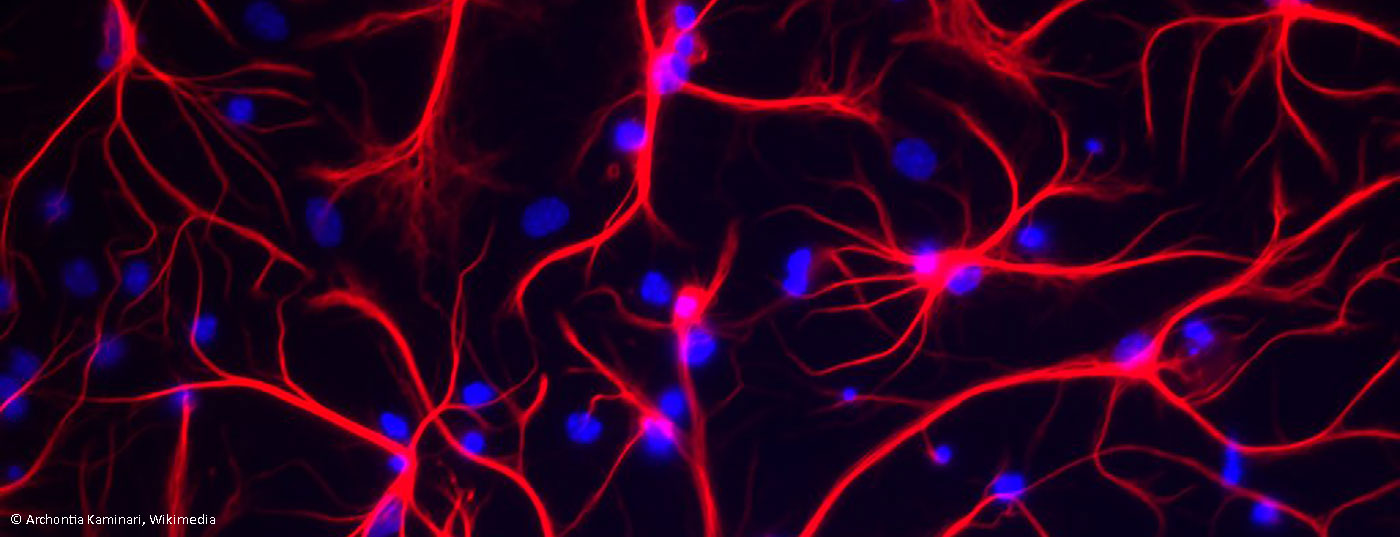
astrocytes_wikimedia
  • Research: Expression of Lcn2 in Reactive Astrocytes

RNA Nanotherapeutics Inhibit the Propagation of Neurotoxic Astroglial Responses Following Brain Injuries

  • Uncategorized
  • 2 minute read

Research from the Department of Clinical Neurosciences and Stem Cell Institute at Cambridge University demonstrates that RNA nanotherapeutics curtail the production of an inflammation-spreading signal released by cells of the central nervous system (CNS) in response to injury or disease.

Astrocytes are a ubiquitous and functionally-diverse class of cells found in the CNS where they play essential roles in regulating physiological processes such as synaptic transmission and blood-brain barrier integrity. Insults to the CNS, including conditions as diverse as traumatic injuries of the brain and spinal cord, multiple sclerosis, brain stroke and Alzheimer’s disease, are known to invoke a reactive state in astrocytes during which these cells undergo a variety of morphological and functional changes. Astroglial changes can be beneficial or detrimental, depending on the type, timing and context of the insult. Reactive astroglial cells typically increase the expression and release of the inflammation- and reactivity-propagating protein Lipocalin 2 (Lcn2). Lcn2 secreted by reactive astrocytes is known to promote reactivity in otherwise resting astrocytes, polarise immune cells towards a pro-inflammatory state, and have toxic effects on neurons.

Using the bio-inspired three-way junction (3WJ) RNA nanotechnology originally developed in the lab of Dr. Peixuan Guo at Ohio State University (USA), Smith et al. demonstrated that RNA interference can efficaciously and safely down-regulate the expression of Lcn2 in reactive astrocytes in vitro. Moreover, treatment with anti-Lcn2-3WJs significantly impeded the ability of reactive astrocytes to perpetuate a pro-inflammatory state. Resting astrocytes receiving the culture media in which reactive astrocytes had been grown showed a large increase in the expression of Lcn2 and nitric oxide synthase 2 (Nos2), an enzyme that produces free radicals and is associated with inflammation. Treating the original reactive astrocytes with anti-Lcn2-3WJs negated this effect. Importantly, 3WJ-mediated Lcn2 reduction was also evident in an experimental mouse model of contusion spinal cord injury, with significant reductions in the amount of Lcn2 present in mice treated with the RNA nanotherapeutics.


This proof-of-concept study has important implications for the treatment of brain disorders in which inflammation is often a contributing factor in the pathology. The approach is especially well-suited to combinatorial treatments in which the inhospitable tissue microenvironment fostered by the local increase in Lcn2 might prove inhibitory to other putative regenerative interventions, such as small molecules or stem cell therapeutics. Moreover, the modular, multiarmed nature of the 3WJ nanostructure lends itself to further functionalisation, with the potential for engineering targeting and/or diagnostic capabilities into the platform for the development of cell-specific therapeutics.

This research was funded by the International Foundation for Research in Paraplegia, the Bascule Charitable Trust, the UK Regenerative Medicine Platform, and Wings for Life.

Source: Full article in: Molecular Therapy – Nucleic Acids, Elsevier

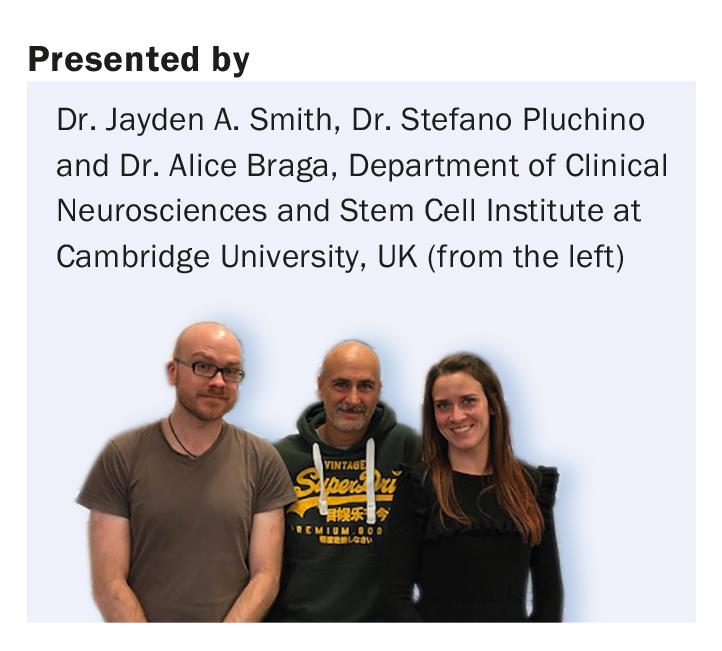
Publication details (article available as advance online publication): Smith JA, Braga A, Pluchino S, et. al.: RNA nanotherapeutics for the amelioration of astroglial reactivity. www.sciencedirect.com/science/article/pii/S2162253117302925


IRP – International Foundation
for Research in Paraplegia
Seestrasse 19
8002 Zürich
www.irp.ch
Partner
  • irp_logo
Publikation
  • HAUSARZT PRAXIS
You May Also Like
View Post
  • 9 min
  • Microbiome, inflammaging and affective/cognitive health

Gut-brain axis in old age

    • Education
    • Gastroenterology and Hepatology
    • General Internal Medicine
    • Geriatrics
    • Neurology
    • Nutrition
    • Prevention and health care
    • RX
    • Studies
View Post
  • 6 min
  • Vitiligo - the level of suffering should not be underestimated

A lot can be achieved therapeutically nowadays

    • Congress Reports
    • Dermatology and venereology
    • RX
    • Studies
View Post
  • 12 min
  • Patient-centered rounds in medicine

Aligning care with the patient

    • CME continuing education
    • Education
    • General Internal Medicine
    • Prevention and health care
    • RX
    • Studies
View Post
  • 14 min
  • Adrenogenital syndrome

Clinical care from birth to adulthood

    • CME continuing education
    • Endocrinology and Diabetology
    • Nephrology
    • Pediatrics
    • RX
    • Studies
View Post
  • 4 min
  • Communication between hospitals and outpatient care

How does a digital clinical information system prove itself in everyday practice?

    • Education
    • General Internal Medicine
    • Practice Management
    • Prevention and health care
    • RX
View Post
  • 13 min
  • Acute myeloid leukemia

Treatment decisions between MRD monitoring, transplantation and CAR-T cells

    • Congress Reports
    • Hematology
    • Oncology
    • RX
    • Studies
View Post
  • 4 min
  • Psoriasis and metabolic comorbidities: new study data

GLP-1RAs showed a valuable dual benefit

    • Cardiology
    • Congress Reports
    • Dermatology and venereology
    • Endocrinology and Diabetology
    • Pharmacology and toxicology
    • Rheumatology
    • RX
    • Studies
View Post
  • 5 min
  • Heart failure: combination of four as "Guideline-Directed Medical Therapy"

Standard established at HFrEF with individual nuances

    • Cardiology
    • Congress Reports
    • General Internal Medicine
    • Nephrology
    • RX
    • Studies
  • IBD matters

    Zum Thema
Top CME content
  • 1
    Clinical care from birth to adulthood
  • 2
    Aligning care with the patient
  • 3
    Control instead of a flood of data: AI makes big data and wearables usable
  • 4
    Causes and prevention at work
  • 5
    Yellow nail and Swyer-James syndrome

Newsletter

Sign up and stay up to date

Subscribe
Medizinonline Medizinonline
  • Contact
  • General terms and conditions
  • Imprint

Input your search keywords and press Enter.