Medizinonline Medizinonline
  • News
    • News
    • Market & Medicine
  • Patients
    • Disease patterns
    • Diagnostics
    • Therapy
  • Partner Content
    • Dermatology
      • Atopic dermatitis and psoriasis news
    • Diabetes
      • Dia-Month Club – Type 2 Diabetes
      • Diabetes in Motion
      • Diabetes Podcasts
    • Gastroenterology
      • IBD matters
    • Oncology
      • Swiss Oncology in motion
    • Orthopedics
      • Osteoporosis in motion
  • Departments
    • Allergology and clinical immunology
    • General Internal Medicine
    • Anesthesiology
    • Angiology
    • Surgery
    • Dermatology and venereology
    • Endocrinology and Diabetology
    • Nutrition
    • Gastroenterology and Hepatology
    • Genetics
    • Geriatrics
    • Gynecology
    • Hematology
    • Infectiology
    • Cardiology
    • Nephrology
    • Neurology
    • Emergency and intensive care medicine
    • Nuclear Medicine
    • Oncology
    • Ophthalmology
    • ORL
    • Orthopedics
    • Pediatrics
    • Pharmacology and toxicology
    • Pharmaceutical medicine
    • Phlebology
    • Physical medicine and rehabilitation
    • Pneumology
    • Prevention and health care
    • Psychiatry and psychotherapy
    • Radiology
    • Forensic Medicine
    • Rheumatology
    • Sports Medicine
    • Traumatology and trauma surgery
    • Tropical and travel medicine
    • Urology
    • Dentistry
  • CME & Congresses
    • CME continuing education
    • Congress Reports
    • Congress calendar
  • Practice
    • Noctimed
    • Practice Management
    • Jobs
    • Interviews
  • Log In
  • Register
  • My account
  • Contact
  • Publications
  • Contact
  • Deutsch
  • English
  • Français
  • Italiano
  • Português
  • Español
Subscribe
Medizinonline Medizinonline
  • News
    • News
    • Market & Medicine
  • Patienten
    • Krankheitsbilder
    • Diagnostik
    • Therapie
  • Partner Content
    • Dermatology
      • Atopic dermatitis and psoriasis news
    • Diabetes
      • Dia-Month Club – Type 2 Diabetes
      • Diabetes in Motion
      • Diabetes Podcasts
    • Gastroenterology
      • IBD matters
    • Oncology
      • Swiss Oncology in motion
    • Orthopedics
      • Osteoporosis in motion
    • Phytotherapie
    • Rheumatology
  • Departments
    • Fachbereiche 1-13
      • Allergology and clinical immunology
      • General Internal Medicine
      • Anesthesiology
      • Angiology
      • Surgery
      • Dermatology and venereology
      • Endocrinology and Diabetology
      • Nutrition
      • Gastroenterology and Hepatology
      • Genetics
      • Geriatrics
      • Gynecology
      • Hematology
    • Fachbereiche 14-26
      • Infectiology
      • Cardiology
      • Nephrology
      • Neurology
      • Emergency and intensive care medicine
      • Nuclear Medicine
      • Oncology
      • Ophthalmology
      • ORL
      • Orthopedics
      • Pediatrics
      • Pharmacology and toxicology
      • Pharmaceutical medicine
    • Fachbereiche 26-38
      • Phlebology
      • Physical medicine and rehabilitation
      • Phytotherapy
      • Pneumology
      • Prevention and health care
      • Psychiatry and psychotherapy
      • Radiology
      • Forensic Medicine
      • Rheumatology
      • Sports Medicine
      • Traumatology and trauma surgery
      • Tropical and travel medicine
      • Urology
      • Dentistry
  • CME & Congresses
    • CME continuing education
    • Congress Reports
    • Congress calendar
  • Practice
    • Noctimed
    • Practice Management
    • Jobs
    • Interviews
Login

Sie haben noch keinen Account? Registrieren

  • Digestive disorders

Gently treat gastrointestinal complaints

    • Education
    • Gastroenterology and Hepatology
    • General Internal Medicine
    • RX
  • 3 minute read

Digestive disorders such as constipation and diarrhea are at the forefront of civilization diseases. If serious diseases, such as chronic inflammatory bowel diseases, can be ruled out as the cause of the symptoms, gentle preparations can provide targeted help.

Illustrations and medical writings indicate that people struggled with gastrointestinal dysfunction as far back as ancient Egypt and the Middle Ages. In the meantime, constipation and diarrhea have developed into diseases of civilization, especially in western industrialized countries. Insufficient fiber intake or viral infections are primarily responsible for reduced or increased stool frequency.

Nothing works anymore

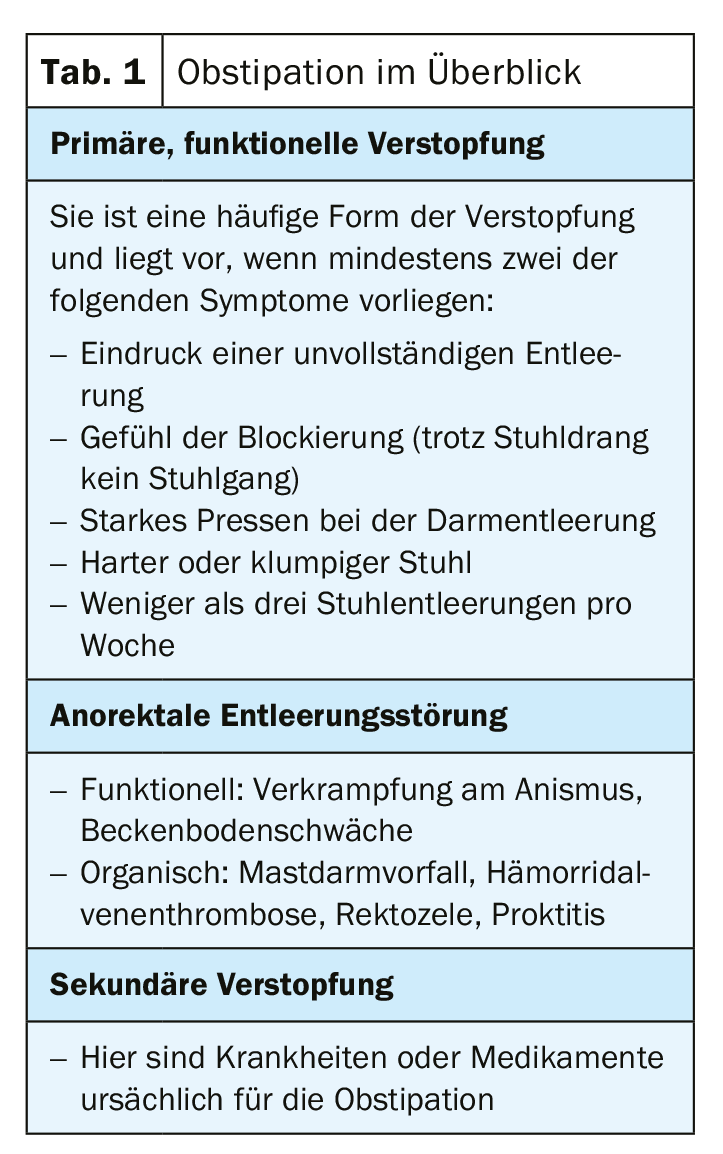
Experts believe that up to 60% of the population in our grades have suffered from constipation at one time or another. This is characterized by stool remaining in the intestine too long and/or stool consistency too high, stool volume too low, and problems with settling. While the frequency of voiding varies from person to person and can range from three times a day to every two or three days. In total, however, the bowel should be emptied three times a week. Constipation can occur acutely, e.g. during travel or hormonal changes, as well as chronically (Tab. 1). An adequate intake of dietary fiber and fluid, as well as regular exercise, can prevent such dysfunction.


Patients often treat the symptoms themselves using over-the-counter laxatives. However, there is a risk that the intestine will react counterproductively over time and that a potassium deficiency will also result. This can trigger a veritable vicious circle. Laxatives come in a variety of preparations. The most common side effects include intestinal cramps and diarrhea.

Osmotic laxatives: (polyethylene glycol) by binding water to the molecular structure increases the amount of stool and stimulates intestinal motility. In addition, the stool acquires a more fluid texture and is easier to excrete. Due to its well-documented efficacy and tolerability, macrogols are primarily administered in pediatrics. These are also available without added electrolytes.

Saline laxatives: (magnesium sulfate, sodium sulfate) should not be used in renal or cardiac insufficiency, hypertension or edema.

Stimulant laxatives: (bisacodyl, sodium picosulfate, sennosides) assisted the passage of water and salts into the intestine, but increase the risk of hypokalemia.

Prucalopride: increases movement of the colon, accelerates intestinal transit and promotes bowel emptying. It is used for chronic constipation when other preparations do not respond.

When is a lot too much?

When stool frequency is greatly increased, at least three unformed stools are passed within 24 hours, they are mushy or thin, and stool weight is increased, the condition is called diarrhea. This is often accompanied by abdominal cramps or bloating. Viral or bacterial infections are often responsible for this. But stress, a food intolerance or the intake of antibioitka can also lead to diarrhea. If serious diseases such as Crohn’s disease or ulcerative colitis can be ruled out, fluid and electrolyte loss should be compensated for in the first instance. Oral rehydration solutions may be necessary for severe diarrhea, especially in infants, young children, and the elderly.

Antidiarrheal agents provide effective support to quickly and specifically manage the symptoms and prevent further loss of fluids and electrolytes.

Motility inhibitor: (loperamide) dampens intestinal peristalsis. The effect sets in quickly. However, there is a risk of constipation, and if the cause is infectious, pathogens are excreted with delay. Children under two years of age and pregnant women should not take the active substance. Similarly, it is contraindicated in antibiotic-induced diarrhea.

Adsorbents: (activated carbon) has a large surface area and high binding capacity for pathogens. Caution is advised when taking the drug at the same time as other medicines, as their effectiveness may be inhibited.

Enkephalinase inhibitor: (racecadotril) blocks the enzyme enkephalinase, counteracting excessive fluid and electrolyte output.

Medicinal yeast: (S. boulardii) binds germs and supports their removal from the intestine. In addition, the regeneration of the microbiome is strengthened without compromising motility.


HAUSARZT PRAXIS 2019; 14(8): 29

Autoren
  • Leoni Burggraf
Publikation
  • HAUSARZT PRAXIS
Related Topics
  • Constipation
  • Diarrhea
  • Diarrhea
  • indigestion
  • laxative
Previous Article
  • Inflammatory systemic diseases

Juvenile dermatomyositis – Current management recommendations.

  • Dermatology and venereology
  • Education
  • Pediatrics
  • RX
View Post
Next Article
  • Bacterial meningitis

Central nervous system survival strategy of pneumococci identified.

  • Infectiology
  • Neurology
  • News
  • RX
  • Studies
View Post
You May Also Like
View Post
  • 14 min
  • Adrenogenital syndrome

Clinical care from birth to adulthood

    • CME continuing education
    • Endocrinology and Diabetology
    • Nephrology
    • Pediatrics
    • RX
    • Studies
View Post
  • 14 min
  • New approvals, current study data and ADC development

Antibody-drug conjugates in gynecologic oncology

    • Education
    • Gynecology
    • Oncology
    • RX
    • Studies
View Post
  • 5 min
  • From symptom to diagnosis

Pneumology – Covid-19: a review

    • Cases
    • Education
    • Infectiology
    • Pneumology
    • Prevention and health care
    • Radiology
    • RX
View Post
  • 6 min
  • Abdominal aortic aneurysms in primary care

Risk-stratified screening and prophylaxis

    • Angiology
    • Congress Reports
    • Prevention and health care
    • Radiology
    • RX
    • Studies
    • Surgery
View Post
  • 9 min
  • Cardiology

Minimally invasive – the quiet triumph of modern heart surgery

    • Cardiology
    • CME continuing education
    • RX
    • Studies
    • Surgery
View Post
  • 0 min
  • Plastic surgery and reconstructive microsurgery for DFS

Functional limb preservation between infection control, vascular medicine and resurfacing

    • Angiology
    • CME continuing education
    • Endocrinology and Diabetology
    • General Internal Medicine
    • Geriatrics
    • Physical medicine and rehabilitation
    • RX
    • Surgery
View Post
  • 6 min
  • Age-related neurocognitive disorders

Neuroprotective effects of Ginkgo biloba extract

    • Education
    • Geriatrics
    • Neurology
    • Pharmaceutical medicine
    • Phytotherapy
    • RX
    • Studies
View Post
  • 6 min
    • Education
    • Endocrinology and Diabetology
    • Pneumology
    • Psychiatry and psychotherapy
    • RX
    • Studies

How origin and place of residence promote CF-associated diabetes

  • IBD matters

    Zum Thema
Top CME content
  • 1
    Functional limb preservation between infection control, vascular medicine and resurfacing
  • 2
    Minimally invasive – the quiet triumph of modern heart surgery
  • 3
    HPV prevention, screening innovation and sentinel lymph node biopsy
  • 4
    Clinical care from birth to adulthood
  • 5
    Multidisciplinary teams in oncology

Newsletter

Sign up and stay up to date

Subscribe
Medizinonline Medizinonline
  • Contact
  • General terms and conditions
  • Imprint

Input your search keywords and press Enter.