Medizinonline Medizinonline
  • News
    • News
    • Market & Medicine
  • Patients
    • Disease patterns
    • Diagnostics
    • Therapy
  • Partner Content
    • Diabetes
      • Dia-Month Club – Type 2 Diabetes
      • Diabetes in Motion
      • Diabetes Podcasts
    • Gastroenterology
      • IBD matters
    • Oncology
      • Swiss Oncology in motion
    • Orthopedics
      • Osteoporosis in motion
  • Departments
    • Allergology and clinical immunology
    • General Internal Medicine
    • Anesthesiology
    • Angiology
    • Surgery
    • Dermatology and venereology
    • Endocrinology and Diabetology
    • Nutrition
    • Gastroenterology and Hepatology
    • Genetics
    • Geriatrics
    • Gynecology
    • Hematology
    • Infectiology
    • Cardiology
    • Nephrology
    • Neurology
    • Emergency and intensive care medicine
    • Nuclear Medicine
    • Oncology
    • Ophthalmology
    • ORL
    • Orthopedics
    • Pediatrics
    • Pharmacology and toxicology
    • Pharmaceutical medicine
    • Phlebology
    • Physical medicine and rehabilitation
    • Pneumology
    • Prevention and health care
    • Psychiatry and psychotherapy
    • Radiology
    • Forensic Medicine
    • Rheumatology
    • Sports Medicine
    • Traumatology and trauma surgery
    • Tropical and travel medicine
    • Urology
    • Dentistry
  • CME & Congresses
    • CME continuing education
    • Congress Reports
    • Congress calendar
  • Practice
    • Noctimed
    • Practice Management
    • Jobs
    • Interviews
  • Log In
  • Register
  • My account
  • Contact
  • Publications
  • Contact
  • Deutsch
  • English
  • Français
  • Italiano
  • Português
  • Español
Subscribe
Medizinonline Medizinonline
  • News
    • News
    • Market & Medicine
  • Patienten
    • Krankheitsbilder
    • Diagnostik
    • Therapie
  • Partner Content
    • Diabetes
      • Dia-Month Club – Type 2 Diabetes
      • Diabetes in Motion
      • Diabetes Podcasts
    • Gastroenterology
      • IBD matters
    • Oncology
      • Swiss Oncology in motion
    • Orthopedics
      • Osteoporosis in motion
    • Phytotherapie
    • Rheumatology
  • Departments
    • Fachbereiche 1-13
      • Allergology and clinical immunology
      • General Internal Medicine
      • Anesthesiology
      • Angiology
      • Surgery
      • Dermatology and venereology
      • Endocrinology and Diabetology
      • Nutrition
      • Gastroenterology and Hepatology
      • Genetics
      • Geriatrics
      • Gynecology
      • Hematology
    • Fachbereiche 14-26
      • Infectiology
      • Cardiology
      • Nephrology
      • Neurology
      • Emergency and intensive care medicine
      • Nuclear Medicine
      • Oncology
      • Ophthalmology
      • ORL
      • Orthopedics
      • Pediatrics
      • Pharmacology and toxicology
      • Pharmaceutical medicine
    • Fachbereiche 26-38
      • Phlebology
      • Physical medicine and rehabilitation
      • Phytotherapy
      • Pneumology
      • Prevention and health care
      • Psychiatry and psychotherapy
      • Radiology
      • Forensic Medicine
      • Rheumatology
      • Sports Medicine
      • Traumatology and trauma surgery
      • Tropical and travel medicine
      • Urology
      • Dentistry
  • CME & Congresses
    • CME continuing education
    • Congress Reports
    • Congress calendar
  • Practice
    • Noctimed
    • Practice Management
    • Jobs
    • Interviews
Login

Sie haben noch keinen Account? Registrieren

  • Rare skin diseases

Hyperkeratosis lenticularis perstans aka Flegel’s disease

    • Dermatology and venereology
    • Education
    • RX
    • Studies
  • 3 minute read

Flegel’s disease is a genodermatosis with manifestation in the second half of life. Topical topical preparations such as those containing urea or cortisone are currently used for therapy. To clarify the genetic cause of this rare dyskeratosis, a research team from Germany and Switzerland conducted a study using next-generation sequencing. The results of the analysis provide valuable insights for the development of new therapeutic approaches.

In 1958, the German dermatologist Heinz Flegel was the first to describe a new, rare skin disease characterized by multiple, asymptomatic, hyperkeratotic, reddish-brown flat papules on the extensor sides of the extremities, especially in the lower extremities and dorsum of the foot [1]. The clinical picture is called hyperkeratosis lenticularis perstans (HLP) or Flegel’s disease. Typically, the skin symptoms first appear in the fourth to fifth decade of life. Regarding etiology of HLP, there are still many open questions. A genetic cause has been suspected for some time, but so far no gene variants have been clearly attributed to HLP.

Case vignette
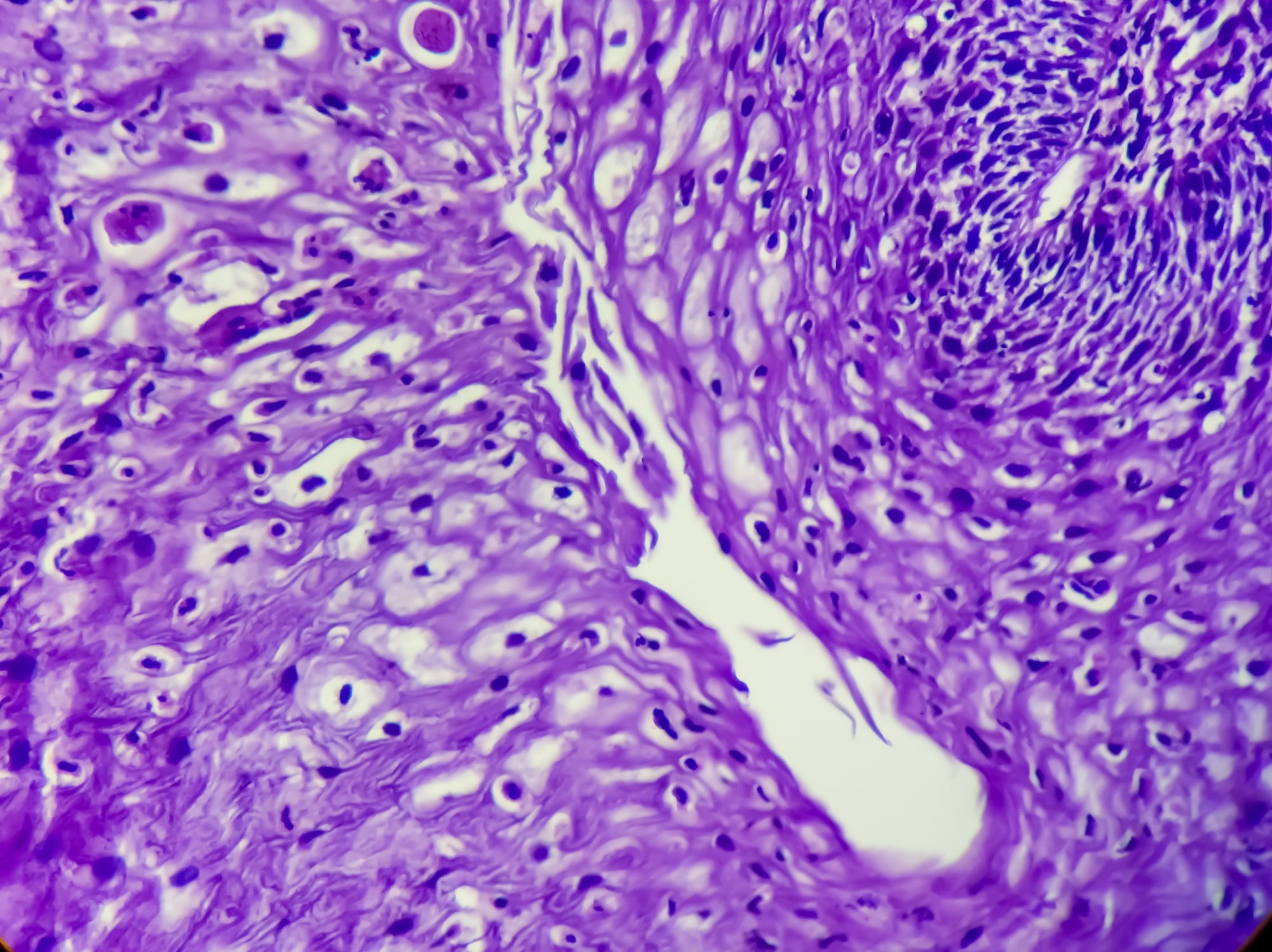
A 72-year-old Caucasian woman presented for multiple small, reddish and brownish, keratotic papules. The papules first appeared on the lower limbs and later spread to the upper limbs and trunk (Fig. 1A and B). There was no history of previous cutaneous or systemic disease, except for an in situ well-differentiated cutaneous squamous cell carcinoma of the leg that had been removed two years earlier. The dermoscopy findings are shown in Figure 2. Histopathology of a lesion on the trunk showed compact, thick lamellar hyperkeratosis with focal parakeratosis over the atrophic epidermis associated with a dense, lichenoid infiltrate of small lymphocytes in the superficial dermis with focal accentuation in the papillomatous areas. Immunohistochemical studies revealed a similar proportion of CD4 and CD8 T lymphocytes accompanied by sparse to absent CD20 cells. After clinicopathologic correlation, a final diagnosis of generalized hyperkeratosis lenticularis perstans (Flegel’s disease) was made.

“Loss-of-function” variants identified in the SPTLC1 gene.

To elucidate the genetic cause of HLP, researchers retrospectively analyzed EDTA** blood, skin biopsies, and formalin-fixed paraffin-embedded (FFPE) tissue from five patients using next-generation sequencing (NGS) [1,2]. Different rare heterozygous germline variants in the gene SPTLC1 (Serine Palmitoyltransferase Long Chain Base Subunit 1) could be identified in all patients. Interestingly, these loss-of-function variants were either small deletions or splice variants. Indeed, immunofluorescence staining of skin sections showed reduced SPTLC1 staining in HLP patients.

** Blood that has been unclotted with the chelating agent ethylenediaminetetraacetate (EDTA) for further examination in laboratory medicine.

In addition, there was evidence of a “second hit” in affected lesions in the form of a “loss of heterozygosity”. Based on these results, the study authors concluded that pathogenic germline variants in the SPTLC1 gene in combination with a “loss of heterozygosity” in lesional skin are responsible for the development of HLP. This likely results in a decrease in SPTLC1 protein – a key enzyme in sphingolipid biosynthesis – and subsequent disruption of the sphingolipid signaling pathway. The elucidation of the genetic causes of Flegel’s disease is an important basis for the development of new therapeutic approaches for this rare skin disease, according to the authors [1,2].

Literature:

  1. Jägle S, et al: Pathogenic variants in the SPTLC1 gene are causative for Flegel’s disease (hyperkeratosis lenticularis perstans). FV02/10th DDG Meeting, 26-29.04.2023
  2. Jägle S, et al: Pathogenic variants in the SPTLC1 gene cause hyperkeratosis lenticularis perstans. Br J Dermatol 2023; 188(1): 94-99.
  3. Stabile G, et al: Widespread and Long-Enduring Hyperkeratosis Lenticularis Perstans (Flegel’s Disease): Clinico-Pathological and Dermoscopic Features of a Rare Presentation. Dermatopathology 2023; 10(1): 46-51. www.mdpi.com/2296-3529/10/1/6,(last accessed Aug 18, 2023).

DERMATOLOGY PRACTICE 2023; 33(4): 40

Autoren
  • Mirjam Peter, M.Sc.
Publikation
  • DERMATOLOGIE PRAXIS
Related Topics
  • Cortisone
  • Dyskeratosis
  • genodermatosis
  • Hyperkeratosis lenticularis perstans
  • morbus flegel
  • Preparations
  • Rare skin diseases
  • topical externals
  • Urea
Previous Article
  • Attention Deficit Hyperactivity Disorder

Clarify and treat ADHD in the family doctor’s office

  • Congress Reports
  • General Internal Medicine
  • Neurology
  • Pediatrics
  • Pharmacology and toxicology
  • Psychiatry and psychotherapy
  • RX
View Post
Next Article
  • Malnutrition in old age

A problem underestimated for a long time

  • RX
  • CME continuing education
  • General Internal Medicine
  • Geriatrics
  • Nutrition
  • Prevention and health care
  • Studies
  • Unkategorisiert
View Post
You May Also Like
View Post
  • 5 min
  • Mental Health with GLP-1 RAs

Benefits of Semaglutide and Liraglutide

    • RX
    • Education
    • Endocrinology and Diabetology
    • General Internal Medicine
    • Nutrition
    • Psychiatry and psychotherapy
    • Studies
View Post
  • 4 min
  • Bronchiolitis obliterans

Out of shape even without popcorn

    • RX
    • Education
    • General Internal Medicine
    • Infectiology
    • Pediatrics
    • Pneumology
    • Studies
View Post
  • 8 min
  • Case study

Guillain-Barré syndrome with a fulminant course

    • RX
    • Cases
    • Education
    • Infectiology
    • Neurology
    • Pharmacology and toxicology
    • Radiology
    • Studies
View Post
  • 5 min
  • Suspicion of neuroborreliosis?

Detection of borrelia-specific CSF parameters provides certainty

    • RX
    • Congress Reports
    • Infectiology
    • Neurology
    • Studies
View Post
  • 12 min
  • The Brain and the Motivation to Eat

Why is it so hard to lose weight?

    • RX
    • CME continuing education
    • Endocrinology and Diabetology
    • General Internal Medicine
    • Nutrition
    • Pharmacology and toxicology
    • Prevention and health care
    • Psychiatry and psychotherapy
    • Studies
View Post
  • 12 min
  • Global Recommendation, Swissmedic Approval, and SL Limitation

WHO Guidelines on GLP-1 for Obesity

    • RX
    • Cardiology
    • Education
    • Endocrinology and Diabetology
    • General Internal Medicine
    • Nutrition
    • Pharmacology and toxicology
    • Prevention and health care
    • Studies
View Post
  • 7 min
  • Obesity in Children and Adolescents

Gene-Environment Interactions: Polygenic or Monogenic Determinants?

    • RX
    • Education
    • General Internal Medicine
    • Genetics
    • Nutrition
    • Pediatrics
View Post
  • 18 min
  • From Risk Identification to Anti-Inflammatory Intervention

Inflammation as a Treatment Goal in Its Own Right

    • RX
    • Angiology
    • Cardiology
    • CME continuing education
    • Endocrinology and Diabetology
    • General Internal Medicine
    • Nutrition
    • Studies
  • IBD matters

    Zum Thema
Top CME content
  • 1
    Inflammation as a Treatment Goal in Its Own Right
  • 2
    Personalized Treatment Before a Planned Pregnancy
  • 3
    Current State of Knowledge and New Therapeutic Approaches
  • 4
    Why is it so hard to lose weight?
  • 5
    Functional limb preservation between infection control, vascular medicine and resurfacing

Newsletter

Sign up and stay up to date

Subscribe
Medizinonline Medizinonline
  • Contact
  • General terms and conditions
  • Imprint

Input your search keywords and press Enter.