Medizinonline Medizinonline
  • News
    • News
    • Market & Medicine
  • Patients
    • Disease patterns
    • Diagnostics
    • Therapy
  • Partner Content
    • Diabetes
      • Dia-Month Club – Type 2 Diabetes
      • Diabetes in Motion
      • Diabetes Podcasts
    • Gastroenterology
      • IBD matters
    • Oncology
      • Swiss Oncology in motion
    • Orthopedics
      • Osteoporosis in motion
  • Departments
    • Allergology and clinical immunology
    • General Internal Medicine
    • Anesthesiology
    • Angiology
    • Surgery
    • Dermatology and venereology
    • Endocrinology and Diabetology
    • Nutrition
    • Gastroenterology and Hepatology
    • Genetics
    • Geriatrics
    • Gynecology
    • Hematology
    • Infectiology
    • Cardiology
    • Nephrology
    • Neurology
    • Emergency and intensive care medicine
    • Nuclear Medicine
    • Oncology
    • Ophthalmology
    • ORL
    • Orthopedics
    • Pediatrics
    • Pharmacology and toxicology
    • Pharmaceutical medicine
    • Phlebology
    • Physical medicine and rehabilitation
    • Pneumology
    • Prevention and health care
    • Psychiatry and psychotherapy
    • Radiology
    • Forensic Medicine
    • Rheumatology
    • Sports Medicine
    • Traumatology and trauma surgery
    • Tropical and travel medicine
    • Urology
    • Dentistry
  • CME & Congresses
    • CME continuing education
    • Congress Reports
    • Congress calendar
  • Practice
    • Noctimed
    • Practice Management
    • Jobs
    • Interviews
  • Log In
  • Register
  • My account
  • Contact
  • Publications
  • Contact
  • Deutsch
  • English
  • Français
  • Italiano
  • Português
  • Español
Subscribe
Medizinonline Medizinonline
  • News
    • News
    • Market & Medicine
  • Patienten
    • Krankheitsbilder
    • Diagnostik
    • Therapie
  • Partner Content
    • Diabetes
      • Dia-Month Club – Type 2 Diabetes
      • Diabetes in Motion
      • Diabetes Podcasts
    • Gastroenterology
      • IBD matters
    • Oncology
      • Swiss Oncology in motion
    • Orthopedics
      • Osteoporosis in motion
    • Phytotherapie
    • Rheumatology
  • Departments
    • Fachbereiche 1-13
      • Allergology and clinical immunology
      • General Internal Medicine
      • Anesthesiology
      • Angiology
      • Surgery
      • Dermatology and venereology
      • Endocrinology and Diabetology
      • Nutrition
      • Gastroenterology and Hepatology
      • Genetics
      • Geriatrics
      • Gynecology
      • Hematology
    • Fachbereiche 14-26
      • Infectiology
      • Cardiology
      • Nephrology
      • Neurology
      • Emergency and intensive care medicine
      • Nuclear Medicine
      • Oncology
      • Ophthalmology
      • ORL
      • Orthopedics
      • Pediatrics
      • Pharmacology and toxicology
      • Pharmaceutical medicine
    • Fachbereiche 26-38
      • Phlebology
      • Physical medicine and rehabilitation
      • Phytotherapy
      • Pneumology
      • Prevention and health care
      • Psychiatry and psychotherapy
      • Radiology
      • Forensic Medicine
      • Rheumatology
      • Sports Medicine
      • Traumatology and trauma surgery
      • Tropical and travel medicine
      • Urology
      • Dentistry
  • CME & Congresses
    • CME continuing education
    • Congress Reports
    • Congress calendar
  • Practice
    • Noctimed
    • Practice Management
    • Jobs
    • Interviews
Login

Sie haben noch keinen Account? Registrieren

  • Headache after traumatic brain injury

In one third of those affected, they remain forever

    • Neurology
    • RX
    • Studies
  • 3 minute read

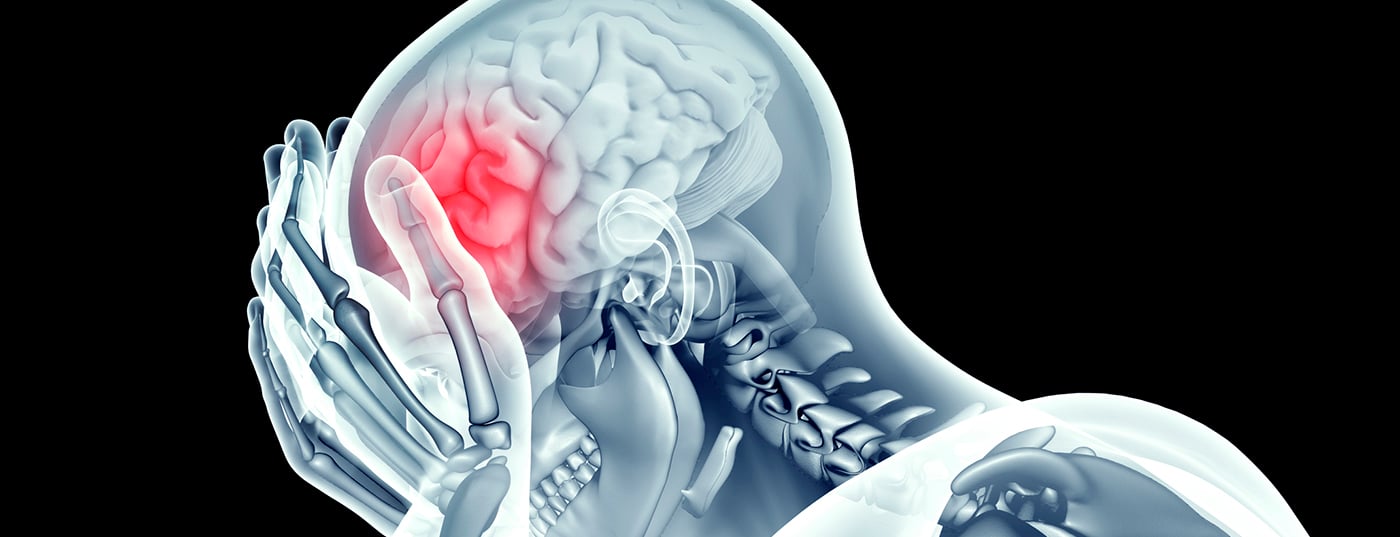
Every year, more than 400,000 people in Germany suffer a traumatic brain injury, which can range from a mild concussion to fractures of the skull bone. The most common symptom of traumatic brain injury is headache – and it doesn’t always go away after the acute injury phase. In up to one third of those affected, the headaches become chronic, i.e. they persist for months or even years after the accident. The causes of this are only gradually being understood.

The fact that people who have suffered an impact on the head develop acute headaches is often considered a normal and temporary phenomenon, even by doctors. Often, therefore, targeted treatment only kicks in when the pain does not go away even after a few weeks – by definition, a post-traumatic headache is considered chronic if it persists for more than three months. “However, this significantly underestimates the problem,” says PD Dr. med. Torsten Kraya, head physician at the Clinic for Neurology at Klinikum St. Georg in Leipzig and congress president of the German Pain Congress 2022. Today, it is assumed that the course for the later development of headache symptoms is already set in the acute phase after the traumatic brain injury.

But how do headaches develop in the first place? Visible tissue injuries, such as bleeding or fractures, are often not present in mild traumatic brain injury. Nevertheless, the shock to which the brain is subjected has far-reaching consequences: As recent research shows, the permeability of nerve cell membranes changes abruptly under mechanical stress, resulting in a whole cascade of changes in ionic currents, signaling substances, neuronal activity, cell metabolism, and regional blood flows in the brain. The release of pro-inflammatory substances also appears to play a role in the development of pain. “These acute changes return to normal within a few days or weeks,” Kraya says. It is still not fully understood why pain persists in some people. Presumably, permanent changes in pain perception, the body’s own pain-inhibiting systems, and a dysbalance of the autonomic nervous system, which controls heart rate, respiratory rate, and blood flow, among other things, played a role here. This could also be the cause of many other complaints that can occur after a traumatic brain injury, such as sleep disorders, depression or anxiety disorders. 

A post-traumatic headache of the migraine type is often treated with triptans, while tension headaches are more likely to be treated with aspirin, paracetamol or ibuprofen. Often there are also mixed forms. However, in addition to the choice of medication, the timing of treatment also appears to be critical. “Once the pain takes on a life of its own, it’s very difficult to manage,” Kraya says. Therefore, the tendency today is to take countermeasures with medication as early as possible – especially in patients who have risk factors for chronic pain. These include a pre-existing tendency to headache, younger age, female gender, and migraine-type headache. “Studies also indicate that moderate physical and mental activation is useful as early as 24 or 48 hours after the accident, in part to avoid practicing restraint behaviors and chronicity of pain,” Kraya says. Persons with an increased risk of chronicity should therefore ideally be treated with a multimodal therapy approach, which, in addition to early pain therapy, also includes behavioral therapy elements and, under certain circumstances, targeted activation through physiotherapy.


Original publication:

https://www.ncbi.nlm.nih.gov/pmc/articles/PMC8203551/ 

Previous Article
  • Interventional therapy methods

Focus on functional mitral valve regurgitation

  • Cardiology
  • Congress Reports
  • RX
  • Studies
  • Surgery
View Post
Next Article
  • Immunoadsorption (IA)

Advantages over methylprednisolone in MS patients

  • Neurology
  • RX
  • Studies
View Post
You May Also Like
View Post
  • 5 min
  • Ulcerative colitis: current evidence on anti-inflammatory therapies

Remission induction and maintenance with biologics and JAK-i

    • RX
    • Congress Reports
    • Gastroenterology and Hepatology
    • General Internal Medicine
    • Studies
View Post
  • 4 min
  • Bronchiectasis

New strategies against neutrophilic inflammation

    • RX
    • Congress Reports
    • General Internal Medicine
    • Infectiology
    • Pneumology
    • Studies
View Post
  • 3 min
  • IBD in childhood

Pneumococcal vaccination without negative consequences

    • RX
    • Education
    • Gastroenterology and Hepatology
    • General Internal Medicine
    • Infectiology
    • Pediatrics
    • Prevention and health care
View Post
  • 14 min
  • Seborrheic Dermatitis in Adults and Adolescents

Current State of Knowledge and New Therapeutic Approaches

    • RX
    • CME continuing education
    • Dermatology and venereology
    • Studies
View Post
  • 7 min
  • Plastic surgery and reconstructive microsurgery for DFS

Functional limb preservation between infection control, vascular medicine and resurfacing

    • RX
    • Angiology
    • CME continuing education
    • Dermatology and venereology
    • Endocrinology and Diabetology
    • General Internal Medicine
    • Geriatrics
    • Physical medicine and rehabilitation
    • Surgery
View Post
  • 7 min
  • Orthobiologics for knee osteoarthritis

PRP and hyaluronic acid injections as building blocks in a multimodal concept

    • RX
    • Congress Reports
    • General Internal Medicine
    • Orthopedics
    • Rheumatology
    • Sports Medicine
    • Studies
    • Surgery
View Post
  • 3 min
  • Soft tissue sarcomas of the lower extremity

Diagnostics, subtypes and treatment options

    • RX
    • Education
    • Oncology
View Post
  • 38 min
  • Psychological dependence on AI assistants, smartphones and short videos

Algorithms, avatars and the unburdened mind

    • RX
    • CME continuing education
    • Neurology
    • Pediatrics
    • Prevention and health care
    • Psychiatry and psychotherapy
    • Studies
  • IBD matters

    Zum Thema
Top CME content
  • 1
    Current State of Knowledge and New Therapeutic Approaches
  • 2
    Why is it so hard to lose weight?
  • 3
    Functional limb preservation between infection control, vascular medicine and resurfacing
  • 4
    Algorithms, avatars and the unburdened mind
  • 5
    Communication as the key to therapy adherence

Newsletter

Sign up and stay up to date

Subscribe
Medizinonline Medizinonline
  • Contact
  • General terms and conditions
  • Imprint

Input your search keywords and press Enter.