Medizinonline Medizinonline
  • News
    • News
    • Market & Medicine
  • Patients
    • Disease patterns
    • Diagnostics
    • Therapy
  • Partner Content
    • Diabetes
      • Dia-Month Club – Type 2 Diabetes
      • Diabetes in Motion
      • Diabetes Podcasts
    • Gastroenterology
      • IBD matters
    • Oncology
      • Swiss Oncology in motion
    • Orthopedics
      • Osteoporosis in motion
  • Departments
    • Allergology and clinical immunology
    • General Internal Medicine
    • Anesthesiology
    • Angiology
    • Surgery
    • Dermatology and venereology
    • Endocrinology and Diabetology
    • Nutrition
    • Gastroenterology and Hepatology
    • Genetics
    • Geriatrics
    • Gynecology
    • Hematology
    • Infectiology
    • Cardiology
    • Nephrology
    • Neurology
    • Emergency and intensive care medicine
    • Nuclear Medicine
    • Oncology
    • Ophthalmology
    • ORL
    • Orthopedics
    • Pediatrics
    • Pharmacology and toxicology
    • Pharmaceutical medicine
    • Phlebology
    • Physical medicine and rehabilitation
    • Pneumology
    • Prevention and health care
    • Psychiatry and psychotherapy
    • Radiology
    • Forensic Medicine
    • Rheumatology
    • Sports Medicine
    • Traumatology and trauma surgery
    • Tropical and travel medicine
    • Urology
    • Dentistry
  • CME & Congresses
    • CME continuing education
    • Congress Reports
    • Congress calendar
  • Practice
    • Noctimed
    • Practice Management
    • Jobs
    • Interviews
  • Log In
  • Register
  • My account
  • Contact
  • Publications
  • Contact
  • Deutsch
  • English
  • Français
  • Italiano
  • Português
  • Español
Subscribe
Medizinonline Medizinonline
  • News
    • News
    • Market & Medicine
  • Patienten
    • Krankheitsbilder
    • Diagnostik
    • Therapie
  • Partner Content
    • Diabetes
      • Dia-Month Club – Type 2 Diabetes
      • Diabetes in Motion
      • Diabetes Podcasts
    • Gastroenterology
      • IBD matters
    • Oncology
      • Swiss Oncology in motion
    • Orthopedics
      • Osteoporosis in motion
    • Phytotherapie
    • Rheumatology
  • Departments
    • Fachbereiche 1-13
      • Allergology and clinical immunology
      • General Internal Medicine
      • Anesthesiology
      • Angiology
      • Surgery
      • Dermatology and venereology
      • Endocrinology and Diabetology
      • Nutrition
      • Gastroenterology and Hepatology
      • Genetics
      • Geriatrics
      • Gynecology
      • Hematology
    • Fachbereiche 14-26
      • Infectiology
      • Cardiology
      • Nephrology
      • Neurology
      • Emergency and intensive care medicine
      • Nuclear Medicine
      • Oncology
      • Ophthalmology
      • ORL
      • Orthopedics
      • Pediatrics
      • Pharmacology and toxicology
      • Pharmaceutical medicine
    • Fachbereiche 26-38
      • Phlebology
      • Physical medicine and rehabilitation
      • Phytotherapy
      • Pneumology
      • Prevention and health care
      • Psychiatry and psychotherapy
      • Radiology
      • Forensic Medicine
      • Rheumatology
      • Sports Medicine
      • Traumatology and trauma surgery
      • Tropical and travel medicine
      • Urology
      • Dentistry
  • CME & Congresses
    • CME continuing education
    • Congress Reports
    • Congress calendar
  • Practice
    • Noctimed
    • Practice Management
    • Jobs
    • Interviews
Login

Sie haben noch keinen Account? Registrieren

  • Psoriasis

Inclusion of comorbidities for long-term treatment success

    • Dermatology and venereology
    • Education
    • RX
    • Studies
  • 3 minute read

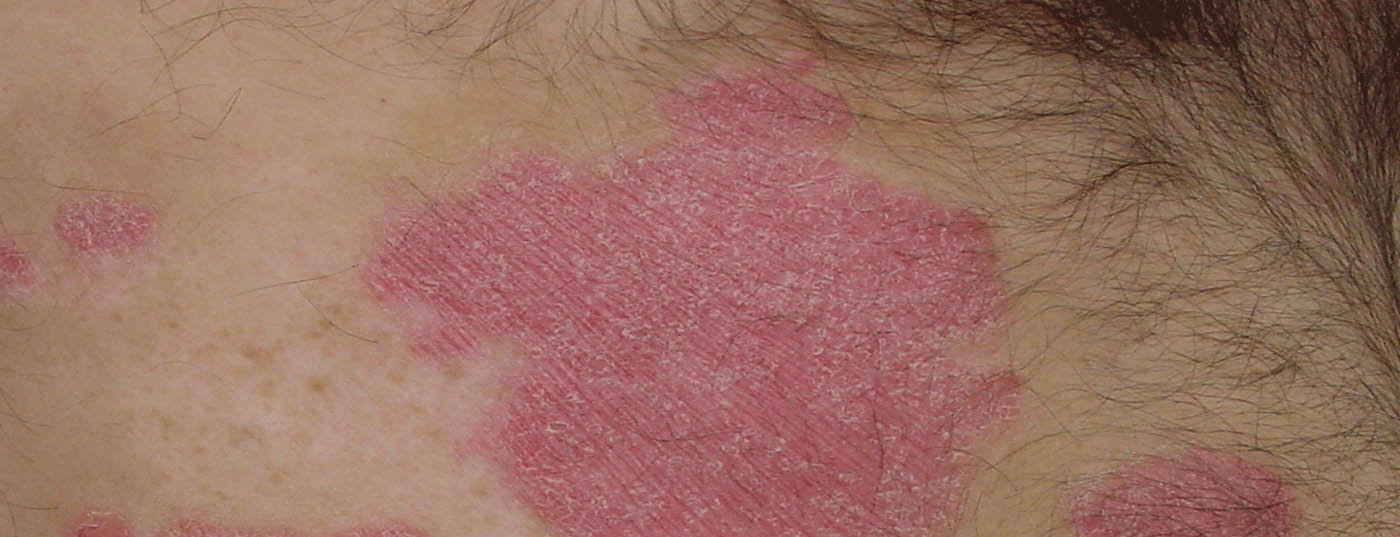
Psoriatics are often affected not only by skin manifestations, but also suffer from one or more concomitant diseases. This should be taken into account in the context of individualized therapy concepts. What this means in concrete terms is the subject of various current studies.

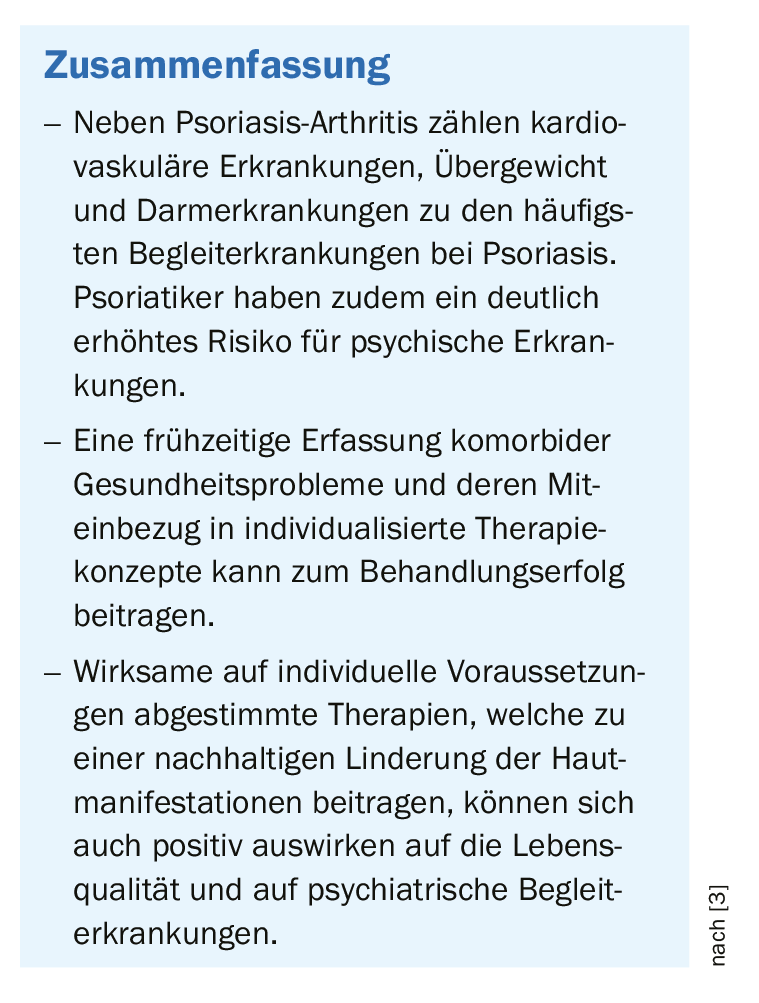
Personalized medicine comprises diagnostic, preventive and therapeutic measures that are optimally tailored to an individual [1]. This approach is playing an increasingly important role in modern disease management of systemic diseases such as psoriasis. 25 to 30 percent of patients develop psoriatic arthritis (PsA) [2]. In addition, psoriasis is associated with an increased risk of cardiovascular and metabolic disease, inflammatory bowel disease, liver and kidney disease, and mental illness, among others [3].

Implications for treatment with biologics

It is important that comorbidities are recorded and that therapy reduces both skin manifestations and concomitant diseases whenever possible. The life expectancy of psoriasis sufferers is reduced due to a variety of factors, with cardiovascular disease being one of the most common causes of mortality [3]. The question of what implications comorbidities have on systemic therapy with biologics is becoming increasingly important. Professor Alice Gottlieb, Icahn School of Medicine, New York, presented results of a post-hoc analysis at the EADV 2019 meeting [4]. The data set was based on four phase III RCTs of a total of 2401 patients treated with either the IL17 inhibitor secukinumab (150 or 300 mg) or the TNF-α inhibitor etanercept (50 mg) over a 12-week period. Outcomes related to efficacy and safety were stratified with respect to presence or absence of baseline comorbidities. 61% of patients were overweight (BMI ≥ 30 kg/m2), 37% suffered from hypertension, and 18% had psoriatic arthritis. There were no significant differences in efficacy and safety between patients with vs. without comorbidities. Secukinumab resulted in greater improvement in symptoms and tolerability was also good in those with comorbidities at baseline. Up to a body weight of 90 kg, the response to therapy was unaffected.


Meta-analysis on long-term effects

A meta-analysis published in JEADV in 2019 compared outcomes of different randomized-controlled trials (RCTs) in terms of effects at 52 weeks [5]. RCTs were included that recorded PASI 75, PASI 90, and PASI 100 as outcomes. In an initial analysis, brodalumab was found to be most effective, followed by secukinumab, ustekinumab, and etanercept. In a second analysis, which included additional studies and agents (adalimumab, apremilast, infliximab and ixekizumab), these results were confirmed: Brodalumab showed the best results, followed by ixekizumab and secukinumab, which proved superior to ustekinumab, infliximab and adalimumab. Etanercept and apremilast had the smallest long-term effects in this analysis. As the evidence base of RCTs with evidence of efficacy over a 52-week period is currently still relatively small, especially for the newer biologics, the second analysis is based on extrapolated values based on the treatment results of the induction phase.

Take the psychosocial dimension into account

Effective therapies can lead not only to a reduction in skin manifestations, but also to an improvement in overall quality of life and psychiatric symptoms. However, the psychosocial impact does not always correlate with the objective severity of the disease, so it is important to include the subjective component as well. Major modifiable risk factors that contribute to worsening symptoms include cigarette smoking and excessive alcohol consumption. Psychological impairment is common in psoriasis patients. A Danish population-based case-control study published in 2019 found that 4.9% developed mental illness over a 10-year period, and psoriatics had a 75% higher risk of mental illness [6]. For these patients in particular, accompanying psychosocial therapy is an important aspect. A recent study addresses the issue of motivation to use specific psychosocial interventions in individuals affected by psoriasis. The research project PITSCH “Development of an instrument to assess therapy motivation for psychosocial interventions in people with visible chronic skin diseases” led by Dr. Rachel Sommer from the University of Hamburg was awarded by the German Dermatological Society (DDG) [7].


Literature:

  1. Federal Office of Public Health (FOPH): Biomedical Research and Technology. Personalized Medicine, www.bag.admin.ch, last accessed 18.05.2020
  2. Gensthaler BM: Psoriasis: symptom control as a therapeutic goal, Pharamazeutische Zeitung, May 27, 2019, www.pharmazeutische-zeitung.de/symptomkontrolle-als-therapieziel, last accessed May 18, 2020.
  3. Kovitwanichkanont T, et al: Beyond skin deep: addressing comorbidities in psoriasis. Med J Aust. 2020 May 10. doi: 10.5694/mja2.50591. [Epub ahead of print].
  4. International Psoriasis Council (IPC): www.psoriasiscouncil.org/2019_eadv_congress_report.htm#, last accessed 05/18/2020.
  5. Sawyer LM, et al: Long-term efficacy of novel therapies in moderate-to-severe plaque psoriasis: a systematic review and network meta-analysis of PASI response. JEADV 2019;33: 355-366
  6. Leisner MZ, et al: Psoriasis and Risk of Mental Disorders in Denmark. JAMA Dermatol 2019; 155(6): 745-747.
  7. Deutscher Psoriasisbund e.V.: www.psoriasis-bund.de/aktuelles, last accessed 18.05.2020


DERMATOLOGY PRACTICE 2020; 30(3): 24

Autoren
  • Mirjam Peter, M.Sc.
Publikation
  • DERMATOLOGIE PRAXIS
Related Topics
  • Psoriasis
  • Psoriasis
Previous Article
  • Lumbar back pain

Note “Yellow Flags” and “Red Flags”!

  • Education
  • General Internal Medicine
  • Neurology
  • Orthopedics
  • Physical medicine and rehabilitation
  • Prevention and health care
  • RX
  • Studies
View Post
Next Article
  • Narcolepsy

Always sleepy

  • Education
  • Neurology
  • RX
View Post
You May Also Like
View Post
  • 4 min
  • Acute otitis media: self-limiting course vs. "red flags"

In which cases are antibiotics necessary?

    • Congress Reports
    • General Internal Medicine
    • Infectiology
    • ORL
    • Pediatrics
    • RX
View Post
  • 6 min
  • Prurigo nodularis: evidence-based treatment

Targeted therapy options on the rise

    • Allergology and clinical immunology
    • Dermatology and venereology
    • Education
    • Pharmacology and toxicology
    • RX
    • Studies
View Post
  • 13 min
  • MACE risk, heart failure incidence and all-cause mortality

Metabolic syndrome as a cardiovascular risk factor

    • Cardiology
    • Education
    • Endocrinology and Diabetology
    • General Internal Medicine
    • RX
    • Studies
View Post
  • 9 min
  • Glaucoma in old age: slowing down progression

IOP lowering is currently the only evidence-based treatment

    • Education
    • General Internal Medicine
    • Ophthalmology
    • Prevention and health care
    • RX
    • Studies
View Post
  • 7 min
  • Vector-borne infections with skin manifestations

Arboviruses and leishmaniasis in Europe

    • Congress Reports
    • Infectiology
    • Prevention and health care
    • RX
    • Studies
    • Tropical and travel medicine
View Post
  • 6 min
  • Multimorbidity and functional capacity in old age

Clarify individual health status and reduce risks

    • Congress Reports
    • General Internal Medicine
    • Geriatrics
    • Neurology
    • Orthopedics
    • Physical medicine and rehabilitation
    • Prevention and health care
    • Rheumatology
    • RX
View Post
  • 6 min
  • Tick season: danger from early summer meningoencephalitis

TBE vaccination recommended for adults and children aged 3 and over

    • Education
    • Infectiology
    • Neurology
    • Prevention and health care
    • RX
    • Studies
View Post
  • 13 min
  • New WHO guideline, updated stimulation protocols, focus on PGT-A

Fertility and reproductive medicine 2026

    • Education
    • Gynecology
    • RX
    • Studies
  • IBD matters

    Zum Thema
Top CME content
  • 1
    Do special amino acids lead to success?
  • 2
    Current status of PAT
  • 3
    Surgical wound complications
  • 4
    Do special amino acids lead to success?
  • 5
    Functional limb preservation between infection control, vascular medicine and resurfacing

Newsletter

Sign up and stay up to date

Subscribe
Medizinonline Medizinonline
  • Contact
  • General terms and conditions
  • Imprint

Input your search keywords and press Enter.