Medizinonline Medizinonline
  • News
    • News
    • Market & Medicine
  • Patients
    • Disease patterns
    • Diagnostics
    • Therapy
  • Partner Content
    • Dermatology
      • Atopic dermatitis and psoriasis news
    • Diabetes
      • Dia-Month Club – Type 2 Diabetes
      • Diabetes in Motion
      • Diabetes Podcasts
    • Gastroenterology
      • IBD matters
    • Oncology
      • Swiss Oncology in motion
    • Orthopedics
      • Osteoporosis in motion
  • Departments
    • Allergology and clinical immunology
    • General Internal Medicine
    • Anesthesiology
    • Angiology
    • Surgery
    • Dermatology and venereology
    • Endocrinology and Diabetology
    • Nutrition
    • Gastroenterology and Hepatology
    • Genetics
    • Geriatrics
    • Gynecology
    • Hematology
    • Infectiology
    • Cardiology
    • Nephrology
    • Neurology
    • Emergency and intensive care medicine
    • Nuclear Medicine
    • Oncology
    • Ophthalmology
    • ORL
    • Orthopedics
    • Pediatrics
    • Pharmacology and toxicology
    • Pharmaceutical medicine
    • Phlebology
    • Physical medicine and rehabilitation
    • Pneumology
    • Prevention and health care
    • Psychiatry and psychotherapy
    • Radiology
    • Forensic Medicine
    • Rheumatology
    • Sports Medicine
    • Traumatology and trauma surgery
    • Tropical and travel medicine
    • Urology
    • Dentistry
  • CME & Congresses
    • CME continuing education
    • Congress Reports
    • Congress calendar
  • Practice
    • Noctimed
    • Practice Management
    • Jobs
    • Interviews
  • Log In
  • Register
  • My account
  • Contact
  • Publications
  • Contact
  • Deutsch
  • English
  • Français
  • Italiano
  • Português
  • Español
Subscribe
Medizinonline Medizinonline
  • News
    • News
    • Market & Medicine
  • Patienten
    • Krankheitsbilder
    • Diagnostik
    • Therapie
  • Partner Content
    • Dermatology
      • Atopic dermatitis and psoriasis news
    • Diabetes
      • Dia-Month Club – Type 2 Diabetes
      • Diabetes in Motion
      • Diabetes Podcasts
    • Gastroenterology
      • IBD matters
    • Oncology
      • Swiss Oncology in motion
    • Orthopedics
      • Osteoporosis in motion
    • Phytotherapie
    • Rheumatology
  • Departments
    • Fachbereiche 1-13
      • Allergology and clinical immunology
      • General Internal Medicine
      • Anesthesiology
      • Angiology
      • Surgery
      • Dermatology and venereology
      • Endocrinology and Diabetology
      • Nutrition
      • Gastroenterology and Hepatology
      • Genetics
      • Geriatrics
      • Gynecology
      • Hematology
    • Fachbereiche 14-26
      • Infectiology
      • Cardiology
      • Nephrology
      • Neurology
      • Emergency and intensive care medicine
      • Nuclear Medicine
      • Oncology
      • Ophthalmology
      • ORL
      • Orthopedics
      • Pediatrics
      • Pharmacology and toxicology
      • Pharmaceutical medicine
    • Fachbereiche 26-38
      • Phlebology
      • Physical medicine and rehabilitation
      • Phytotherapy
      • Pneumology
      • Prevention and health care
      • Psychiatry and psychotherapy
      • Radiology
      • Forensic Medicine
      • Rheumatology
      • Sports Medicine
      • Traumatology and trauma surgery
      • Tropical and travel medicine
      • Urology
      • Dentistry
  • CME & Congresses
    • CME continuing education
    • Congress Reports
    • Congress calendar
  • Practice
    • Noctimed
    • Practice Management
    • Jobs
    • Interviews
Login

Sie haben noch keinen Account? Registrieren

  • 9th Lucerne Trend Days Health

Market control in health care

    • Congress Reports
    • Prevention and health care
    • RX
  • 2 minute read

At this year’s Lucerne “Trend Days Health”, Prof. Dr. Stefan Felder, Basel, raised the question of whether it really makes sense to regard market control as one of the most important factors in healthcare. Above all, he pointed to the manifold tensions arising from the unfortunate combination of free-market and planned economy considerations.

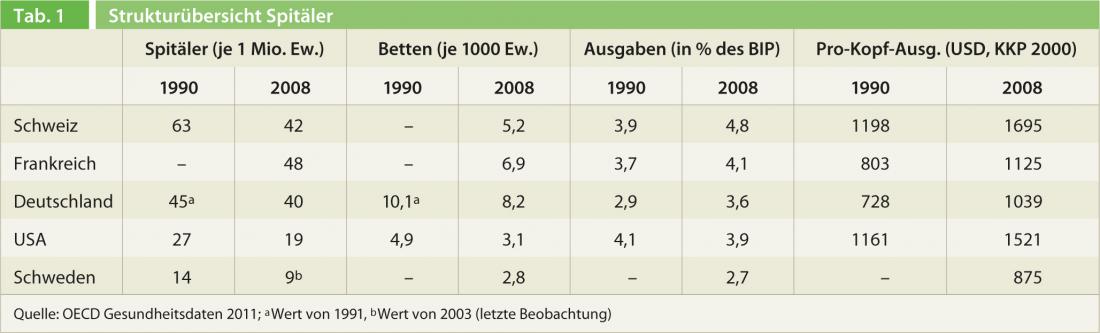
It is questionable whether the state even knows the supply that is needed and, whether it can estimate what supply the market would produce. Therefore, government regulations must always be critically scrutinized and must be examined for the time being. The fact is that the hospitals here are expensive. In 2008, they generated significantly more costs in terms of GDP than their foreign counterparts, for example in France, Germany, the USA or Sweden (table 1). The flat rates per case also show high values. Compared to Germany, people in Switzerland paid well over twice as much for stomach surgery or heart valve surgery in 2010.

The basic ideas for the new hospital financing are therefore financing via flat rates per case, subject instead of object financing, but above all strengthening competition. In the future, insured persons will have greater freedom of choice and there will be more transparency with regard to efficiency and quality. Last but not least, it seems reasonable to put public and private hospitals on an equal footing.

Structural adjustments, such as optimizing treatment processes, increasing efficiency and reducing overcapacity, would also have to take place, according to Prof. Dr. Sefan Felder, Professor of Health Economics at the University of Basel.
 

Regulation vs. competition

The question remains whether the new hospital financing can be better organized via prices (market economy) or via volumes (planned economy). Prof. Felder emphasized that tensions arise from these two poles: The revision of the Health Insurance Act (KVG revision), for example, introduced Diagnosis-Related Groups (DRGs), which means that prices are the starting point. At the same time, it requires the cantons to plan hospitals to prevent underuse. This planning mandate not only runs counter to the market-based steering effect of DRGs, but also leaves some room for interpretation, which is interpreted differently by the cantons. In addition to additional criteria for listed hospitals, the partly arbitrary awarding of service contracts, quantity limits or the restriction of the share of supplementary insureds, open and hidden subsidies as well as support funds for public hospitals fall into this area. Overall, this restricts competition.

More competition instead of a planned economy

According to Prof. Felder, however, the solution lies precisely in increased competition, not only in the hospital sector, but also with regard to the licensing of physicians. In principle, no restrictions on freedom of contract, purpose of acquisition, or antitrust laws should apply in any area. Financing should come from a single source, and the multiple roles of the cantons should be clarified and unbundled, Prof. Felder concluded.

Source: “Market control as the most important factor in health care?” 9th Trend Days Health Lucerne, February 27-28, 2013.


Autoren
  • Andreas Grossmann
Publikation
  • HAUSARZT PRAXIS
Related Topics
  • Competition
  • Flat rates per case
  • Healthcare
  • Hospital financing
  • Lucerne TRendtage Health
  • Market control
Previous Article
  • Rheumatoid arthritis

How do current research findings influence future RA therapy?

  • Congress Reports
  • Rheumatology
  • RX
View Post
Next Article
  • Pain management in RA and OA

The psychosocial component should not be underestimated

  • Congress Reports
  • Rheumatology
  • RX
View Post
You May Also Like
View Post
  • 4 min
  • Study report

Sphingolipid profile in early-stage primary biliary cholangitis

    • Education
    • Gastroenterology and Hepatology
    • General Internal Medicine
    • RX
    • Studies
View Post
  • 6 min
  • Angiosarcoma of the heart

A diagnostic and therapeutic “black box”

    • Cardiology
    • Education
    • Oncology
    • Radiology
    • RX
    • Studies
View Post
  • 5 min
  • Ataxias

Friedreich’s ataxia: when the energy metabolism attacks the nervous system

    • Education
    • Genetics
    • Neurology
    • RX
    • Studies
View Post
  • 3 min
  • Risk of osteoporosis in autoimmune liver diseases

Always determine bone density in PBC, PSC and AIH

    • Education
    • Gastroenterology and Hepatology
    • General Internal Medicine
    • Orthopedics
    • RX
    • Studies
View Post
  • 3 min
  • Case report: Complication after type 2 diabetes

Topical corticosteroids lead to ketoacidosis

    • Cases
    • Education
    • Endocrinology and Diabetology
    • Ophthalmology
    • RX
View Post
  • 12 min
  • NSCLC

Bispecific antibodies for rare EGFR mutations

    • Education
    • Oncology
    • Pneumology
    • RX
    • Studies
View Post
  • 6 min
  • Type 2 diabetes - glycemic control and prevention of secondary diseases

Utilizing pleiotropic cardio- and nephroprotective effects of SGLT-2-i and GLP-1-RA

    • Cardiology
    • Congress Reports
    • Endocrinology and Diabetology
    • Nephrology
    • RX
    • Studies
View Post
  • 6 min
  • Subsyndromal anxiety disorders: Family doctor as first point of contact

Practical recommendations for diagnostics and therapy

    • Education
    • General Internal Medicine
    • Pharmacology and toxicology
    • Phytotherapy
    • Psychiatry and psychotherapy
    • RX
    • Studies
Banner Landingpage Kurzfachinfo
  • IBD matters

    Zum Thema
Top CME content
  • 1
    Interplay between cancer and mental illness
  • 2
    Can you swallow intelligence? Relevant substance classes times for healthy people
  • 3
    PH and lung diseases
  • 4
    Causes and prevention at work
  • 5
    Clinical care from birth to adulthood

Newsletter

Sign up and stay up to date

Subscribe
Medizinonline Medizinonline
  • Contact
  • General terms and conditions
  • Imprint

Input your search keywords and press Enter.