Medizinonline Medizinonline
  • News
    • News
    • Market & Medicine
  • Patients
    • Disease patterns
    • Diagnostics
    • Therapy
  • Partner Content
    • Dermatology
      • Atopic dermatitis and psoriasis news
    • Diabetes
      • Dia-Month Club – Type 2 Diabetes
      • Diabetes in Motion
      • Diabetes Podcasts
    • Gastroenterology
      • IBD matters
    • Oncology
      • Swiss Oncology in motion
    • Orthopedics
      • Osteoporosis in motion
  • Departments
    • Allergology and clinical immunology
    • General Internal Medicine
    • Anesthesiology
    • Angiology
    • Surgery
    • Dermatology and venereology
    • Endocrinology and Diabetology
    • Nutrition
    • Gastroenterology and Hepatology
    • Genetics
    • Geriatrics
    • Gynecology
    • Hematology
    • Infectiology
    • Cardiology
    • Nephrology
    • Neurology
    • Emergency and intensive care medicine
    • Nuclear Medicine
    • Oncology
    • Ophthalmology
    • ORL
    • Orthopedics
    • Pediatrics
    • Pharmacology and toxicology
    • Pharmaceutical medicine
    • Phlebology
    • Physical medicine and rehabilitation
    • Pneumology
    • Prevention and health care
    • Psychiatry and psychotherapy
    • Radiology
    • Forensic Medicine
    • Rheumatology
    • Sports Medicine
    • Traumatology and trauma surgery
    • Tropical and travel medicine
    • Urology
    • Dentistry
  • CME & Congresses
    • CME continuing education
    • Congress Reports
    • Congress calendar
  • Practice
    • Noctimed
    • Practice Management
    • Jobs
    • Interviews
  • Log In
  • Register
  • My account
  • Contact
  • Publications
  • Contact
  • Deutsch
  • English
  • Français
  • Italiano
  • Português
  • Español
Subscribe
Medizinonline Medizinonline
  • News
    • News
    • Market & Medicine
  • Patienten
    • Krankheitsbilder
    • Diagnostik
    • Therapie
  • Partner Content
    • Dermatology
      • Atopic dermatitis and psoriasis news
    • Diabetes
      • Dia-Month Club – Type 2 Diabetes
      • Diabetes in Motion
      • Diabetes Podcasts
    • Gastroenterology
      • IBD matters
    • Oncology
      • Swiss Oncology in motion
    • Orthopedics
      • Osteoporosis in motion
    • Phytotherapie
    • Rheumatology
  • Departments
    • Fachbereiche 1-13
      • Allergology and clinical immunology
      • General Internal Medicine
      • Anesthesiology
      • Angiology
      • Surgery
      • Dermatology and venereology
      • Endocrinology and Diabetology
      • Nutrition
      • Gastroenterology and Hepatology
      • Genetics
      • Geriatrics
      • Gynecology
      • Hematology
    • Fachbereiche 14-26
      • Infectiology
      • Cardiology
      • Nephrology
      • Neurology
      • Emergency and intensive care medicine
      • Nuclear Medicine
      • Oncology
      • Ophthalmology
      • ORL
      • Orthopedics
      • Pediatrics
      • Pharmacology and toxicology
      • Pharmaceutical medicine
    • Fachbereiche 26-38
      • Phlebology
      • Physical medicine and rehabilitation
      • Phytotherapy
      • Pneumology
      • Prevention and health care
      • Psychiatry and psychotherapy
      • Radiology
      • Forensic Medicine
      • Rheumatology
      • Sports Medicine
      • Traumatology and trauma surgery
      • Tropical and travel medicine
      • Urology
      • Dentistry
  • CME & Congresses
    • CME continuing education
    • Congress Reports
    • Congress calendar
  • Practice
    • Noctimed
    • Practice Management
    • Jobs
    • Interviews
Login

Sie haben noch keinen Account? Registrieren

  • Stomach cancer

One-third fewer cases of disease through eradication?

    • Gastroenterology and Hepatology
    • News
    • Oncology
    • RX
  • 3 minute read

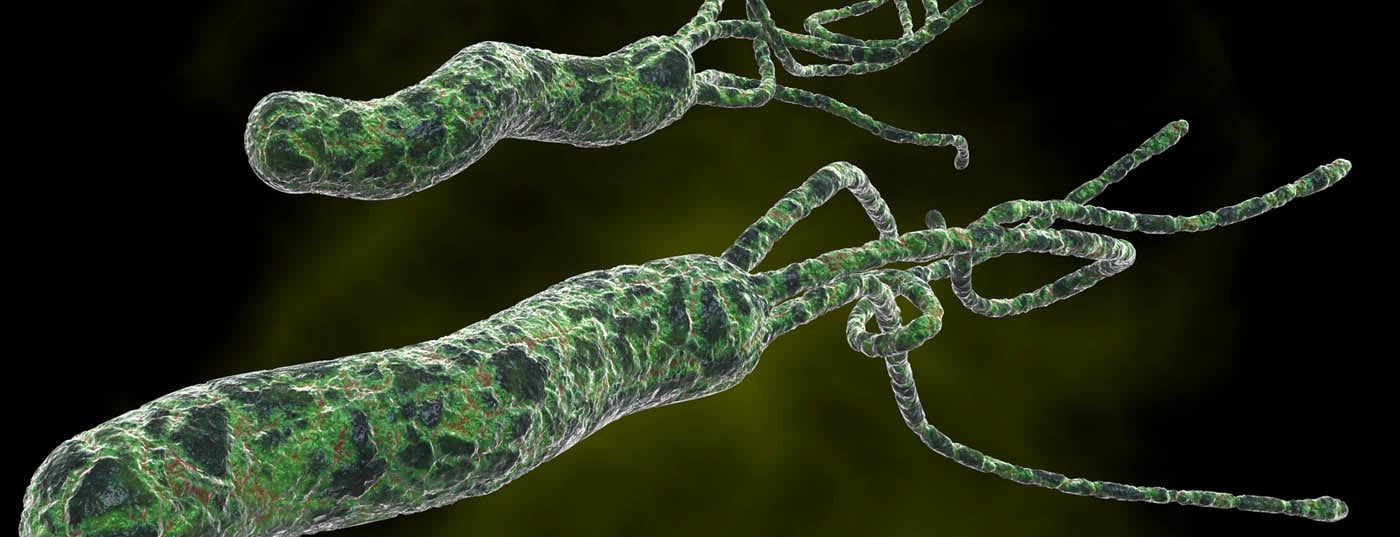
Approximately 90% of all gastric cancer cases are associated with Helicobacter pylori infections. Eradication of these pathogens in healthy asymptomatic individuals or in the general population appears to reduce the incidence of gastric cancer – by 34% versus placebo or no therapy, according to a Cochrane review. However, the authors emphasize that the evidence is of mediocre quality and the number of studies is limited.

Data were examined from the Cochrane Central Register of Controlled Trials, MEDLINE, and EMBASE, as well as hand-selected relevant congress abstracts. In addition, experts were asked about the most significant clinical trials and unpublished material.

Randomized controlled trials that compared at least one week of H. pylori therapy with placebo or no therapy and tested its preventive effect were eligible for analysis. Gastric cancer was defined as any adenocarcinoma of the stomach (intestinal differentiated or diffuse undifferentiated type, with/without specified histology). Follow-up had to be for at least 2 years and ≥2 individuals had to have actual gastric cancer at the time of study completion. However, at baseline, participants were not allowed to have any symptoms or disease apart from their confirmed positivity for H. pylori.

Much of the data comes from Asia

Only just six studies with a total of 6497 participants met the strict selection/quality criteria. Five of the six analyses referred to an Asian population, which is not surprising since, for example, Japan has a comprehensive eradication program and a “test and treat” strategy in the course of gastric cancer prevention (not least because of the significantly higher prevalence of H. pylori infections compared with other countries). The authors estimated the risk of bias to be high in two studies, low in three, and unclear in one.

Quality of examinations is mediocre

The main objective of the meta-analysis was to determine the extent of the preventive effect of eradication. Using mediocre evidence from the six studies used, they conclude that the risk ratio for developing subsequent gastric cancer versus no therapy or placebo is 0.66 (95% CI 0.46-0.95). 1.6% from the eradication group became ill, while this was true for 2.4% from the untreated group. Or, to put it another way, eradication reduced the risk of disease by 34%. Whether this also reduces the risk of death from gastric cancer could not be determined from the data, because the confidence intervals varied widely. Three studies with 4475 participants had examined this parameter and found a risk reduction of 33%, but the associated values of the 95% confidence interval ranged from 0.4-1.11. A relevant effect on all-cause mortality could not be demonstrated in any of the four studies investigating this factor.

Side effects of eradication were described to an insufficient extent, which is why the authors refrain from making a conclusive statement.

Effect on esophageal tumors

Only one study examined the effect of eradication on esophageal tumor development. Two of 817 participants in the eradication group and one in the placebo group (n=813) developed such neoplasia (RR 1.99; 95% CI 0.18-21.91). Consequently, the presence of H. pylori could possibly even reduce the risk in this case, but the results do not allow a clear conclusion and thus do not help to clarify the controversial data in this area.

Limitations

Overall, the authors note that it is unclear whether the results of their meta-analysis can be applied to other, non-Asian populations. Also critical is the weight given to large studies in such a small sample of six studies. Finally, the delicate resistance situation and multidrug-resistant germs that threaten every antibiotic therapy must be mentioned – after all, by far not all cases of antibiotic eradication are successful. One way of limiting the use of antibiotics is to define risk groups that are eligible for eradication. This remains a major challenge, however, as numerous individual risk factors must be taken into account in addition to H. pylori infection.

Source: Ford AC, et al: Helicobacter pylori eradication for the prevention of gastric neoplasia. Cochrane Database of Systematic Reviews 2015; 7: CD005583. DOI: 10.1002/14651858.CD005583.pub2.


InFo ONCOLOGY & HEMATOLOGY 2015; 3(11-12): 4.
Autoren
  • Andreas Grossmann
Publikation
  • InFo ONKOLOGIE & HÄMATOLOGIE
Related Topics
  • Eradication
  • Helicobacter
  • Stomach cancer
Previous Article
  • Vulnerable body sites in sports traumatology

The sportsman and his Achilles heel

  • News
  • RX
  • Sports Medicine
View Post
Next Article
  • Castration refractory prostate cancer (CRPC).

What are the new treatment options?

  • Education
  • Oncology
  • RX
  • Urology
View Post
You May Also Like
View Post
  • 14 min
  • New approvals, current study data and ADC development

Antibody-drug conjugates in gynecologic oncology

    • Education
    • Gynecology
    • Oncology
    • RX
    • Studies
View Post
  • 5 min
  • From symptom to diagnosis

Pneumology – Covid-19: a review

    • Cases
    • Education
    • Infectiology
    • Pneumology
    • Prevention and health care
    • Radiology
    • RX
View Post
  • 6 min
  • Abdominal aortic aneurysms in primary care

Risk-stratified screening and prophylaxis

    • Angiology
    • Congress Reports
    • Prevention and health care
    • Radiology
    • RX
    • Studies
    • Surgery
View Post
  • 9 min
  • Cardiology

Minimally invasive – the quiet triumph of modern heart surgery

    • Cardiology
    • CME continuing education
    • RX
    • Studies
    • Surgery
View Post
  • 0 min
  • Plastic surgery and reconstructive microsurgery for DFS

Functional limb preservation between infection control, vascular medicine and resurfacing

    • Angiology
    • CME continuing education
    • Endocrinology and Diabetology
    • General Internal Medicine
    • Geriatrics
    • Physical medicine and rehabilitation
    • RX
    • Surgery
View Post
  • 6 min
  • Age-related neurocognitive disorders

Neuroprotective effects of Ginkgo biloba extract

    • Education
    • Geriatrics
    • Neurology
    • Pharmaceutical medicine
    • Phytotherapy
    • RX
    • Studies
View Post
  • 6 min
    • Education
    • Endocrinology and Diabetology
    • Pneumology
    • Psychiatry and psychotherapy
    • RX
    • Studies

How origin and place of residence promote CF-associated diabetes

View Post
  • 10 min
  • Patients with leg swelling

DVT and other common DDs with peripheral edema

    • Angiology
    • Cardiology
    • Congress Reports
    • Geriatrics
    • RX
  • IBD matters

    Zum Thema
Top CME content
  • 1
    Functional limb preservation between infection control, vascular medicine and resurfacing
  • 2
    Minimally invasive – the quiet triumph of modern heart surgery
  • 3
    HPV prevention, screening innovation and sentinel lymph node biopsy
  • 4
    Clinical care from birth to adulthood
  • 5
    Multidisciplinary teams in oncology

Newsletter

Sign up and stay up to date

Subscribe
Medizinonline Medizinonline
  • Contact
  • General terms and conditions
  • Imprint

Input your search keywords and press Enter.