Medizinonline Medizinonline
  • News
    • News
    • Market & Medicine
  • Patients
    • Disease patterns
    • Diagnostics
    • Therapy
  • Partner Content
    • Diabetes
      • Dia-Month Club – Type 2 Diabetes
      • Diabetes in Motion
      • Diabetes Podcasts
    • Gastroenterology
      • IBD matters
    • Oncology
      • Swiss Oncology in motion
    • Orthopedics
      • Osteoporosis in motion
  • Departments
    • Allergology and clinical immunology
    • General Internal Medicine
    • Anesthesiology
    • Angiology
    • Surgery
    • Dermatology and venereology
    • Endocrinology and Diabetology
    • Nutrition
    • Gastroenterology and Hepatology
    • Genetics
    • Geriatrics
    • Gynecology
    • Hematology
    • Infectiology
    • Cardiology
    • Nephrology
    • Neurology
    • Emergency and intensive care medicine
    • Nuclear Medicine
    • Oncology
    • Ophthalmology
    • ORL
    • Orthopedics
    • Pediatrics
    • Pharmacology and toxicology
    • Pharmaceutical medicine
    • Phlebology
    • Physical medicine and rehabilitation
    • Pneumology
    • Prevention and health care
    • Psychiatry and psychotherapy
    • Radiology
    • Forensic Medicine
    • Rheumatology
    • Sports Medicine
    • Traumatology and trauma surgery
    • Tropical and travel medicine
    • Urology
    • Dentistry
  • CME & Congresses
    • CME continuing education
    • Congress Reports
    • Congress calendar
  • Practice
    • Noctimed
    • Practice Management
    • Jobs
    • Interviews
  • Log In
  • Register
  • My account
  • Contact
  • Publications
  • Contact
  • Deutsch
  • English
  • Français
  • Italiano
  • Português
  • Español
Subscribe
Medizinonline Medizinonline
  • News
    • News
    • Market & Medicine
  • Patienten
    • Krankheitsbilder
    • Diagnostik
    • Therapie
  • Partner Content
    • Diabetes
      • Dia-Month Club – Type 2 Diabetes
      • Diabetes in Motion
      • Diabetes Podcasts
    • Gastroenterology
      • IBD matters
    • Oncology
      • Swiss Oncology in motion
    • Orthopedics
      • Osteoporosis in motion
    • Phytotherapie
    • Rheumatology
  • Departments
    • Fachbereiche 1-13
      • Allergology and clinical immunology
      • General Internal Medicine
      • Anesthesiology
      • Angiology
      • Surgery
      • Dermatology and venereology
      • Endocrinology and Diabetology
      • Nutrition
      • Gastroenterology and Hepatology
      • Genetics
      • Geriatrics
      • Gynecology
      • Hematology
    • Fachbereiche 14-26
      • Infectiology
      • Cardiology
      • Nephrology
      • Neurology
      • Emergency and intensive care medicine
      • Nuclear Medicine
      • Oncology
      • Ophthalmology
      • ORL
      • Orthopedics
      • Pediatrics
      • Pharmacology and toxicology
      • Pharmaceutical medicine
    • Fachbereiche 26-38
      • Phlebology
      • Physical medicine and rehabilitation
      • Phytotherapy
      • Pneumology
      • Prevention and health care
      • Psychiatry and psychotherapy
      • Radiology
      • Forensic Medicine
      • Rheumatology
      • Sports Medicine
      • Traumatology and trauma surgery
      • Tropical and travel medicine
      • Urology
      • Dentistry
  • CME & Congresses
    • CME continuing education
    • Congress Reports
    • Congress calendar
  • Practice
    • Noctimed
    • Practice Management
    • Jobs
    • Interviews
Login

Sie haben noch keinen Account? Registrieren

  • Type 2 diabetes: insulin therapy - quo vadis?

Basic insulin with once-weekly injection convinces

    • Congress Reports
    • Endocrinology and Diabetology
    • General Internal Medicine
    • RX
    • Studies
  • 3 minute read

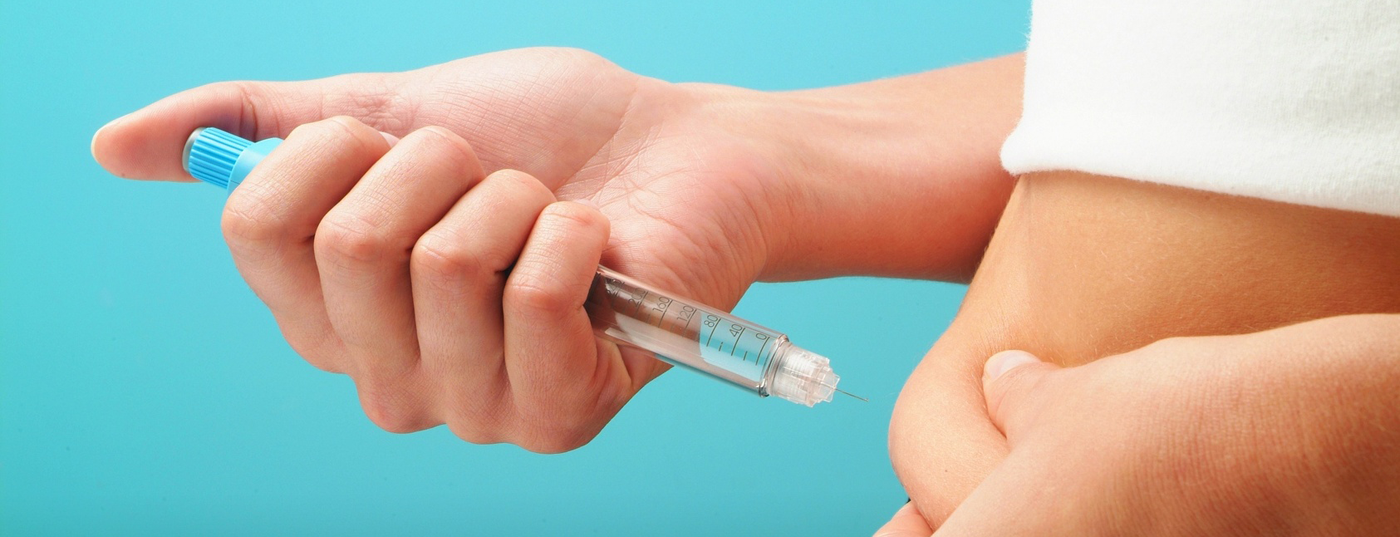
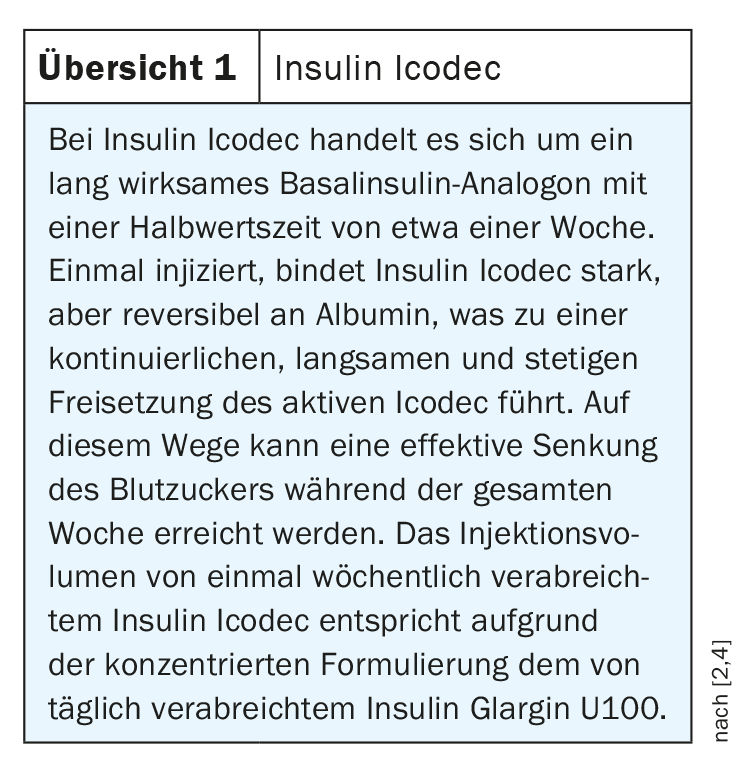
An ultra-long-acting insulin analogue that only needs to be injected once a week is currently in development. The results of the clinical studies to date are promising. Insulin Icodec has shown comparable lowering of blood glucose levels to currently available daily insulin injections. These and other innovations on the research horizon were the topic of this year’s Diabetology without Borders congress.

In general, the basic therapy for type 2 diabetes includes dietary changes and regular exercise, supplemented by the administration of oral medications such as metformin and, if appropriate, SGLT-2 inhibitors and/or GLP-1 receptor agonists. If these therapies do not work, an attempt is usually made to compensate for the lack of insulin production by the pancreas by administering additional insulin. Insulin therapy has a long and eventful history, explains Prof. Dr. med. Petra-Maria Schumm-Draeger, Medical Director and Specialist for Internal Medicine, Endocrinology and Diabetology at the Center for Internal Medicine Fünf Höfe, Munich (D) [1].

Study success for insulin Icodec

After 100 years of insulin therapy with continuous improvement of available treatment options, another milestone is on the horizon: Studies on the once-weekly insulin Icodec have delivered promising results, and it remains to be seen what will happen next. Insulin therapy, which requires an injection only once a week, could contribute to an improved acceptance of the therapy. Insulin Icodec, administered once weekly, has a glucose-lowering effect comparable to that of once-daily insulin glargine in patients with type 2 diabetes mellitus. This is the result of a study published in the New England Journal of Medicine 2020 [2]. The results of extensive Phase III studies must first be awaited before a possible approval can be granted. The Phase II study compared once-weekly insulin Icodec with once-daily insulin glargine U100 (Lantus®) in 247 patients with type 2 diabetes who had not previously received insulin and whose diabetes was not adequately controlled with oral medications. Over a 6-month period, no significant difference was found in the quality of diabetes control. Side effects such as hypoglycemia were also comparable in both groups.


Future visions for insulin therapy

In addition to insulin Icodec, other weekly basal insulins are currently under development by various manufacturers.Apart from clinical research programs on weekly insulin, studies have been launched under the EU-funded project “Oralis” to develop a drug (“Oramed”) in which insulin is delivered via the liver instead of being injected directly into the bloodstream. A phase II study showed a statistically significant reduction in HbA1c levels with good safety and tolerability. The drug candidate ORMD-0801 has been tested in over 700 individuals to date. The research team hopes that Phase III trials can be initiated soon under the aegis of the FDA and EMA [3].

The “Smart Insulin” concept, which is also currently being researched, involves the following vision: an insulin depot in the body that releases insulin bound to a carrier in adequate quantities until the target glucose value is reached when blood glucose levels are high. To date, however, some success with insulin carrier preparations has only been achieved in animal models. Fundamental difficulties include questions about the location of the depot (bloodstream, subcutaneous tissue, tissue) and whether or how the glucose concentration at the “depot location” should control insulin release. To date, it is also unclear whether the insulin effects are tissue-dependent and, if so, exactly what these differences are.

Congress: Diabetology without borders 2021


Literature:

  1. Schumm-Draeger P-M: Type 2 diabetes: what’s important and new – update 2021. Prof. Dr. med. Petra-Maria Schumm-Draeger, press conference, Diabetologie grenzenlos, 26.02.2021.
  2. Rosenstock J, et al: N Engl J Med 2020; DOI: 10.1056/NEJMoa2022474.
  3. Cordis (EU): https://cordis.europa.eu/article/id/421968-the-first-oral-insulin-for-the-treatment-of-type-2-diabetes/de (last accessed 24.03.21).
  4. Arznei-news.de: https://arznei-news.de/insulin-degludec (last accessed 24.03.21)


HAUSARZT PRAXIS 2021; 16(4): 24 (published 4/4/21, ahead of print).
CARDIOVASC 2021; 20(2): 28 (published 6/28/21, ahead of print).

Autoren
  • Mirjam Peter, M.Sc.
Publikation
  • HAUSARZT PRAXIS
Related Topics
  • Antidiabetic
  • Insulin
  • insulin therapy
  • Type 2 diabetes
Previous Article
  • Inflammatory dermatoses

Acne and rosacea – current trends at a glance

  • Congress Reports
  • Dermatology and venereology
  • RX
  • Studies
View Post
Next Article
  • Alpha-1 antitrypsin deficiency

It does not always have to be obstruction

  • Cases
  • Congress Reports
  • Education
  • General Internal Medicine
  • Infectiology
  • Pneumology
  • Radiology
  • RX
View Post
You May Also Like
View Post
  • 5 min
  • Viloxazine for ADHD

A non-stimulating option—but with limited evidence

    • RX
    • Education
    • Neurology
    • Pediatrics
    • Pharmacology and toxicology
    • Psychiatry and psychotherapy
    • Studies
View Post
  • 6 min
  • Preclinical study on phytotherapeutic agent

Active ingredient combination of peppermint and caraway oil modified fecal microbiota

    • RX
    • Education
    • Gastroenterology and Hepatology
    • General Internal Medicine
    • Pharmaceutical medicine
    • Phytotherapy
    • Studies
View Post
  • 4 min
  • Casuistry

Rituximab used effectively against IgG4-RD colitis

    • RX
    • Cases
    • Education
    • Gastroenterology and Hepatology
    • General Internal Medicine
    • Radiology
    • Rheumatology
View Post
  • 5 min
  • Sarcoidosis

New options from JAKi to mTOR

    • RX
    • Congress Reports
    • General Internal Medicine
    • Pneumology
    • Studies
View Post
  • 6 min
  • Head and neck squamous cell carcinoma

Precision immunotherapy and local treatment

    • RX
    • Congress Reports
    • Dermatology and venereology
    • Oncology
    • ORL
    • Studies
View Post
  • 3 min
  • From symptom to diagnosis

Abdominal pain – Prostate cysts

    • RX
    • Cases
    • Education
    • General Internal Medicine
    • Radiology
    • Surgery
    • Urology
View Post
  • 0 min
  • Multimodal Parkinson's Treatment

Positive Effects of a Music-Based Intervention

    • RX
    • Education
    • Geriatrics
    • Neurology
    • Physical medicine and rehabilitation
    • Psychiatry and psychotherapy
View Post
  • 8 min
  • Psychooncology

Communication as the key to therapy adherence

    • RX
    • CME continuing education
    • General Internal Medicine
    • Practice Management
  • IBD matters

    Zum Thema
Top CME content
  • 1
    Current State of Knowledge and New Therapeutic Approaches
  • 2
    Why is it so hard to lose weight?
  • 3
    Functional limb preservation between infection control, vascular medicine and resurfacing
  • 4
    Algorithms, avatars and the unburdened mind
  • 5
    Communication as the key to therapy adherence

Newsletter

Sign up and stay up to date

Subscribe
Medizinonline Medizinonline
  • Contact
  • General terms and conditions
  • Imprint

Input your search keywords and press Enter.