Medizinonline Medizinonline
  • News
    • News
    • Market & Medicine
  • Patients
    • Disease patterns
    • Diagnostics
    • Therapy
  • Partner Content
    • Diabetes
      • Dia-Month Club – Type 2 Diabetes
      • Diabetes in Motion
      • Diabetes Podcasts
    • Gastroenterology
      • IBD matters
    • Oncology
      • Swiss Oncology in motion
    • Orthopedics
      • Osteoporosis in motion
  • Departments
    • Allergology and clinical immunology
    • General Internal Medicine
    • Anesthesiology
    • Angiology
    • Surgery
    • Dermatology and venereology
    • Endocrinology and Diabetology
    • Nutrition
    • Gastroenterology and Hepatology
    • Genetics
    • Geriatrics
    • Gynecology
    • Hematology
    • Infectiology
    • Cardiology
    • Nephrology
    • Neurology
    • Emergency and intensive care medicine
    • Nuclear Medicine
    • Oncology
    • Ophthalmology
    • ORL
    • Orthopedics
    • Pediatrics
    • Pharmacology and toxicology
    • Pharmaceutical medicine
    • Phlebology
    • Physical medicine and rehabilitation
    • Pneumology
    • Prevention and health care
    • Psychiatry and psychotherapy
    • Radiology
    • Forensic Medicine
    • Rheumatology
    • Sports Medicine
    • Traumatology and trauma surgery
    • Tropical and travel medicine
    • Urology
    • Dentistry
  • CME & Congresses
    • CME continuing education
    • Congress Reports
    • Congress calendar
  • Practice
    • Noctimed
    • Practice Management
    • Jobs
    • Interviews
  • Log In
  • Register
  • My account
  • Contact
  • Publications
  • Contact
  • Deutsch
  • English
  • Français
  • Italiano
  • Português
  • Español
Subscribe
Medizinonline Medizinonline
  • News
    • News
    • Market & Medicine
  • Patienten
    • Krankheitsbilder
    • Diagnostik
    • Therapie
  • Partner Content
    • Diabetes
      • Dia-Month Club – Type 2 Diabetes
      • Diabetes in Motion
      • Diabetes Podcasts
    • Gastroenterology
      • IBD matters
    • Oncology
      • Swiss Oncology in motion
    • Orthopedics
      • Osteoporosis in motion
    • Phytotherapie
    • Rheumatology
  • Departments
    • Fachbereiche 1-13
      • Allergology and clinical immunology
      • General Internal Medicine
      • Anesthesiology
      • Angiology
      • Surgery
      • Dermatology and venereology
      • Endocrinology and Diabetology
      • Nutrition
      • Gastroenterology and Hepatology
      • Genetics
      • Geriatrics
      • Gynecology
      • Hematology
    • Fachbereiche 14-26
      • Infectiology
      • Cardiology
      • Nephrology
      • Neurology
      • Emergency and intensive care medicine
      • Nuclear Medicine
      • Oncology
      • Ophthalmology
      • ORL
      • Orthopedics
      • Pediatrics
      • Pharmacology and toxicology
      • Pharmaceutical medicine
    • Fachbereiche 26-38
      • Phlebology
      • Physical medicine and rehabilitation
      • Phytotherapy
      • Pneumology
      • Prevention and health care
      • Psychiatry and psychotherapy
      • Radiology
      • Forensic Medicine
      • Rheumatology
      • Sports Medicine
      • Traumatology and trauma surgery
      • Tropical and travel medicine
      • Urology
      • Dentistry
  • CME & Congresses
    • CME continuing education
    • Congress Reports
    • Congress calendar
  • Practice
    • Noctimed
    • Practice Management
    • Jobs
    • Interviews
Login

Sie haben noch keinen Account? Registrieren

  • Opioid abuse

Pancreatitis? Think of Loperamide!

    • Education
    • Gastroenterology and Hepatology
    • General Internal Medicine
    • Pharmacology and toxicology
    • RX
  • 4 minute read

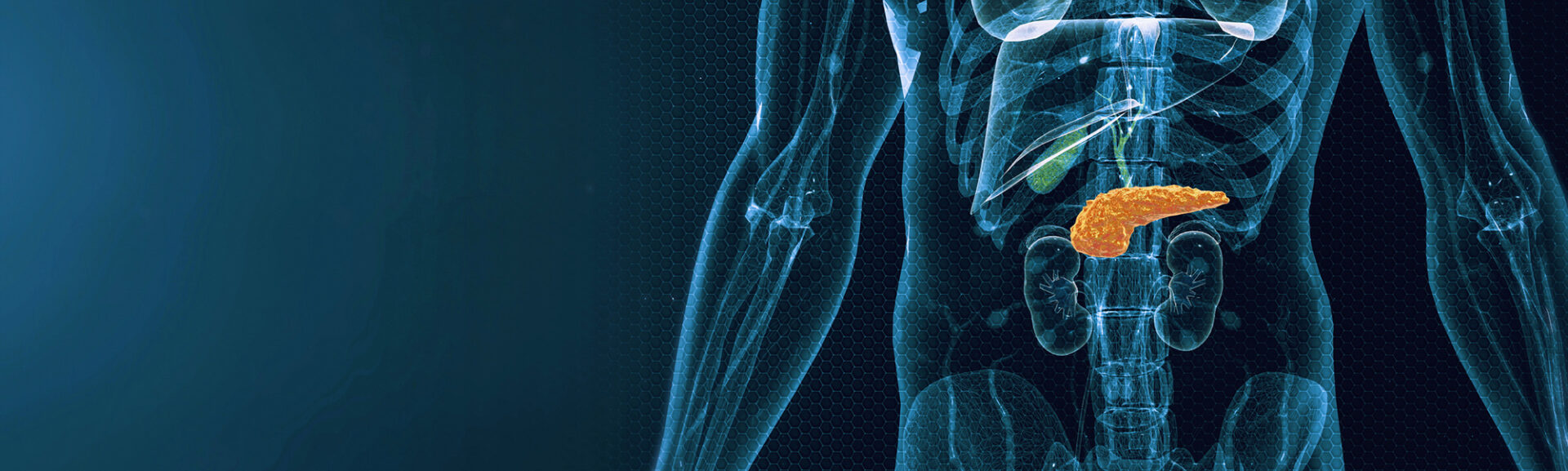
Reports on the abuse of loperamide for the purpose of euphoria or as a substitute for methadone have recently increased. Misuse can lead to dysregulation of the heart muscle cells, which often manifests itself as ventricular arrhythmias. Due to the μ-agonism of loperamide, supratherapeutic doses are also suspected of inducing sphincter Oddi dysfunction and a predisposition to pancreatitis.

Loperamide abuse reflects the progression of the opioid epidemic in the U.S., most commonly manifested by cardiac complications. Some opiates have been shown to increase basal sphincter of Oddi pressure, and abnormal pancreatic sphincter of Oddi manometry has been shown to be a risk factor for recurrent acute pancreatitis. Mild pancreatitis usually heals spontaneously, while severe pancreatitis is characterized by organ failure and often requires admission to an intensive care unit.

A 32-year-old man with acute abdominal pain, fatigue and weakness and an extensive history of gastroduodenal ulceration and fluctuating abdominal pain for four months presented to the team of Dr. Christopher A. Bouvette, Department of Medicine, University of Oklahoma College of Medicine, Oklahoma City [1]. Six years earlier, the patient had undergone several emergency laparotomies and an antrectomy with a Roux-en-Y gastrojejunostomy due to penetrating duodenal ulcerations associated with the use of non-steroidal anti-inflammatory drugs. The patient stated that he had not had any recent abdominal trauma or instrumentation. His only active medication was omeprazole and paracetamol as required. He also denied the consumption of alcohol, tobacco or illegal drugs.

On arrival, the patient was free of fever and had normal blood pressure, his heart rate was between 45 and 55 beats per minute, the authors write. An electrocardiogram revealed transient episodes of asymptomatic bradycardia with a corrected QT interval of 577 milliseconds. Physical examination revealed postoperative scarring along the midline of the abdomen. Palpation of the epigastrium was associated with significant tenderness without rebound.

High-grade pancreatic duct leak developed

On admission, the laboratory values were significant for leukocytes (19 ×109 cells/l), hemoglobin (7 g/dl), platelets (700 ×109 cells/l), sodium (135 mmol/l), creatinine (0.77 mg/dl), total bilirubin (0.3 mg/dl) and triglyceride (110 mg/dl), among others. A urine drug screen revealed a negative result. Computed tomography of the abdomen and pelvis revealed severe constipation, acute pancreatitis, localized peripancreatic/perigastric/left-sided retroperitoneal fluid collections and severe splenic vein compression with splenomegaly (Fig. 1).
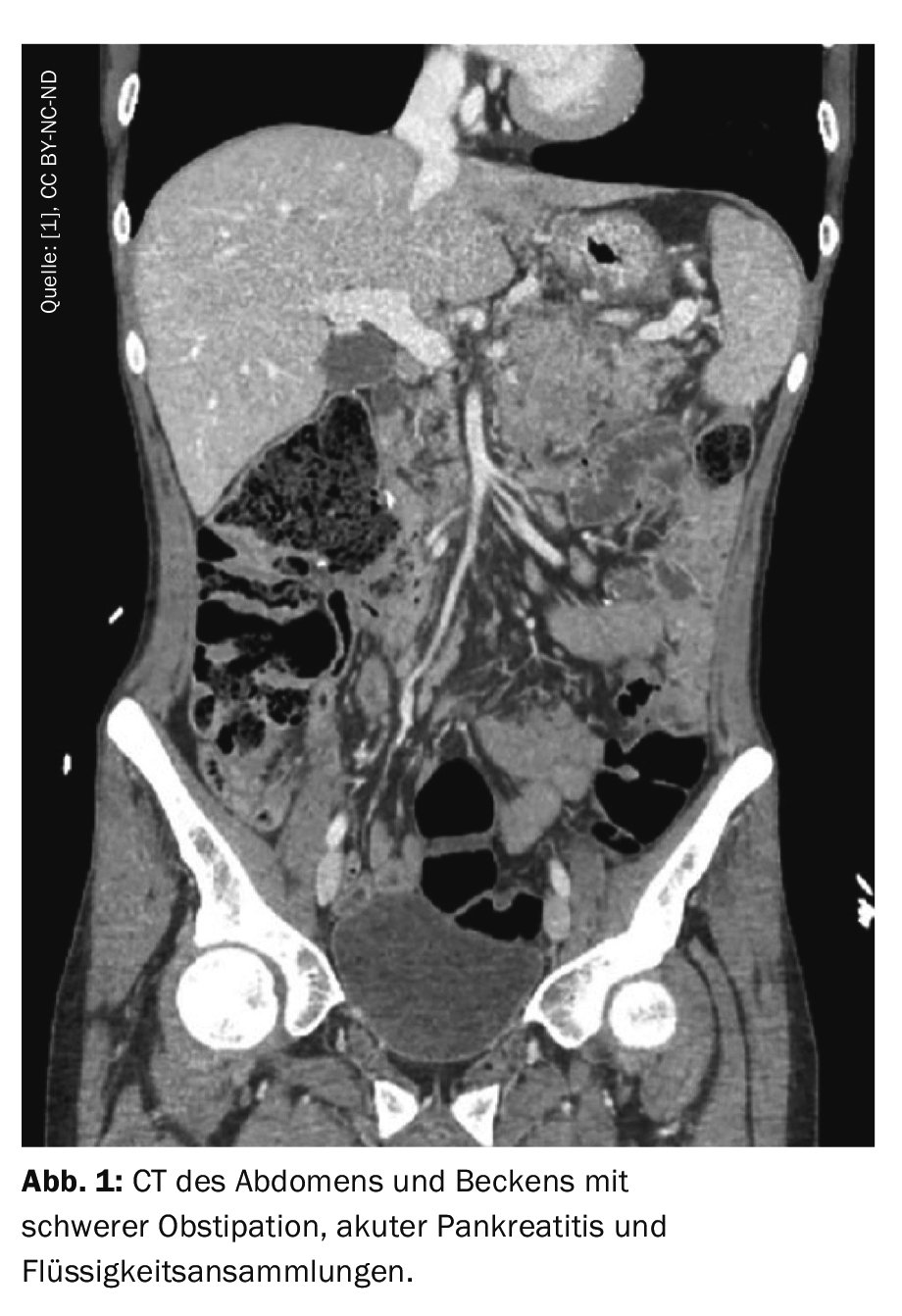
The patient received supportive intravenous fluids and opioid analgesia to treat the pancreatitis. Piperacillin-tazobactam was administered due to the localized abdominal fluid collections, leukocytosis and suspected intra-abdominal infection. The extent of the abdominal fluid collections and the development of a marked left pleural effusion raised concern about a possible pancreatic leak. Analysis of the pleural fluid revealed elevated amylase and lipase levels, which confirmed this.

The patient’s hemodynamic instability prompted the doctors to transfer him to the intensive care unit, where he was found to be in septic shock associated with Escherichia coli bacteremia. After stabilization, endoscopic retrograde pancreatography was used to rule out calculus/impaction. Instead, a high-grade pancreatic duct leak was found at the level of the body-tail junction, for which an 11 cm long 7-French stent was inserted into the ventral pancreatic duct (Fig. 2).
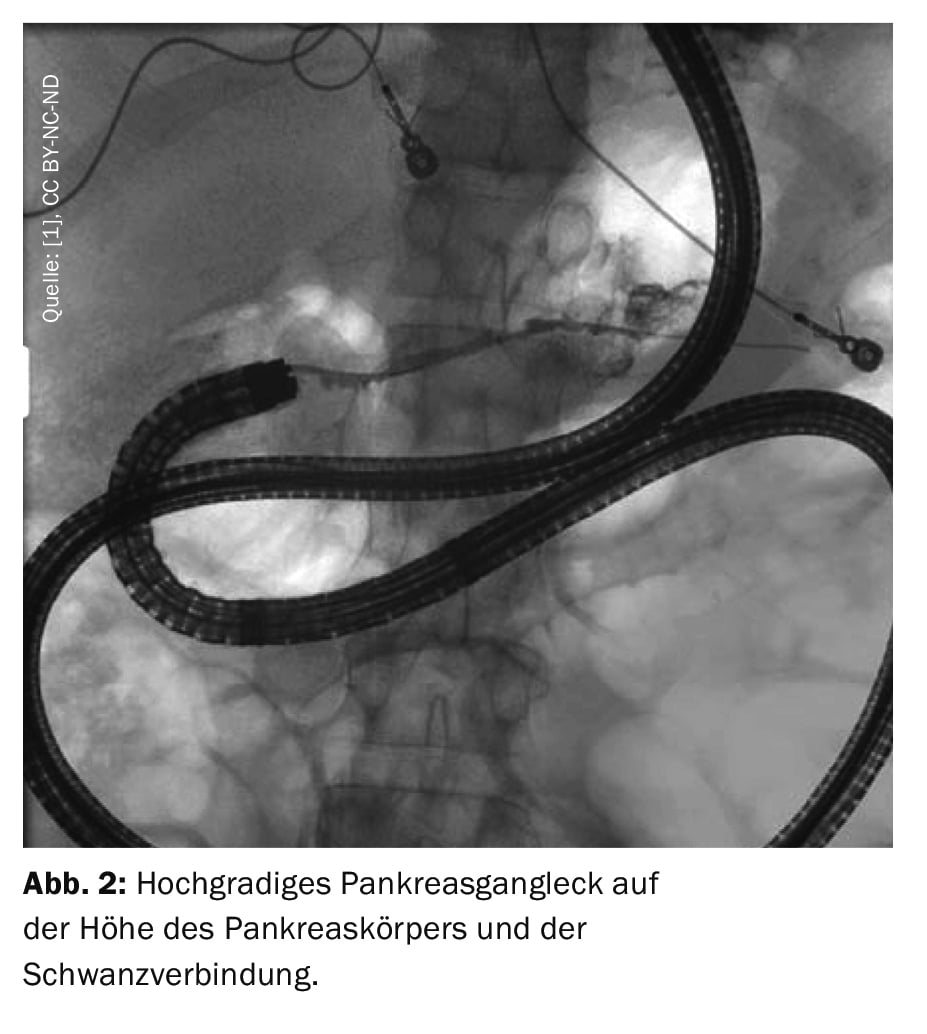
150 tablets of loperamide daily

After endoscopic retrograde pancreatography, the patient’s clinical condition improved. The autoimmune pancreatitis panel (IgG4) and the genetic panel (CFTR, SPINK1, PRSS1 and CTRC) were sent in and were within the normal range.

Only in the course of further medical questioning did the patient finally admit that he had taken up to 150 tablets of loperamide 2 mg per day in the last six months. It has been suggested that these prolonged supratherapeutic doses of loperamide may have caused sphincter Oddi dysfunction and resultant pancreatitis. After his condition stabilized, the patient was discharged to an inpatient substance abuse rehabilitation center.

Loperamide is a gastrointestinal μ-opioid receptor agonist. At a dose of 16 mg (maximum daily dose) or less, it is actively removed from the central nervous system (CNS) by a P-glycoprotein (P-gp) membrane transporter-dependent mechanism. The main metabolite, desmethyl-loperamide, is of interest because in high concentrations it acts both as a P-gp substrate and as an inhibitor. This is typically the case with doses of 70 to 200 mg daily, Dr. Bouvette and his colleagues write. P-gp inhibition enables the accumulation of loperamide in the CNS. This is where the potential for abuse lies.

Opioids alter the biomechanics of the sphincter Oddi. In the absence of a plausible alternative cause, the authors suggest that long-term use of loperamide at supratherapeutic doses may have caused sphincter of Oddi dysfunction and associated pancreatitis. “In view of the variable opioid-specific effects on the sphincter Oddi, it is not possible for us to prove a causal relationship,” the authors explain. In addition, physicians should be more suspicious of loperamide abuse in patients with a clinical picture of opioid abuse, signs of ventricular dysregulation, and now possibly pancreatitis.

Literature:

  1. Bouvette CA, Nasir AB, Grossen AM, et al: Loperamide Misuse Presenting With Pancreatitis. AIM ClinicalCases 2024; doi: 10.7326/aimcc.2023.0874.

GASTROENTEROLOGY PRACTICE 2024; 2(1): 18-19

Autoren
  • Jens Dehn
Publikation
  • GASTROENTEROLOGIE PRAXIS
Related Topics
  • Loperamide
  • Opioid abuse
  • Pancreatic duct leak
  • Pancreatitis
  • Sphincter Oddi dysfunction
  • Sphincter-Oddi
Previous Article
  • Skin and soft tissue infections

Erysipelas and cellulitis: important “hot topics”

  • RX
  • Congress Reports
  • Dermatology and venereology
  • Infectiology
  • Studies
View Post
Next Article
  • CGM adherence in children and adolescents

City, country, diabetes

  • Endocrinology and Diabetology
  • Pediatrics
  • Prevention and health care
  • RX
  • Studies
View Post
You May Also Like
View Post
  • 8 min
  • Proteins in wound healing

Do special amino acids lead to success?

    • CME continuing education
    • Dermatology and venereology
    • Endocrinology and Diabetology
    • Nutrition
    • RX
    • Studies
View Post
  • 7 min
  • Plastic surgery and reconstructive microsurgery for DFS

Functional limb preservation between infection control, vascular medicine and resurfacing

    • Angiology
    • CME continuing education
    • Endocrinology and Diabetology
    • General Internal Medicine
    • Geriatrics
    • Physical medicine and rehabilitation
    • RX
    • Surgery
View Post
  • 9 min
  • Polycystic ovary syndrome 2025/2026

New pathophysiology, updated diagnostics and the age of incretin mimetics

    • Education
    • Gastroenterology and Hepatology
    • General Internal Medicine
    • Gynecology
    • Pharmacology and toxicology
    • RX
    • Studies
View Post
  • 14 min
  • Heart failure and type 2 diabetes

Oral semaglutide and cardiac decompensation in type 2 diabetes

    • Cardiology
    • Education
    • Endocrinology and Diabetology
    • RX
    • Studies
View Post
  • 7 min
  • Atopic dermatitis as a door opener for an atopic cascade?

AD trajectories: Summary of current findings

    • Allergology and clinical immunology
    • Congress Reports
    • Dermatology and venereology
    • RX
    • Studies
View Post
  • 11 min
  • New evidence on descensus, urinary incontinence and the future of reconstruction

Urogynecology and pelvic floor surgery 2026

    • Education
    • General Internal Medicine
    • Gynecology
    • Physical medicine and rehabilitation
    • RX
    • Studies
    • Surgery
    • Urology
View Post
  • 8 min
  • Proteins in wound healing

Do special amino acids lead to success?

    • CME continuing education
    • Dermatology and venereology
    • Endocrinology and Diabetology
    • Nutrition
    • RX
    • Studies
View Post
  • 5 min
  • Case study

Autosomal recessive polycystic kidney disease: atypical phenotype

    • Cases
    • Education
    • Gastroenterology and Hepatology
    • Genetics
    • Nephrology
    • RX
  • IBD matters

    Zum Thema
Top CME content
  • 1
    Functional limb preservation between infection control, vascular medicine and resurfacing
  • 2
    Do special amino acids lead to success?
  • 3
    Do special amino acids lead to success?
  • 4
    Current status of PAT
  • 5
    Surgical wound complications

Newsletter

Sign up and stay up to date

Subscribe
Medizinonline Medizinonline
  • Contact
  • General terms and conditions
  • Imprint

Input your search keywords and press Enter.