Medizinonline Medizinonline
  • News
    • News
    • Market & Medicine
  • Patients
    • Disease patterns
    • Diagnostics
    • Therapy
  • Partner Content
    • Diabetes
      • Dia-Month Club – Type 2 Diabetes
      • Diabetes in Motion
      • Diabetes Podcasts
    • Gastroenterology
      • IBD matters
    • Oncology
      • Swiss Oncology in motion
    • Orthopedics
      • Osteoporosis in motion
  • Departments
    • Allergology and clinical immunology
    • General Internal Medicine
    • Anesthesiology
    • Angiology
    • Surgery
    • Dermatology and venereology
    • Endocrinology and Diabetology
    • Nutrition
    • Gastroenterology and Hepatology
    • Genetics
    • Geriatrics
    • Gynecology
    • Hematology
    • Infectiology
    • Cardiology
    • Nephrology
    • Neurology
    • Emergency and intensive care medicine
    • Nuclear Medicine
    • Oncology
    • Ophthalmology
    • ORL
    • Orthopedics
    • Pediatrics
    • Pharmacology and toxicology
    • Pharmaceutical medicine
    • Phlebology
    • Physical medicine and rehabilitation
    • Pneumology
    • Prevention and health care
    • Psychiatry and psychotherapy
    • Radiology
    • Forensic Medicine
    • Rheumatology
    • Sports Medicine
    • Traumatology and trauma surgery
    • Tropical and travel medicine
    • Urology
    • Dentistry
  • CME & Congresses
    • CME continuing education
    • Congress Reports
    • Congress calendar
  • Practice
    • Noctimed
    • Practice Management
    • Jobs
    • Interviews
  • Log In
  • Register
  • My account
  • Contact
  • Publications
  • Contact
  • Deutsch
  • English
  • Français
  • Italiano
  • Português
  • Español
Subscribe
Medizinonline Medizinonline
  • News
    • News
    • Market & Medicine
  • Patienten
    • Krankheitsbilder
    • Diagnostik
    • Therapie
  • Partner Content
    • Diabetes
      • Dia-Month Club – Type 2 Diabetes
      • Diabetes in Motion
      • Diabetes Podcasts
    • Gastroenterology
      • IBD matters
    • Oncology
      • Swiss Oncology in motion
    • Orthopedics
      • Osteoporosis in motion
    • Phytotherapie
    • Rheumatology
  • Departments
    • Fachbereiche 1-13
      • Allergology and clinical immunology
      • General Internal Medicine
      • Anesthesiology
      • Angiology
      • Surgery
      • Dermatology and venereology
      • Endocrinology and Diabetology
      • Nutrition
      • Gastroenterology and Hepatology
      • Genetics
      • Geriatrics
      • Gynecology
      • Hematology
    • Fachbereiche 14-26
      • Infectiology
      • Cardiology
      • Nephrology
      • Neurology
      • Emergency and intensive care medicine
      • Nuclear Medicine
      • Oncology
      • Ophthalmology
      • ORL
      • Orthopedics
      • Pediatrics
      • Pharmacology and toxicology
      • Pharmaceutical medicine
    • Fachbereiche 26-38
      • Phlebology
      • Physical medicine and rehabilitation
      • Phytotherapy
      • Pneumology
      • Prevention and health care
      • Psychiatry and psychotherapy
      • Radiology
      • Forensic Medicine
      • Rheumatology
      • Sports Medicine
      • Traumatology and trauma surgery
      • Tropical and travel medicine
      • Urology
      • Dentistry
  • CME & Congresses
    • CME continuing education
    • Congress Reports
    • Congress calendar
  • Practice
    • Noctimed
    • Practice Management
    • Jobs
    • Interviews
Login

Sie haben noch keinen Account? Registrieren

  • Hypothyroidism

What to do with Hashimoto’s thyroiditis? An update

    • Congress Reports
    • Education
    • Endocrinology and Diabetology
    • General Internal Medicine
    • RX
  • 2 minute read

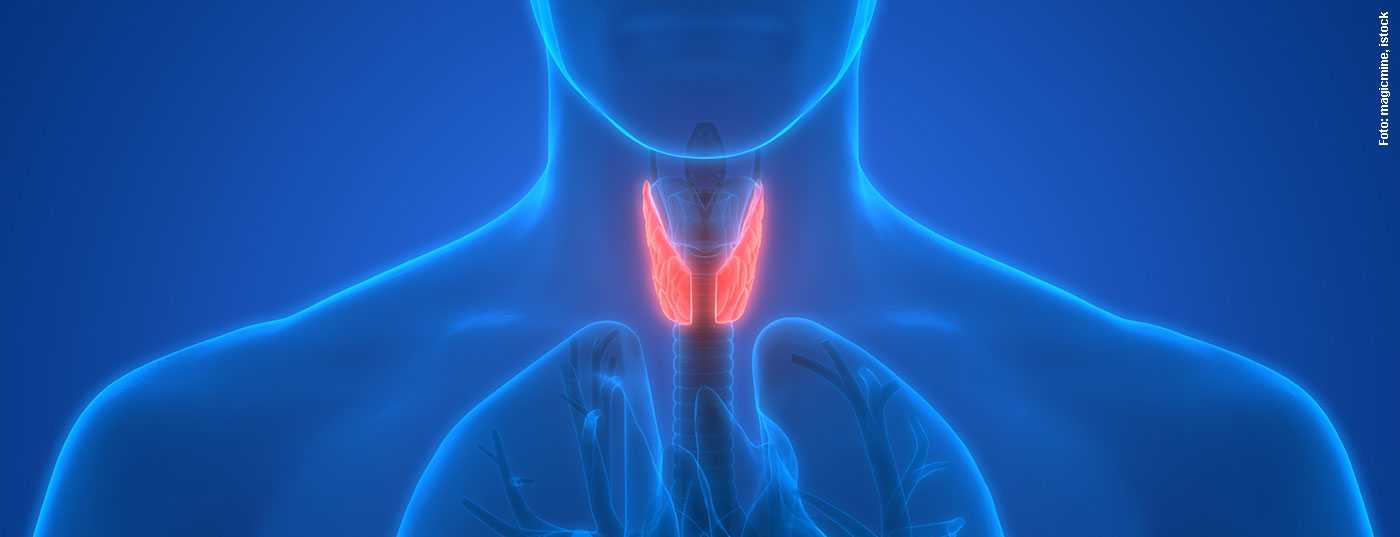
Hypothyroidism is a common condition that has significant effects on the body’s metabolic processes. Impaired performance is a result of deficient hormone production by the thyroid gland. Accordingly, thyroid hormone replacement therapy is indicated.

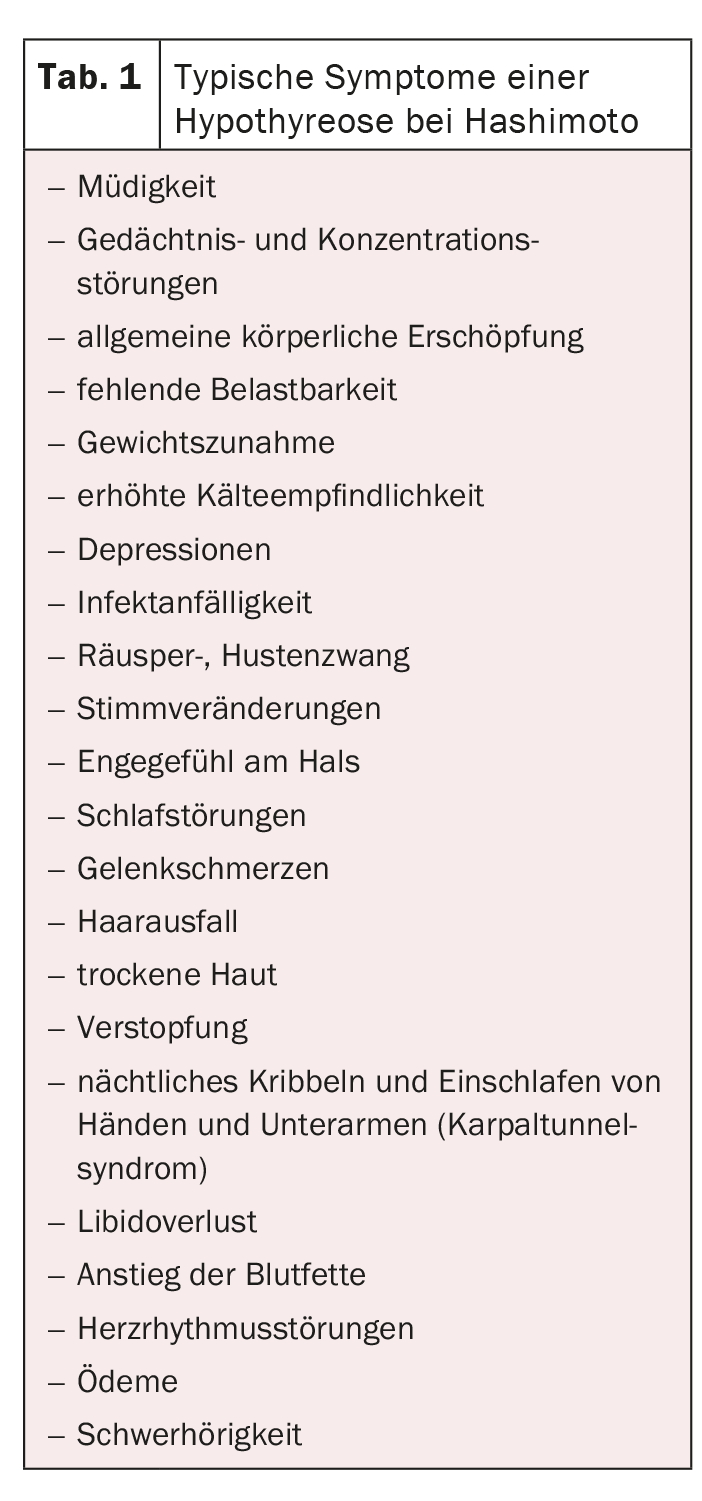
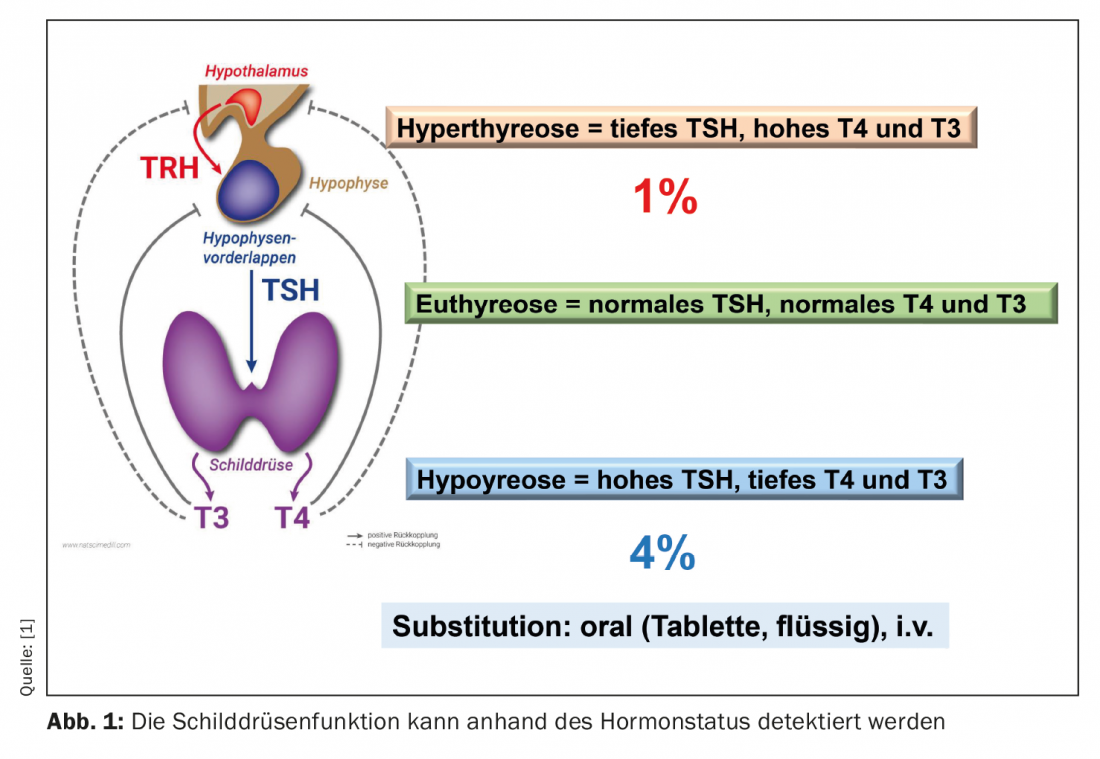
We speak of manifest hypothyroidism when the TSH level is elevated, but T4 and T3 are reduced. Clinical signs manifest as bradycardia, hypertension, hyporeflexia, hypothermia, a deep, hoarse voice, and a pale yellowish skin coloration. In 41% of cases, the cause can be traced back to autoimmune thyroiditis, as Prof. Roger Lehmann, MD, Zurich, Switzerland, pointed out. First described by Hakaru Hashimoto in 1912, the disease is characterized by chronic inflammation of the thyroid gland. It is possible that at the beginning of the disease, due to inflammation, hyperfunction may be seen, which is called “hashitoxicosis”. In the further course, however, this always turns into hypothyroidism, since due to the destruction of the thyroid cells, sufficient hormones can no longer be produced and, in addition, these are often released in an uncontrolled manner. Immunopathogenetically, CD4+ T cells and their differentiations into Th1, Th2, Th17, and Treg play a particularly important role. Stimulation and production of B cells and plasma cells is the result, which form antibodies against the thyroid cells. In addition, lymphocytes, macrophages and cytokines such as interferon or TNF-α are activated. This increases the autoimmune process and leads to destruction of the thyroid gland. A genetic predisposition in combination with unfavorable external influences ensure the onset of the disease. Triggers include hormonal fluctuations – especially during pregnancy – high iodine intake, stress, infections, medications, or severe illness. Since almost all organs are affected by the metabolic disorder, the symptoms are very varied (Table 1) .


Antibody detection not always sufficient

Hashimoto’s is diagnosed by blood work and ultrasound. In the blood, the thyroid antibodies TPO-AK, TG-AK and TR-AK produced by the immune system are determined. In manifest disease, these values are elevated. However, 10-20% of affected individuals do not form antibodies, so ultrasound examination should always be performed. In addition, the hormones TSH, fT3 and fT4 are determined. In the case of hypofunction, the TSH value is above 2.0.


Improvement of complaints through hormone substitution

Therapy with thyroid hormones is indicated to alleviate symptoms. As a rule, monotherapy with the storage hormone L-thyroxine is started. The start should be with the expected maintenance dose. This is equivalent to 1.6 µg/kg bw and should be taken 30 minutes before breakfast. Older patients >60 years of age or those with CHD should be started on a reduced dose. After two weeks, a dose adjustment can be made with regard to fT4. The target value here is 14-16 nmol/l. After six weeks at the earliest, the TSH level can be monitored in the long-term. A target value of 0.5-2 µU/l should be aimed for here.

Congress: FomF UpDate Refresher


Source:

  1. General Internal Medicine, Update Refresher, 08/18/2021, Hyper- and Hypothyroidism, Roger Lehmann.


CARDIOVASC 2021; 20(3): 36 (published 8/9/21, ahead of print).
Autoren
  • Leoni Burggraf
Publikation
  • CARDIOVASC
Related Topics
  • HASHIMOTO
  • Hypothyroidism
  • Thyroid gland
Previous Article
  • Research

Understanding lung damage

  • Education
  • General Internal Medicine
  • Infectiology
  • News
  • Pneumology
  • RX
View Post
Next Article
  • Lung tumors

What’s new?

  • Congress Reports
  • Oncology
  • Pneumology
  • RX
  • Studies
View Post
You May Also Like
View Post
  • 4 min
  • From symptom to diagnosis

Multilocular cystic renal cell carcinoma (MCRCC)

    • RX
    • Cases
    • Education
    • Nephrology
    • Oncology
    • Radiology
    • Studies
    • Surgery
View Post
  • 3 min
  • Shaping the Future with LLM & Co.

AI in Everyday Clinical Practice: Friend or Foe?

    • RX
    • General Internal Medicine
    • Practice Management
    • Prevention and health care
View Post
  • 5 min
  • Ulcerative colitis: current evidence on anti-inflammatory therapies

Remission induction and maintenance with biologics and JAK-i

    • RX
    • Congress Reports
    • Gastroenterology and Hepatology
    • General Internal Medicine
    • Studies
View Post
  • 4 min
  • Bronchiectasis

New strategies against neutrophilic inflammation

    • RX
    • Congress Reports
    • General Internal Medicine
    • Infectiology
    • Pneumology
    • Studies
View Post
  • 3 min
  • IBD in childhood

Pneumococcal vaccination without negative consequences

    • RX
    • Education
    • Gastroenterology and Hepatology
    • General Internal Medicine
    • Infectiology
    • Pediatrics
    • Prevention and health care
View Post
  • 7 min
  • Plastic surgery and reconstructive microsurgery for DFS

Functional limb preservation between infection control, vascular medicine and resurfacing

    • RX
    • Angiology
    • CME continuing education
    • Dermatology and venereology
    • Endocrinology and Diabetology
    • General Internal Medicine
    • Geriatrics
    • Physical medicine and rehabilitation
    • Surgery
View Post
  • 14 min
  • Seborrheic Dermatitis in Adults and Adolescents

Current State of Knowledge and New Therapeutic Approaches

    • RX
    • CME continuing education
    • Dermatology and venereology
    • Studies
View Post
  • 7 min
  • Orthobiologics for knee osteoarthritis

PRP and hyaluronic acid injections as building blocks in a multimodal concept

    • RX
    • Congress Reports
    • General Internal Medicine
    • Orthopedics
    • Rheumatology
    • Sports Medicine
    • Studies
    • Surgery
  • IBD matters

    Zum Thema
Top CME content
  • 1
    Current State of Knowledge and New Therapeutic Approaches
  • 2
    Why is it so hard to lose weight?
  • 3
    Functional limb preservation between infection control, vascular medicine and resurfacing
  • 4
    Algorithms, avatars and the unburdened mind
  • 5
    Communication as the key to therapy adherence

Newsletter

Sign up and stay up to date

Subscribe
Medizinonline Medizinonline
  • Contact
  • General terms and conditions
  • Imprint

Input your search keywords and press Enter.