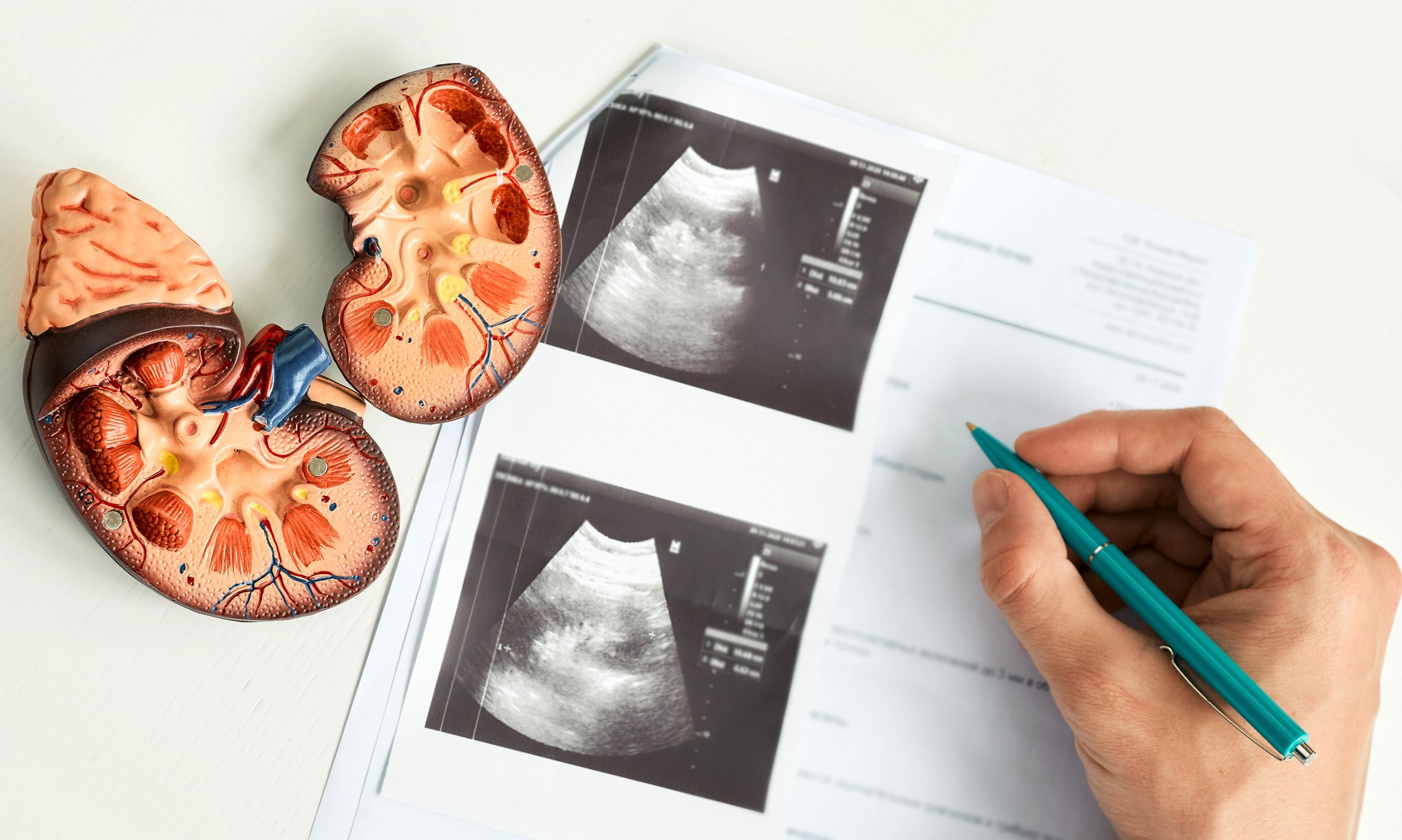
In a 5-year-old boy with renal ultrasound findings typical of autosomal recessive polycystic kidney disease (ARPKD), numerous large liver cysts were found – atypical for this disease. Genetic analyses revealed heterozygous missense mutations in the PKHD1 gene. Mutations in genes underlying polycystic liver disease could be excluded. In summary, comprehensive genetic analyses are crucial for the case-related clarification of polycystic kidney disease.
Autoren
- Mirjam Peter, M.Sc.
Publikation
- HAUSARZT PRAXIS

Related Topics
You May Also Like
- Plastic surgery and reconstructive microsurgery for DFS
Functional limb preservation between infection control, vascular medicine and resurfacing
- Seborrheic Dermatitis in Adults and Adolescents
Current State of Knowledge and New Therapeutic Approaches
- Orthobiologics for knee osteoarthritis
PRP and hyaluronic acid injections as building blocks in a multimodal concept
- Soft tissue sarcomas of the lower extremity
Diagnostics, subtypes and treatment options
- Psychological dependence on AI assistants, smartphones and short videos
Algorithms, avatars and the unburdened mind
- Psychooncology
Communication as the key to therapy adherence
- The Brain and the Motivation to Eat
Why is it so hard to lose weight?
- Omaveloxolone for Friedreich's Ataxia