Medizinonline Medizinonline
  • News
    • News
    • Market & Medicine
  • Patients
    • Disease patterns
    • Diagnostics
    • Therapy
  • Partner Content
    • Dermatology
      • Atopic dermatitis and psoriasis news
    • Diabetes
      • Dia-Month Club – Type 2 Diabetes
      • Diabetes in Motion
      • Diabetes Podcasts
    • Gastroenterology
      • IBD matters
    • Oncology
      • Swiss Oncology in motion
    • Orthopedics
      • Osteoporosis in motion
  • Departments
    • Allergology and clinical immunology
    • General Internal Medicine
    • Anesthesiology
    • Angiology
    • Surgery
    • Dermatology and venereology
    • Endocrinology and Diabetology
    • Nutrition
    • Gastroenterology and Hepatology
    • Genetics
    • Geriatrics
    • Gynecology
    • Hematology
    • Infectiology
    • Cardiology
    • Nephrology
    • Neurology
    • Emergency and intensive care medicine
    • Nuclear Medicine
    • Oncology
    • Ophthalmology
    • ORL
    • Orthopedics
    • Pediatrics
    • Pharmacology and toxicology
    • Pharmaceutical medicine
    • Phlebology
    • Physical medicine and rehabilitation
    • Pneumology
    • Prevention and health care
    • Psychiatry and psychotherapy
    • Radiology
    • Forensic Medicine
    • Rheumatology
    • Sports Medicine
    • Traumatology and trauma surgery
    • Tropical and travel medicine
    • Urology
    • Dentistry
  • CME & Congresses
    • CME continuing education
    • Congress Reports
    • Congress calendar
  • Practice
    • Noctimed
    • Practice Management
    • Jobs
    • Interviews
  • Log In
  • Register
  • My account
  • Contact
  • Publications
  • Contact
  • Deutsch
  • English
  • Français
  • Italiano
  • Português
  • Español
Subscribe
Medizinonline Medizinonline
  • News
    • News
    • Market & Medicine
  • Patienten
    • Krankheitsbilder
    • Diagnostik
    • Therapie
  • Partner Content
    • Dermatology
      • Atopic dermatitis and psoriasis news
    • Diabetes
      • Dia-Month Club – Type 2 Diabetes
      • Diabetes in Motion
      • Diabetes Podcasts
    • Gastroenterology
      • IBD matters
    • Oncology
      • Swiss Oncology in motion
    • Orthopedics
      • Osteoporosis in motion
    • Phytotherapie
    • Rheumatology
  • Departments
    • Fachbereiche 1-13
      • Allergology and clinical immunology
      • General Internal Medicine
      • Anesthesiology
      • Angiology
      • Surgery
      • Dermatology and venereology
      • Endocrinology and Diabetology
      • Nutrition
      • Gastroenterology and Hepatology
      • Genetics
      • Geriatrics
      • Gynecology
      • Hematology
    • Fachbereiche 14-26
      • Infectiology
      • Cardiology
      • Nephrology
      • Neurology
      • Emergency and intensive care medicine
      • Nuclear Medicine
      • Oncology
      • Ophthalmology
      • ORL
      • Orthopedics
      • Pediatrics
      • Pharmacology and toxicology
      • Pharmaceutical medicine
    • Fachbereiche 26-38
      • Phlebology
      • Physical medicine and rehabilitation
      • Phytotherapy
      • Pneumology
      • Prevention and health care
      • Psychiatry and psychotherapy
      • Radiology
      • Forensic Medicine
      • Rheumatology
      • Sports Medicine
      • Traumatology and trauma surgery
      • Tropical and travel medicine
      • Urology
      • Dentistry
  • CME & Congresses
    • CME continuing education
    • Congress Reports
    • Congress calendar
  • Practice
    • Noctimed
    • Practice Management
    • Jobs
    • Interviews
Login

Sie haben noch keinen Account? Registrieren

  • Cardiovascular events in CKD

Carotid artery plaque density as a predictive value.

    • Cardiology
    • Congress Reports
    • Nephrology
    • RX
    • Studies
  • 3 minute read

Chronic kidney disease (CKD) is associated with a greatly increased risk of cardiovascular disease. Diagnosis in affected patients can be difficult because they often have no symptoms or only atypical symptoms. Ultrasound examination of the carotid arteries could help predict the occurrence of cardiovascular events at an early stage.

Preventive treatments are often ineffective or have very little effect in CKD patients unless started at an early stage of cardiovascular disease (CVD). It is therefore important to find these patients as early as possible. However, classical risk assessment systems sometimes significantly underestimate the increased risk for CVD in chronic kidney disease. The Coronary Artery Calcification Score (CACS) has improved the prediction of cardiovascular events in CKD patients.

Ultrasonography of the carotid arteries with measurement of maximum carotid plaque thickness (cPTmax) has shown similar predictive value to CACS in the general population. A research group led by Dr. Sasha Saurbrey Bjergfelt, Department of Nephrology, Rigshospitalet in Copenhagen, investigated whether cPTmax can predict cardiovascular events in patients with CKD and compared the predictive value of cPTmax with that of CACS [1].

Patients in CKD stage 3 included

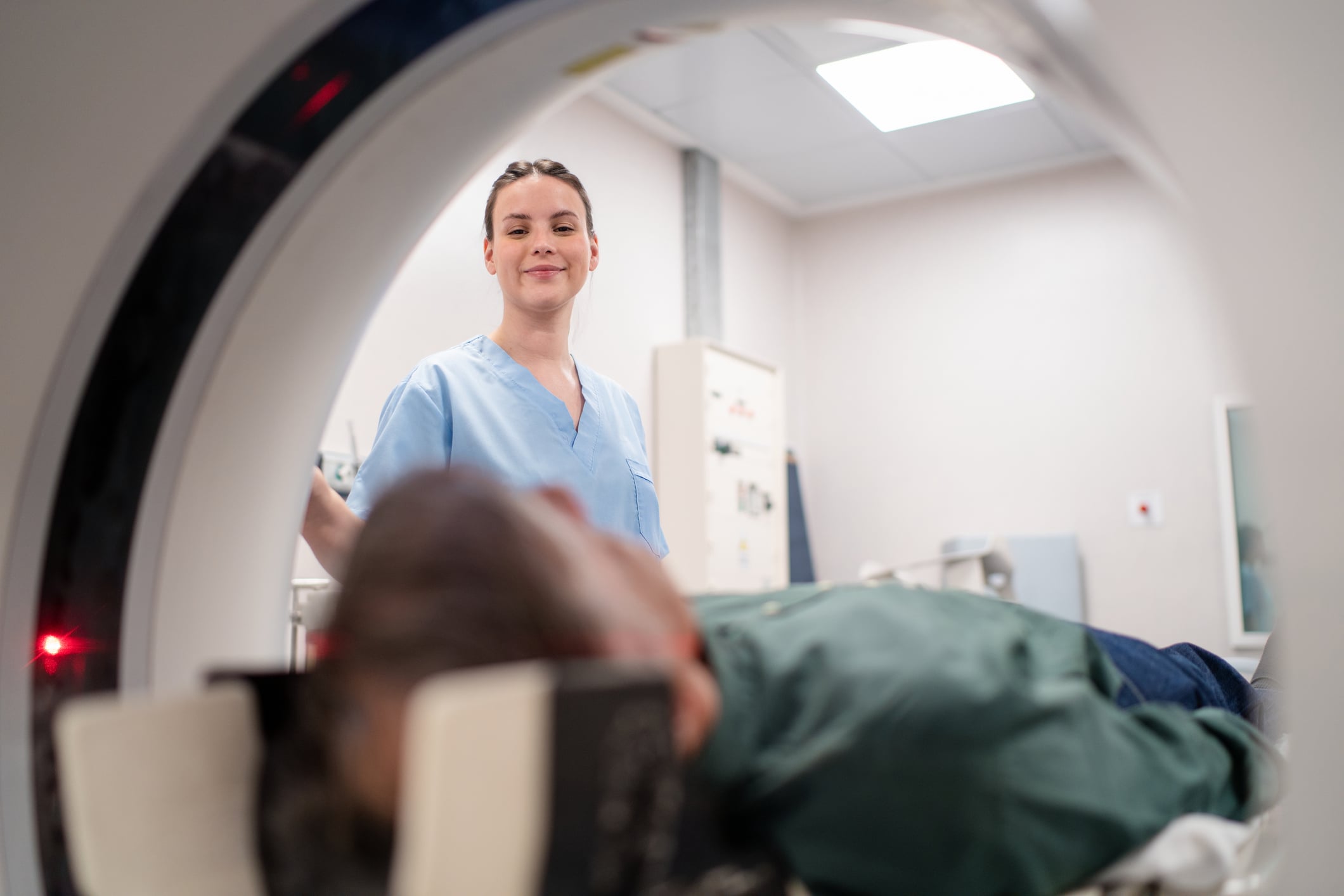
The researchers worked with a subpopulation of the CKD cohort, consisting of 741 patients with CKD (without dialysis) who were enrolled six to eight years ago. All patients were questioned regarding their medical history and medication use, they underwent physical examinations, provided blood samples and 24-hour urine samples, underwent ECG and were offered echocardiography, as well as noncontrast CT scans of the natural larger arteries including the coronary arteries. Finally, the study cohort (n=200) consisted of patients with CKD stage 3 who were additionally offered a carotid ultrasound scan. “We chose this group of patients because we believe stage 3 is the last stage where preventive treatment can be effective,” Dr. Saurbrey Bjergfelt explained.

Of the 200 patients who received carotid artery ultrasound, 175 participated in a noncontrast CT scan of the heart to measure the Coronary Artery Calcification Score. CACS measures the degree of calcification in a coronary artery in areas exceeding 130 Hounsfield units. The method is currently considered the gold standard for predicting cardiovascular events in patients with CKD.

To determine maximum carotid plaque thickness, the Danish researchers took cross-sectional images of the carotid arteries to find the plaque, if present, and to determine the thickest part of the plaque (cPTmax). Subsequently, the radial distance from the interface between the outer and middle layers of the artery to the center of the lumen was measured (Fig. 1) [2].

Same results as under the gold standard

During the median follow-up period of 5.4 years, all-cause mortality was 14% (28 patients), and 20 patients (10%) had a cardiovascular event. Cardiovascular events included: Myocardial infarction, percutaneous coronary intervention, coronary artery bypass grafting, ischemic stroke, carotid endarterectomy or stenting, nontraumatic lower limb amputation, lower limb bypass grafting, and percutaneous transluminal angioplasty of a lower extremity.

Based on the distribution of cPTmax, subjects were divided into 3 groups: no plaques, cPTmax 1.0-1.9 mm, and cPTmax >1.9 mm (the median cPTmax in the group was 1.9 mm). The risk of cardiovascular events and death was shown to increase with increasing cPTmax. In a non-adjusted analysis, the hazard ratio (HR) for major adverse cardiac events (MACE) in patients with cPTmax 1.0-1.9 mm (HR 3.8; CI: 1.5-9.9; p<0,01) und bei Patienten mit cPTmax>1.9 mm (HR 8.4; CI: 3.4-20.8; p<0,0001) signifikant erhöht. Nach Adjustierung an Alter, Geschlecht, Diabetes, Rauchen, Bluthochdruck und Hypercholesterinämie wiesen Patienten mit einer cPTmax>1.9 mm still showed a significant threefold increased risk of MACE (HR 3.2; CI: 1.1-9.3; p<0.05) compared to patients without plaques. Finally, using the C-statistic, Dr. Saurbrey Bjergfelt and colleagues compared the predictive value for MACE of cPTmax with that of CACS: the results for the two imaging modalities were very similar (cPTmax 0.247, p<0.0001 vs. CACS 0.243, p<0.0001) [3].

The nephrologist concluded that cPTmax >1.9 mm was an independent predictor of cardiovascular events and death in patients with stage 3 CKD. It is a quick and simple measurement that can possibly be performed in an outpatient clinic within 15 minutes. However, these results would need to be further confirmed in additional studies with larger cohorts.

Congress: ERA 2023

Sources:

  1. Bjergfelt SS: Vortrag «Carotid plaque thickness predicts cardiovascular events and death in patients with chronic kidney disease», Session «Mechanisms of CKD progression and complications: Unmasking the Mystery»; ERA 2023, 17.06.2023.
  2. Bjergfelt SS, Sørensen IMH, Hjortkjær HØ, et al.: Carotid plaque thickness is increased in chronic kidney disease and associated with carotid and coronary calcification. PLoS ONE 2021; 16(11): e0260417; doi: 10.1371/journal.pone.0260417.
  3. Bjergfelt SS, et al.: #2889 Carotid plaque thickness predicts cardiovascular events and death in patients with chronic kidney disease. Nephrology Dialysis Transplantation 2023; 38(1): gfad063a_2889; doi: 10.1093/ndt/gfad063a_2889.

CARDIOVASC 2023; 22(3): 40

Autoren
  • Jens Dehn
Publikation
  • CARDIOVASC
Related Topics
  • cardiovascular disease
  • chronic kidney disease
  • CKD
  • Plaque density
Previous Article
  • Rare diseases

Gaucher disease – a sphingolipidosis

  • Cases
  • Education
  • Gastroenterology and Hepatology
  • General Internal Medicine
  • Genetics
  • Hematology
  • Radiology
  • Rheumatology
  • RX
View Post
Next Article
  • medizinonline

Long-term data on upadacitinib show a consistent safety profile and no new safety signals [1].

  • Dermatology and venereology
  • RX
  • Training with partner
View Post
You May Also Like
View Post
  • 5 min
  • From symptom to diagnosis

Abdominal pain – angiosarcoma

    • Angiology
    • Cases
    • Education
    • General Internal Medicine
    • Oncology
    • Radiology
    • RX
View Post
  • 6 min
  • Pediatric epilepsy

Diazepam nasal spray for infants

    • Education
    • Neurology
    • Pediatrics
    • Pharmacology and toxicology
    • RX
    • Studies
View Post
  • 6 min
  • Findings from research on the generalization of exposure therapy

Treatment of comorbid anxiety

    • Education
    • Psychiatry and psychotherapy
    • RX
    • Studies
asthma_winter_istock-887318372
View Post
  • 4 min
  • Symptom-free despite asthma?

Asthma treatment requirements have increased

    • Congress Reports
    • General Internal Medicine
    • Pharmacology and toxicology
    • Pneumology
    • RX
View Post
  • 9 min
  • Phytotherapy for rhinosinusitis

Evidence, active substances and clinical classification for medical practice

    • Education
    • General Internal Medicine
    • Infectiology
    • ORL
    • Pharmaceutical medicine
    • Phytotherapy
    • RX
    • Studies
View Post
  • 15 min
  • Pulmonary hypertension

PH and lung diseases

    • Cardiology
    • CME continuing education
    • Pneumology
    • RX
    • Studies
View Post
  • 10 min
  • Contact eczema

Causes and prevention at work

    • Allergology and clinical immunology
    • CME continuing education
    • Dermatology and venereology
    • Prevention and health care
    • RX
View Post
  • 6 min
  • Respiratory infections: viral bronchitis or bacterial pneumonia?

Old crucial question in the light of current findings

    • Congress Reports
    • General Internal Medicine
    • Infectiology
    • Pharmaceutical medicine
    • Pharmacology and toxicology
    • Phytotherapy
    • Pneumology
    • RX
  • IBD matters

    Zum Thema
Top CME content
  • 1
    Can you swallow intelligence? Relevant substance classes times for healthy people
  • 2
    PH and lung diseases
  • 3
    Causes and prevention at work
  • 4
    Clinical care from birth to adulthood
  • 5
    Aligning care with the patient

Newsletter

Sign up and stay up to date

Subscribe
Medizinonline Medizinonline
  • Contact
  • General terms and conditions
  • Imprint

Input your search keywords and press Enter.