Medizinonline Medizinonline
  • News
    • News
    • Market & Medicine
  • Patients
    • Disease patterns
    • Diagnostics
    • Therapy
  • Partner Content
    • Diabetes
      • Dia-Month Club – Type 2 Diabetes
      • Diabetes in Motion
      • Diabetes Podcasts
    • Gastroenterology
      • IBD matters
    • Oncology
      • Swiss Oncology in motion
    • Orthopedics
      • Osteoporosis in motion
  • Departments
    • Allergology and clinical immunology
    • General Internal Medicine
    • Anesthesiology
    • Angiology
    • Surgery
    • Dermatology and venereology
    • Endocrinology and Diabetology
    • Nutrition
    • Gastroenterology and Hepatology
    • Genetics
    • Geriatrics
    • Gynecology
    • Hematology
    • Infectiology
    • Cardiology
    • Nephrology
    • Neurology
    • Emergency and intensive care medicine
    • Nuclear Medicine
    • Oncology
    • Ophthalmology
    • ORL
    • Orthopedics
    • Pediatrics
    • Pharmacology and toxicology
    • Pharmaceutical medicine
    • Phlebology
    • Physical medicine and rehabilitation
    • Pneumology
    • Prevention and health care
    • Psychiatry and psychotherapy
    • Radiology
    • Forensic Medicine
    • Rheumatology
    • Sports Medicine
    • Traumatology and trauma surgery
    • Tropical and travel medicine
    • Urology
    • Dentistry
  • CME & Congresses
    • CME continuing education
    • Congress Reports
    • Congress calendar
  • Practice
    • Noctimed
    • Practice Management
    • Jobs
    • Interviews
  • Log In
  • Register
  • My account
  • Contact
  • Publications
  • Contact
  • Deutsch
  • English
  • Français
  • Italiano
  • Português
  • Español
Subscribe
Medizinonline Medizinonline
  • News
    • News
    • Market & Medicine
  • Patienten
    • Krankheitsbilder
    • Diagnostik
    • Therapie
  • Partner Content
    • Diabetes
      • Dia-Month Club – Type 2 Diabetes
      • Diabetes in Motion
      • Diabetes Podcasts
    • Gastroenterology
      • IBD matters
    • Oncology
      • Swiss Oncology in motion
    • Orthopedics
      • Osteoporosis in motion
    • Phytotherapie
    • Rheumatology
  • Departments
    • Fachbereiche 1-13
      • Allergology and clinical immunology
      • General Internal Medicine
      • Anesthesiology
      • Angiology
      • Surgery
      • Dermatology and venereology
      • Endocrinology and Diabetology
      • Nutrition
      • Gastroenterology and Hepatology
      • Genetics
      • Geriatrics
      • Gynecology
      • Hematology
    • Fachbereiche 14-26
      • Infectiology
      • Cardiology
      • Nephrology
      • Neurology
      • Emergency and intensive care medicine
      • Nuclear Medicine
      • Oncology
      • Ophthalmology
      • ORL
      • Orthopedics
      • Pediatrics
      • Pharmacology and toxicology
      • Pharmaceutical medicine
    • Fachbereiche 26-38
      • Phlebology
      • Physical medicine and rehabilitation
      • Phytotherapy
      • Pneumology
      • Prevention and health care
      • Psychiatry and psychotherapy
      • Radiology
      • Forensic Medicine
      • Rheumatology
      • Sports Medicine
      • Traumatology and trauma surgery
      • Tropical and travel medicine
      • Urology
      • Dentistry
  • CME & Congresses
    • CME continuing education
    • Congress Reports
    • Congress calendar
  • Practice
    • Noctimed
    • Practice Management
    • Jobs
    • Interviews
Login

Sie haben noch keinen Account? Registrieren

  • Hyperkalemia

Hyperkalemia from a nephrological and cardiological point of view.

    • Cardiology
    • Congress Reports
    • Endocrinology and Diabetology
    • General Internal Medicine
    • Nephrology
    • RX
    • Studies
  • 2 minute read

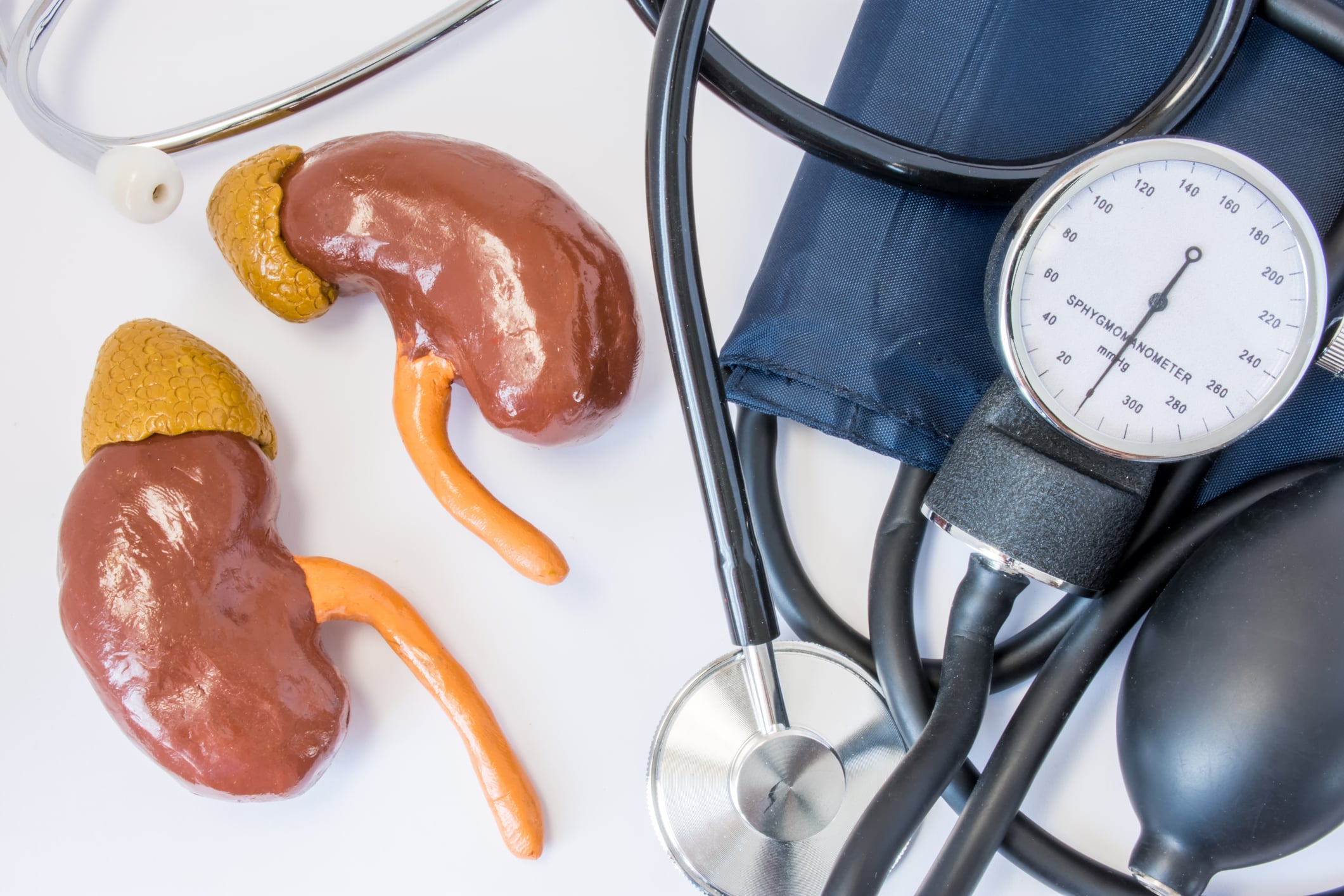
Patients with cardiac and/or renal insufficiency often experience electrolyte imbalance, which in many cases is life-threatening. Hyperkalemia can be caused by the underlying disease itself, but also by its treatment management. Therefore, in order not to cast out the devil with the Beelzebub, an effective approach specifically tailored to hyperkalemia is needed.

Potassium levels are determined by absorption, distribution, and (predominantly renal) elimination. On average, 1 mmol/kg is absorbed daily through food. The total concentration is then distributed with a ratio of 2% to 98% in the extracellular and intracellular space. The potassium-sodium ATPase is responsible for this. This activity can be modified via different pathways, such as insulin action or β adrenergic receptors, explained Prof. Ralph Kettritz, MD, Berlin (D). These support potassium influx into the intracellular space. Hyperglycemia, α agonists, and inorganic acidosis, on the other hand, cause potassium efflux. Potassium secretion is controlled by the mechanisms of sodium delivery, urine flow, aldosterone, and serum potassium, among others. By shifting potassium into cells and aldosterone-driven renal potassium secretion, the body can basically process high dietary potassium levels. High potassium intake also has beneficial effects on blood pressure and CV events, but also on CKD progression. According to association studies, the optimal potassium level is 4.0-4.6 mmol/l. In addition to CKD, age, diabetes mellitus, and RAAS blockade must also be considered risk factors for hyperkalemia.

The kidney in focus

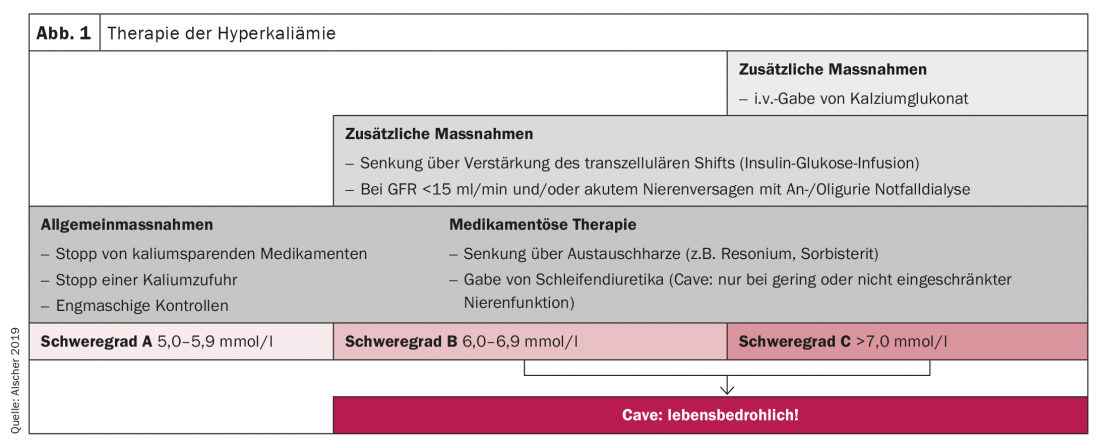
If too much potassium is supplied to the body, the appropriate countermeasures are already initiated during intestinal absorption. Prof. Dr. med. Mark Dominik Alscher, Stuttgart (D), pointed out that these mechanisms cannot fully take place in the case of impaired kidney function. In this case, acute hyperkalemia can occur very quickly. This is divided into three degrees of severity:

  1. Severity A: 5.0-5.9 mmol/l
  2. Severity B: 6.0-6.9 mmol/l
  3. Severity C: >7.0 mmol/l

Already from severity B the situation can be life-threatening. Accordingly, measures to lower the potassium level should be taken as soon as possible (Fig. 1).


Effects on the heart

The cardio-renal interaction in systolic heart failure resembles a vicious circle, as Prof. Christiane Angermann, MD, Würzburg (D), explained. If cardiac pump function is reduced, lower renal perfusion and diuresis are the result. This results in congestion, which in turn has an unfavorable effect on the heart. Correspondingly, the rate of hyperkalemia in heart failure increases with decreasing renal function. This leads to a core problem in practice, as this consequence is also evident depending on the therapy and therefore, for example, RAAS inhibitors are discontinued or reduced and potentially life-saving therapies are withheld, the expert said.

In this case, specific therapy of hyperkalemia should rather be considered. Sodium polystyrene sulfonate is available for this purpose, but it is subject to significant limitations, is poorly tolerated and can result in severe gastrointestinal complications. Patiromer offers significantly better tolerability with only mild gastrointestinal side effects such as constipation, as well as good study evidence, Angermann reported. Studies have shown that the potassium blocker allows initiation and up-dosing of treatment with RAAS inhibitors and thus optimized heart failure therapy.

Congress: DGIM


CARDIOVASC 2021; 20(2): 31 (published 6/27-21, ahead of print).
Autoren
  • Leoni Burggraf
Publikation
  • CARDIOVASC
Related Topics
  • Heart failure
  • Hyperkalemia
  • Renal failure
Previous Article
  • Rheumatism 2021

News from basic research

  • CME continuing education
  • Education
  • General Internal Medicine
  • Geriatrics
  • Rheumatology
  • RX
  • Studies
View Post
Next Article
  • Alopecia areata

Baricitinib improves hair growth in second Phase III study

  • Dermatology and venereology
  • General Internal Medicine
  • Market & Medicine
  • RX
  • Studies
View Post
You May Also Like
View Post
  • 5 min
  • Irritable Bowel Syndrome

IBS or endometriosis?

    • RX
    • Education
    • Gastroenterology and Hepatology
    • General Internal Medicine
    • Gynecology
    • Studies
View Post
  • 6 min
  • Type 2 diabetes: sarcopenia and frailty

How can the breakdown of skeletal muscles be stopped?

    • RX
    • Congress Reports
    • Endocrinology and Diabetology
    • General Internal Medicine
    • Geriatrics
    • Nutrition
    • Orthopedics
    • Sports Medicine
View Post
  • 4 min
  • Cholangiocarcinoma

Modern molecular diagnostics and targeted therapy options

    • RX
    • Education
    • Gastroenterology and Hepatology
    • Oncology
    • Studies
View Post
  • 6 min
  • Treatment resistant depression

Esketamine nasal spray as monotherapy? New for treatment-resistant depression

    • RX
    • Education
    • General Internal Medicine
    • ORL
    • Pharmacology and toxicology
    • Psychiatry and psychotherapy
    • Studies
View Post
  • 6 min
  • Analysis of SNVCS data from the period 2005-2022

TBE vaccination for children and adolescents in Switzerland

    • RX
    • Education
    • General Internal Medicine
    • Infectiology
    • Neurology
    • Pediatrics
    • Prevention and health care
View Post
  • 4 min
  • Tuberculosis

Detecting diabetes in TB patients early and efficiently

    • RX
    • Education
    • Endocrinology and Diabetology
    • Infectiology
    • Pneumology
    • Studies
View Post
  • 4 min
  • Trichophyton indotineae

Terbinafine-resistant dermatophytoses are on the rise in Central Europe

    • RX
    • Allergology and clinical immunology
    • Congress Reports
    • Dermatology and venereology
    • Infectiology
    • Studies
    • Tropical and travel medicine
View Post
  • 11 min
  • Peristomal skin health

Focus on preventive care options

    • RX
    • Cases
    • CME continuing education
    • Dermatology and venereology
    • Gastroenterology and Hepatology
    • Infectiology
    • Physical medicine and rehabilitation
    • Prevention and health care
    • Surgery
Landingpage Fachinfo Landingpage Button
  • IBD matters

    Zum Thema
Top CME content
  • 1
    Communication as the key to therapy adherence
  • 2
    Solutions to the malnutrition dilemma
  • 3
    Solutions to the malnutrition dilemma
  • 4
    Focus on preventive care options
  • 5
    Fertility preservation from gonads to genomes to genoids

Newsletter

Sign up and stay up to date

Subscribe
Medizinonline Medizinonline
  • Contact
  • General terms and conditions
  • Imprint

Input your search keywords and press Enter.