Medizinonline Medizinonline
  • News
    • News
    • Market & Medicine
  • Patients
    • Disease patterns
    • Diagnostics
    • Therapy
  • Partner Content
    • Diabetes
      • Dia-Month Club – Type 2 Diabetes
      • Diabetes in Motion
      • Diabetes Podcasts
    • Gastroenterology
      • IBD matters
    • Oncology
      • Swiss Oncology in motion
    • Orthopedics
      • Osteoporosis in motion
  • Departments
    • Allergology and clinical immunology
    • General Internal Medicine
    • Anesthesiology
    • Angiology
    • Surgery
    • Dermatology and venereology
    • Endocrinology and Diabetology
    • Nutrition
    • Gastroenterology and Hepatology
    • Genetics
    • Geriatrics
    • Gynecology
    • Hematology
    • Infectiology
    • Cardiology
    • Nephrology
    • Neurology
    • Emergency and intensive care medicine
    • Nuclear Medicine
    • Oncology
    • Ophthalmology
    • ORL
    • Orthopedics
    • Pediatrics
    • Pharmacology and toxicology
    • Pharmaceutical medicine
    • Phlebology
    • Physical medicine and rehabilitation
    • Pneumology
    • Prevention and health care
    • Psychiatry and psychotherapy
    • Radiology
    • Forensic Medicine
    • Rheumatology
    • Sports Medicine
    • Traumatology and trauma surgery
    • Tropical and travel medicine
    • Urology
    • Dentistry
  • CME & Congresses
    • CME continuing education
    • Congress Reports
    • Congress calendar
  • Practice
    • Noctimed
    • Practice Management
    • Jobs
    • Interviews
  • Log In
  • Register
  • My account
  • Contact
  • Publications
  • Contact
  • Deutsch
  • English
  • Français
  • Italiano
  • Português
  • Español
Subscribe
Medizinonline Medizinonline
  • News
    • News
    • Market & Medicine
  • Patienten
    • Krankheitsbilder
    • Diagnostik
    • Therapie
  • Partner Content
    • Diabetes
      • Dia-Month Club – Type 2 Diabetes
      • Diabetes in Motion
      • Diabetes Podcasts
    • Gastroenterology
      • IBD matters
    • Oncology
      • Swiss Oncology in motion
    • Orthopedics
      • Osteoporosis in motion
    • Phytotherapie
    • Rheumatology
  • Departments
    • Fachbereiche 1-13
      • Allergology and clinical immunology
      • General Internal Medicine
      • Anesthesiology
      • Angiology
      • Surgery
      • Dermatology and venereology
      • Endocrinology and Diabetology
      • Nutrition
      • Gastroenterology and Hepatology
      • Genetics
      • Geriatrics
      • Gynecology
      • Hematology
    • Fachbereiche 14-26
      • Infectiology
      • Cardiology
      • Nephrology
      • Neurology
      • Emergency and intensive care medicine
      • Nuclear Medicine
      • Oncology
      • Ophthalmology
      • ORL
      • Orthopedics
      • Pediatrics
      • Pharmacology and toxicology
      • Pharmaceutical medicine
    • Fachbereiche 26-38
      • Phlebology
      • Physical medicine and rehabilitation
      • Phytotherapy
      • Pneumology
      • Prevention and health care
      • Psychiatry and psychotherapy
      • Radiology
      • Forensic Medicine
      • Rheumatology
      • Sports Medicine
      • Traumatology and trauma surgery
      • Tropical and travel medicine
      • Urology
      • Dentistry
  • CME & Congresses
    • CME continuing education
    • Congress Reports
    • Congress calendar
  • Practice
    • Noctimed
    • Practice Management
    • Jobs
    • Interviews
Login

Sie haben noch keinen Account? Registrieren

  • Multiple Sclerosis: RRMS

Therapy change – strategy for follow-up treatment

    • Education
    • General Internal Medicine
    • Neurology
    • Rheumatology
    • RX
    • Studies
  • 3 minute read

Until the individually appropriate disease-modifying therapy (DMT) is available, there are
in the absence of predictive biomarkers, stepwise optimizations are often necessary, possibly resulting in multiple changes of DMT. To reduce the risk of rebound effects, a strategy for follow-up treatment should be established before discontinuation as a precautionary measure.

The heterogeneity of multiple sclerosis (MS) and the availability of different disease modifying therapies (DMTs) presents a challenge in therapy selection. The goal is to select the treatment that best meets the individual needs of the patient, taking into account efficacy and an acceptable risk-benefit ratio [1].
Therapy changes are common

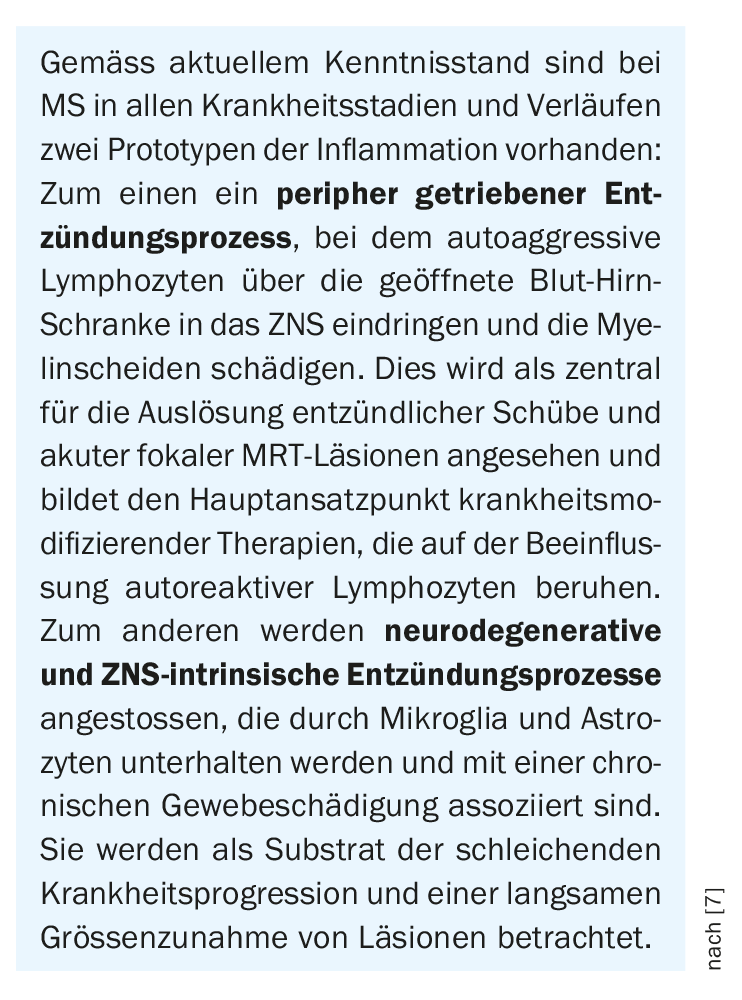
Reasons for switching a DMT may include lack of efficacy, adverse events, and inadequate treatment adherence. A multicenter, retrospective Italian study analyzed data from 2954 patients newly diagnosed with relapsing-remitting multiple sclerosis (RRMS) from 2010 to 2017 [2,3]. It was found that 48% of patients had changed therapy within 3 years [2,3]. Approximately one-tenth of patients who discontinue treatment with fingolimod due to side effects or inadequate control of MS disease activity experience increased disease activity (so-called rebound) two to four months after discontinuation [4]. Therefore, as a precautionary measure, a strategy for follow-up treatment should be established before discontinuation. Fingolimod has been approved in Switzerland since 2011 for the treatment of patients with RRMS to reduce relapse frequency and delay progression of disability. Sphingosine-1-phosphate receptor modulator (S1PR) selectively and reversibly retains lymphocytes in lymph nodes, allowing important immune functions to be maintained and patients to be treated flexibly.
Study on switching from fingolimod to ocrelizumab or natalizumab

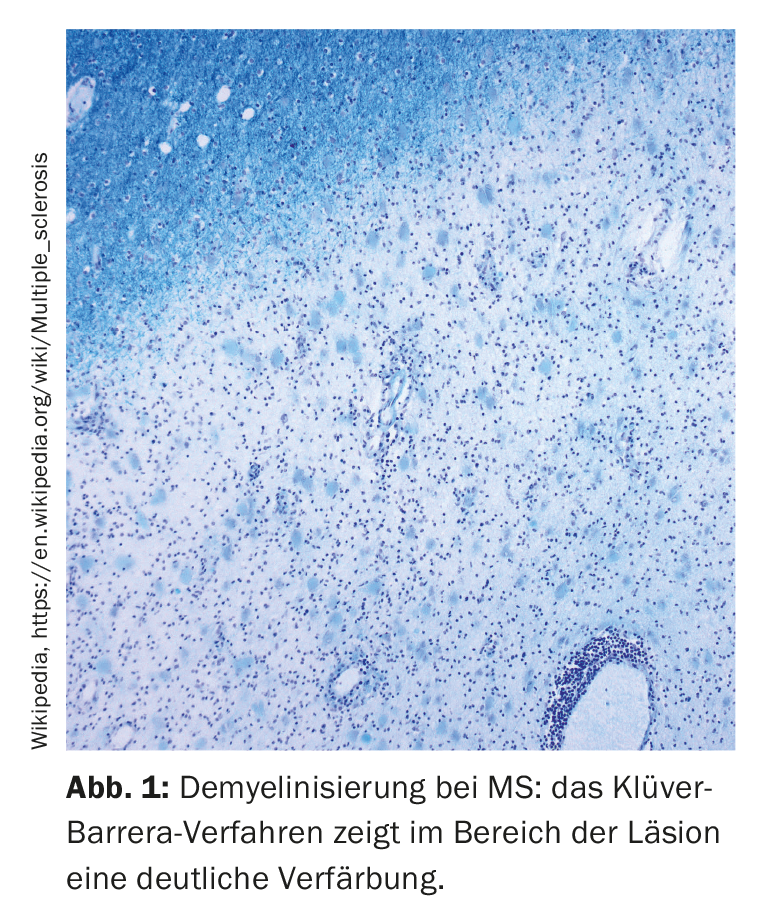
A recent study in the Journal of Neurology, Neurosurgery and Psychiatry published study led by researchers at Monash University found that the number of relapses in patients with RRMS was well controlled and disability stabilized or improved when patients who discontinued fingolimod were switched to either ocrelizumab or natalizumab [5]. First author and biostatistician Dr. Chao Zhu used a sophisticated statistical approach in his data analysis. In summary, ocrelizumab performed best in reducing the annualized relapse rate, followed by natalizumab and cladribine. Natalizumab led to the most improvements in disability, and patients remained on ocrelizumab the longest. The results at a glance:

  • A total of 1 045 patients switched from fingolimod to ocrelizumab (n=445), cladribine (n=76), or natalizumab (n=524).
  • The annualized relapse rate (ARR) for ocrelizumab was 0.07, for natalizumab 0.11, and for cladribine 0.25.
  • Compared with natalizumab, the ARR ratio (95% confidence interval was [KI]) for ocrelizumab was 0.67 (0.47-0.96) and for cladribine was 2.31 (1.30-4.10); the hazard ratio (95% CI) for time to first relapse was 0.57 (0.40-0.83) for ocrelizumab and 1.18 (0.47-2.93) for cladribine.
  • Ocrelizumab users had an 89% lower dropout rate (95% CI: 0.07-0.20) than natalizumab, but also a 51% lower likelihood of confirmed disability improvement (95% CI: 0.32-0.73).
  • There was no difference in the accumulation of impairment.

Natalizumab is a humanized IgG4 monoclonal antibody that prevents leukocyte migration into inflammatory tissues by binding to the α4-subunit of human integrins [6]. Ocrelizumab is a recombinant humanized monoclonal antibody that selectively depletes CD20-positive B cells [7].

Literature:

  1. Grand’Maison F, et al: Sequencing of disease-modifying therapies for relapsing-remitting multiple sclerosis: a theoretical approach to optimizing treatment. Curr Med Res Opin 2018; 34(8): 1419-1430.
  2. Saccà F, et al: Determinants of therapy switch in multiple sclerosis treatment-naive patients: A real-life study. Mult Scler 2019; 25(9): 1263-1272.
  3. Wiendl H, et al; The Multiple Sclerosis Therapy Consensus Group (MSTKG): Position paper on course-modifying therapy for multiple sclerosis 2021 (white paper) Nervenarzt 2021; 92(8): 773-801.
  4. Multiple Sclerosis Competence Network, Patient information on treatment with Gilenya®, www.kompetenznetz-multiplesklerose.de, (last accessed 12/12/2022).
  5. Zhu C, et al; MSBase Study Group: Comparing switch to ocrelizumab, cladribine or natalizumab after fingolimod treatment cessation in multiple sclerosis. J Neurol Neurosurg Psychiatry 2022; 93(12): 1330-1337.
  6. Delbue S, Comar M, Ferrante P: Natalizumab treatment of multiple sclerosis: new insights. Immunotherapy 2017; 9: 157-171.
  7. Hoffmann O, Gold R: Disease-modifying therapy of secondary progressive multiple sclerosis. Neurologist 2021; 92(10): 1052-1060.

HAUSARZT PRAXIS 2023; 18(1): 38

Autoren
  • Mirjam Peter, M.Sc.
Publikation
  • HAUSARZT PRAXIS
Related Topics
  • Change of therapy
  • disease modifying therapy
  • DMT
  • Follow-up treatment
  • Multiple sclerosis
  • RRMS
  • strategy
Previous Article
  • "Survey of Health, Ageing and Retirement."

Health literacy of older people in Switzerland

  • Education
  • General Internal Medicine
  • Geriatrics
  • Practice Management
  • Prevention and health care
  • RX
  • Studies
View Post
Next Article
  • From symptom to diagnosis

Dysphagia – gastric carcinoma

  • Cases
  • Education
  • Gastroenterology and Hepatology
  • General Internal Medicine
  • Oncology
  • Radiology
  • RX
View Post
You May Also Like
View Post
  • 5 min
  • Ulcerative colitis: current evidence on anti-inflammatory therapies

Remission induction and maintenance with biologics and JAK-i

    • RX
    • Congress Reports
    • Gastroenterology and Hepatology
    • General Internal Medicine
    • Studies
View Post
  • 4 min
  • Bronchiectasis

New strategies against neutrophilic inflammation

    • RX
    • Congress Reports
    • General Internal Medicine
    • Infectiology
    • Pneumology
    • Studies
View Post
  • 3 min
  • IBD in childhood

Pneumococcal vaccination without negative consequences

    • RX
    • Education
    • Gastroenterology and Hepatology
    • General Internal Medicine
    • Infectiology
    • Pediatrics
    • Prevention and health care
View Post
  • 7 min
  • Plastic surgery and reconstructive microsurgery for DFS

Functional limb preservation between infection control, vascular medicine and resurfacing

    • RX
    • Angiology
    • CME continuing education
    • Dermatology and venereology
    • Endocrinology and Diabetology
    • General Internal Medicine
    • Geriatrics
    • Physical medicine and rehabilitation
    • Surgery
View Post
  • 14 min
  • Seborrheic Dermatitis in Adults and Adolescents

Current State of Knowledge and New Therapeutic Approaches

    • RX
    • CME continuing education
    • Dermatology and venereology
    • Studies
View Post
  • 7 min
  • Orthobiologics for knee osteoarthritis

PRP and hyaluronic acid injections as building blocks in a multimodal concept

    • RX
    • Congress Reports
    • General Internal Medicine
    • Orthopedics
    • Rheumatology
    • Sports Medicine
    • Studies
    • Surgery
View Post
  • 3 min
  • Soft tissue sarcomas of the lower extremity

Diagnostics, subtypes and treatment options

    • RX
    • Education
    • Oncology
View Post
  • 38 min
  • Psychological dependence on AI assistants, smartphones and short videos

Algorithms, avatars and the unburdened mind

    • RX
    • CME continuing education
    • Neurology
    • Pediatrics
    • Prevention and health care
    • Psychiatry and psychotherapy
    • Studies
  • IBD matters

    Zum Thema
Top CME content
  • 1
    Current State of Knowledge and New Therapeutic Approaches
  • 2
    Why is it so hard to lose weight?
  • 3
    Functional limb preservation between infection control, vascular medicine and resurfacing
  • 4
    Algorithms, avatars and the unburdened mind
  • 5
    Communication as the key to therapy adherence

Newsletter

Sign up and stay up to date

Subscribe
Medizinonline Medizinonline
  • Contact
  • General terms and conditions
  • Imprint

Input your search keywords and press Enter.