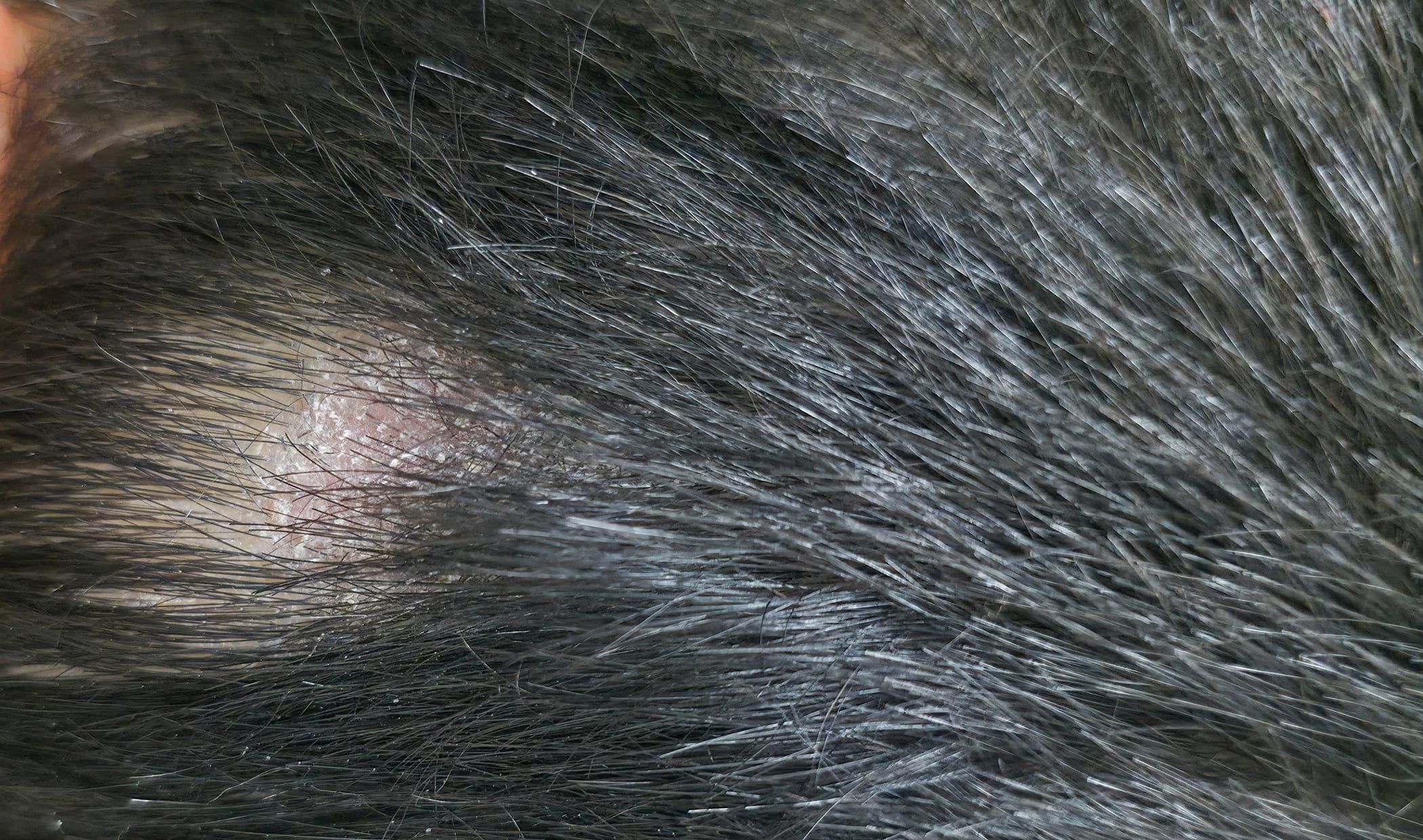
Tinea capitis is less common in adults, but its incidence is on the rise. From a diagnostic perspective, one should be on the lookout for pathogens that are rather atypical for the disease in children (e.g., T. rubrum), as well as consider “side-cut” tinea capitis (caused by T. tonsurans), which occasionally occurs after a haircut at a barbershop. For oral treatment of adults, the antifungal medications terbinafine, itraconazole, or fluconazole are options.
Autoren
- Mirjam Peter, M.Sc.
Publikation
- DERMATOLOGIE PRAXIS
Related Topics
You May Also Like
- Case study
Guillain-Barré syndrome with a fulminant course
- Suspicion of neuroborreliosis?
Detection of borrelia-specific CSF parameters provides certainty
- The Brain and the Motivation to Eat
Why is it so hard to lose weight?
- Global Recommendation, Swissmedic Approval, and SL Limitation
WHO Guidelines on GLP-1 for Obesity
- Obesity in Children and Adolescents
Gene-Environment Interactions: Polygenic or Monogenic Determinants?
- From Risk Identification to Anti-Inflammatory Intervention
Inflammation as a Treatment Goal in Its Own Right
- H. pylori infection: current study data
Fewer gastric carcinomas and peptic ulcers after eradication
- From symptom to diagnosis