Medizinonline Medizinonline
  • News
    • News
    • Market & Medicine
  • Patients
    • Disease patterns
    • Diagnostics
    • Therapy
  • Partner Content
    • Diabetes
      • Dia-Month Club – Type 2 Diabetes
      • Diabetes in Motion
      • Diabetes Podcasts
    • Gastroenterology
      • IBD matters
    • Oncology
      • Swiss Oncology in motion
    • Orthopedics
      • Osteoporosis in motion
  • Departments
    • Allergology and clinical immunology
    • General Internal Medicine
    • Anesthesiology
    • Angiology
    • Surgery
    • Dermatology and venereology
    • Endocrinology and Diabetology
    • Nutrition
    • Gastroenterology and Hepatology
    • Genetics
    • Geriatrics
    • Gynecology
    • Hematology
    • Infectiology
    • Cardiology
    • Nephrology
    • Neurology
    • Emergency and intensive care medicine
    • Nuclear Medicine
    • Oncology
    • Ophthalmology
    • ORL
    • Orthopedics
    • Pediatrics
    • Pharmacology and toxicology
    • Pharmaceutical medicine
    • Phlebology
    • Physical medicine and rehabilitation
    • Pneumology
    • Prevention and health care
    • Psychiatry and psychotherapy
    • Radiology
    • Forensic Medicine
    • Rheumatology
    • Sports Medicine
    • Traumatology and trauma surgery
    • Tropical and travel medicine
    • Urology
    • Dentistry
  • CME & Congresses
    • CME continuing education
    • Congress Reports
    • Congress calendar
  • Practice
    • Noctimed
    • Practice Management
    • Jobs
    • Interviews
  • Log In
  • Register
  • My account
  • Contact
  • Publications
  • Contact
  • Deutsch
  • English
  • Français
  • Italiano
  • Português
  • Español
Subscribe
Medizinonline Medizinonline
  • News
    • News
    • Market & Medicine
  • Patienten
    • Krankheitsbilder
    • Diagnostik
    • Therapie
  • Partner Content
    • Diabetes
      • Dia-Month Club – Type 2 Diabetes
      • Diabetes in Motion
      • Diabetes Podcasts
    • Gastroenterology
      • IBD matters
    • Oncology
      • Swiss Oncology in motion
    • Orthopedics
      • Osteoporosis in motion
    • Phytotherapie
    • Rheumatology
  • Departments
    • Fachbereiche 1-13
      • Allergology and clinical immunology
      • General Internal Medicine
      • Anesthesiology
      • Angiology
      • Surgery
      • Dermatology and venereology
      • Endocrinology and Diabetology
      • Nutrition
      • Gastroenterology and Hepatology
      • Genetics
      • Geriatrics
      • Gynecology
      • Hematology
    • Fachbereiche 14-26
      • Infectiology
      • Cardiology
      • Nephrology
      • Neurology
      • Emergency and intensive care medicine
      • Nuclear Medicine
      • Oncology
      • Ophthalmology
      • ORL
      • Orthopedics
      • Pediatrics
      • Pharmacology and toxicology
      • Pharmaceutical medicine
    • Fachbereiche 26-38
      • Phlebology
      • Physical medicine and rehabilitation
      • Phytotherapy
      • Pneumology
      • Prevention and health care
      • Psychiatry and psychotherapy
      • Radiology
      • Forensic Medicine
      • Rheumatology
      • Sports Medicine
      • Traumatology and trauma surgery
      • Tropical and travel medicine
      • Urology
      • Dentistry
  • CME & Congresses
    • CME continuing education
    • Congress Reports
    • Congress calendar
  • Practice
    • Noctimed
    • Practice Management
    • Jobs
    • Interviews
Login

Sie haben noch keinen Account? Registrieren

  • The somewhat different knowledge

Cancer therapy and fingerprinting: a search for traces of lost papillary lines.

    • Dermatology and venereology
    • Education
    • General Internal Medicine
    • Oncology
    • Prevention and health care
    • RX
    • Studies
  • 3 minute read

Fingerprinting before entering a foreign country? Quickly unlock your smartphone using fingerprint technology? What seemed self-evident yesterday can become impossible for cancer patients within a very short time. Although the loss of the fingerprint is not one of the dangerous side effects of oncological therapies, it can still lead to problems in daily life.

53-year-old Markus K. suffers from advanced rectal cancer with liver and lung metastases. Under chemotherapy with capecitabine/oxaliplatin, his condition stabilizes to the point that he wants to visit his sister in the U.S. one last time. But then comes the shock: he is refused entry because the quality of his fingerprints is insufficient. Only after consultation with the treating oncologists and much frustration does Markus K. manage to enter the USA despite his declining health. He dies six months later.

Markus K. is not an isolated case; the reason for his disappearing papillary lines is the therapy with capecitabine. However, other chemotherapeutic agents and certain targeted oncologic agents can also lead to loss of fingerprinting (or: phlebotomy). Apart from a few case reports, only a few systematic studies exist on this phenomenon – and these provide quite unexpected results.

No clear association with hand-foot syndrome

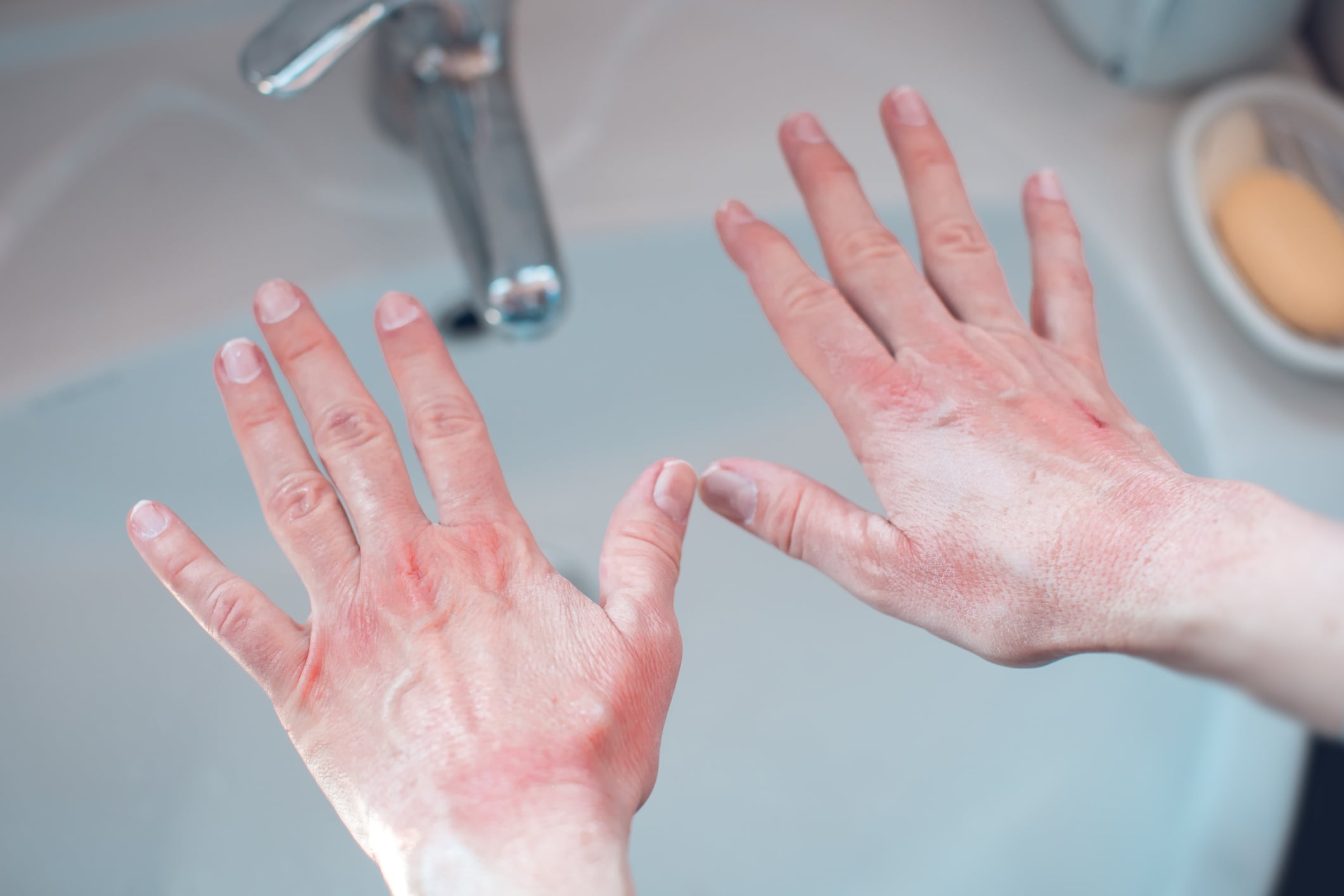
Contrary to the earlier assumption that the loss of papillary lines should be considered a direct consequence of hand-foot syndrome and thus a known chemotherapy side effect, several recent studies conclude that the fingerprint can disappear even without clinical signs[1–3]. Thus, changes in the fingerprint of varying degrees were observed in corresponding studies in almost 70% of patients receiving capecitabine therapy and about 55% of patients receiving paclitaxel treatment – without association to the occurrence of hand-foot syndrome [1,2]. While some study participants developed clinically definite hand-foot syndrome without severe changes in fingerprints, others developed clear changes in papillary lines – without symptoms of hand-foot syndrome such as dysesthesia, swelling, redness, or blistering. Also, in one study, treatment with sunitinib led to a marked decrease in fingerprint quality in one patient without subjective complaints [3]. Unlike hand-foot syndrome, neither dose nor duration of therapy appears to have a clear effect on papillary lines. What effects other substances that can trigger hand-foot syndrome have on the fingerprint cannot be assessed on the basis of the current state of studies. These agents include, for example, doxorubicin, docetaxel, cytarabine, and 5-fluorouracil, as well as small molecule kinase inhibitors such as axitinib, dabrafenib, and sunitinib [4]. In any case, an impairment of the quality of the fingerprints cannot be ruled out.

The bottom line: who gets hit by the uncomfortable condition of drug-induced vein matoglyphics is largely unclear so far. This makes it all the more important to educate potentially affected patients at an early stage – especially those who are being treated with capecitabine or paclitaxel. This is the only way to intercept frustration, apply for the biometric passport before therapy, and change the cell phone lock to facial recognition. Since fingerprint decline is currently only listed in the prescribing information for capecitabine – and even there only as a consequence of hand-foot syndrome – there is an even more important role for practitioners in this regard [5]. The physician is also important in dealing with the little-known adverse drug effect of papillary line loss. Thus, corresponding travel plans can be significantly simplified by a medical certificate.

The good news

Aside from the often asymptomatic course of the fading fingerprint, there is another piece of good news. Indeed, even if there is no clear correlation with clinically manifest hand-foot syndrome, the loss of papillary lines after discontinuation of therapy behaves similarly: it is reversible within weeks after the end of treatment, and permanent damage is rare [3]. However, discontinuation of effective treatment because of asymptomatic choroidal matoglyphia seems quite excessive – another reason for comprehensive patient education.


Literature:

  1. Yaghobi Joybari A, et al: Capecitabine induced fingerprint changes. J Clin Pharm Ther. 2019; 44(5): 780-787.
  2. Azadeh P, et al: Fingerprint changes among cancer patients treated with paclitaxel. J Cancer Res Clin Oncol. 2017; 143(4): 693-701.
  3. van Doorn L, et al: Capecitabine and the Risk of Fingerprint Loss. JAMA Oncology. 2017; 3(1): 122-3.
  4. Heyn G: Oncological therapy: targeted prevention of skin damage. Pharmaceutical Journal. 2019. www.pharmazeutische-zeitung.de/hautschaeden-gezielt-vorbeugen.
  5. Swissmedic drug information: www.swissmedicinfo.ch (last accessed 09.11.2021).


InFo ONcOLOGy & heMATOLOGy
Autoren
  • Med. pract. Amelie Stüger
Publikation
  • InFo ONKOLOGIE & HÄMATOLOGIE
Related Topics
  • cancer
  • Capecitabine
  • Fingerprint
Previous Article
  • Hairlessness

Better understanding of disease by identifying key genes

  • Dermatology and venereology
  • Education
  • General Internal Medicine
  • RX
View Post
Next Article
  • Skin and soft tissue infections

Erysipelas or limited phlegmon? CRP and leukocytes tip the scales

  • Dermatology and venereology
  • Education
  • Infectiology
  • RX
  • Studies
View Post
You May Also Like
View Post
  • 8 min
  • Proteins in wound healing

Do special amino acids lead to success?

    • CME continuing education
    • Dermatology and venereology
    • Endocrinology and Diabetology
    • Nutrition
    • RX
    • Studies
View Post
  • 0 min
  • Psychedelic-assisted therapy

Current status of PAT

    • CME continuing education
    • General Internal Medicine
    • Pharmacology and toxicology
    • Psychiatry and psychotherapy
    • RX
    • Studies
View Post
  • 5 min
  • Hepatitis B prophylaxis

Vaccination protection for healthcare staff with patient contact – an update

    • Congress Reports
    • General Internal Medicine
    • Infectiology
    • Prevention and health care
    • RX
View Post
  • 7 min
  • Plastic surgery and reconstructive microsurgery for DFS

Functional limb preservation between infection control, vascular medicine and resurfacing

    • Angiology
    • CME continuing education
    • Endocrinology and Diabetology
    • General Internal Medicine
    • Geriatrics
    • Physical medicine and rehabilitation
    • RX
    • Surgery
View Post
  • 6 min
  • Chronic urticaria: new treatment alternatives in sight

If antihistamines are not sufficient and IgE levels are low

    • Allergology and clinical immunology
    • Congress Reports
    • Dermatology and venereology
    • Pharmacology and toxicology
    • RX
    • Studies
View Post
  • 14 min
  • Adrenogenital syndrome

Clinical care from birth to adulthood

    • CME continuing education
    • Endocrinology and Diabetology
    • Nephrology
    • Pediatrics
    • RX
    • Studies
View Post
  • 4 min
  • Digital dermatology: innovative project examples

AI and eHealth tools in HS care

    • Dermatology and venereology
    • General Internal Medicine
    • Practice Management
    • Prevention and health care
    • RX
    • Studies
View Post
  • 7 min
  • Atopic dermatitis as a door opener for an atopic cascade?

AD trajectories: Summary of current findings

    • Allergology and clinical immunology
    • Congress Reports
    • Dermatology and venereology
    • RX
    • Studies
  • IBD matters

    Zum Thema
Top CME content
  • 1
    Current status of PAT
  • 2
    Do special amino acids lead to success?
  • 3
    Functional limb preservation between infection control, vascular medicine and resurfacing
  • 4
    Minimally invasive – the quiet triumph of modern heart surgery
  • 5
    HPV prevention, screening innovation and sentinel lymph node biopsy

Newsletter

Sign up and stay up to date

Subscribe
Medizinonline Medizinonline
  • Contact
  • General terms and conditions
  • Imprint

Input your search keywords and press Enter.