Medizinonline Medizinonline
  • News
    • News
    • Market & Medicine
  • Patients
    • Disease patterns
    • Diagnostics
    • Therapy
  • Partner Content
    • Diabetes
      • Dia-Month Club – Type 2 Diabetes
      • Diabetes in Motion
      • Diabetes Podcasts
    • Gastroenterology
      • IBD matters
    • Oncology
      • Swiss Oncology in motion
    • Orthopedics
      • Osteoporosis in motion
  • Departments
    • Allergology and clinical immunology
    • General Internal Medicine
    • Anesthesiology
    • Angiology
    • Surgery
    • Dermatology and venereology
    • Endocrinology and Diabetology
    • Nutrition
    • Gastroenterology and Hepatology
    • Genetics
    • Geriatrics
    • Gynecology
    • Hematology
    • Infectiology
    • Cardiology
    • Nephrology
    • Neurology
    • Emergency and intensive care medicine
    • Nuclear Medicine
    • Oncology
    • Ophthalmology
    • ORL
    • Orthopedics
    • Pediatrics
    • Pharmacology and toxicology
    • Pharmaceutical medicine
    • Phlebology
    • Physical medicine and rehabilitation
    • Pneumology
    • Prevention and health care
    • Psychiatry and psychotherapy
    • Radiology
    • Forensic Medicine
    • Rheumatology
    • Sports Medicine
    • Traumatology and trauma surgery
    • Tropical and travel medicine
    • Urology
    • Dentistry
  • CME & Congresses
    • CME continuing education
    • Congress Reports
    • Congress calendar
  • Practice
    • Noctimed
    • Practice Management
    • Jobs
    • Interviews
  • Log In
  • Register
  • My account
  • Contact
  • Publications
  • Contact
  • Deutsch
  • English
  • Français
  • Italiano
  • Português
  • Español
Subscribe
Medizinonline Medizinonline
  • News
    • News
    • Market & Medicine
  • Patienten
    • Krankheitsbilder
    • Diagnostik
    • Therapie
  • Partner Content
    • Diabetes
      • Dia-Month Club – Type 2 Diabetes
      • Diabetes in Motion
      • Diabetes Podcasts
    • Gastroenterology
      • IBD matters
    • Oncology
      • Swiss Oncology in motion
    • Orthopedics
      • Osteoporosis in motion
    • Phytotherapie
    • Rheumatology
  • Departments
    • Fachbereiche 1-13
      • Allergology and clinical immunology
      • General Internal Medicine
      • Anesthesiology
      • Angiology
      • Surgery
      • Dermatology and venereology
      • Endocrinology and Diabetology
      • Nutrition
      • Gastroenterology and Hepatology
      • Genetics
      • Geriatrics
      • Gynecology
      • Hematology
    • Fachbereiche 14-26
      • Infectiology
      • Cardiology
      • Nephrology
      • Neurology
      • Emergency and intensive care medicine
      • Nuclear Medicine
      • Oncology
      • Ophthalmology
      • ORL
      • Orthopedics
      • Pediatrics
      • Pharmacology and toxicology
      • Pharmaceutical medicine
    • Fachbereiche 26-38
      • Phlebology
      • Physical medicine and rehabilitation
      • Phytotherapy
      • Pneumology
      • Prevention and health care
      • Psychiatry and psychotherapy
      • Radiology
      • Forensic Medicine
      • Rheumatology
      • Sports Medicine
      • Traumatology and trauma surgery
      • Tropical and travel medicine
      • Urology
      • Dentistry
  • CME & Congresses
    • CME continuing education
    • Congress Reports
    • Congress calendar
  • Practice
    • Noctimed
    • Practice Management
    • Jobs
    • Interviews
Login

Sie haben noch keinen Account? Registrieren

  • Newborn child with bluish-red macules and plaques

From berries and skin

    • Allergology and clinical immunology
    • Dermatology and venereology
    • Education
    • Pediatrics
    • RX
  • 2 minute read

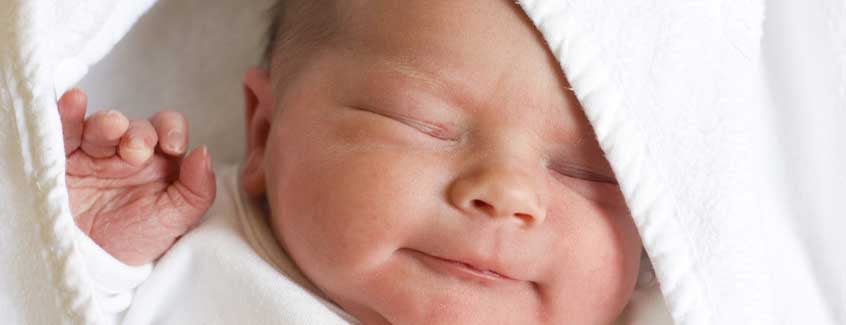
Case report: The family presents with their three-week-old newborn as an emergency case. Already at birth a bluish spot on the face had been noticed, which was thought to be a peripartum hematoma. Since the tenth day of life, similar bluish-reddish spots and plaques would appear all over the body. Her son was born on term after an uneventful pregnancy, showed unremarkable adaptation, and was in regular general condition with good weight gain.

Clinical picture:

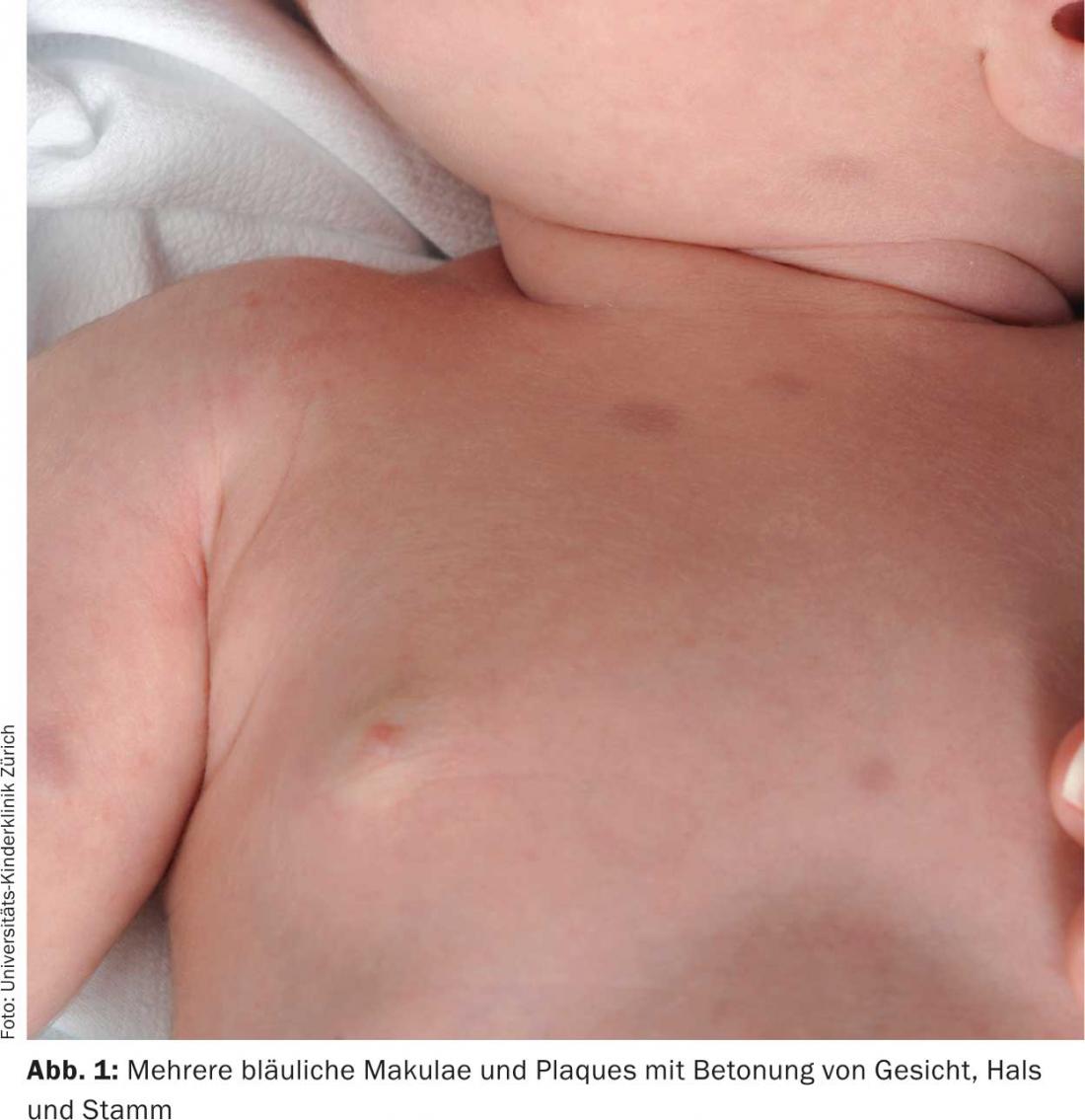
In the area of the face, the trunk and to a lesser extent the proximal extremities, a total of about 20 bluish-reddish, relatively sharply demarcated macules and plaques are visible (Fig. 1). The mucous membranes are unremarkable, and no lymphadenopathies or organomegaly are present.


Quiz

Based on this information, which is the most likely diagnosis?
A Mastocytosis (Urticaria pigmentosa)
B “Blue rubber bleb nevus” syndrome
C Hemangiomatosis
D Acute leukemia
E Child abuse

Diagnosis and discussion:

This rare but characteristic clinical presentation with multiple bluish, reddish, or pinkish macules, plaques, or nodules is called a “blueberry muffin baby” given its resemblance to blueberry muffins. It is a phenotype that may be based on various pathologies and is observed exclusively at birth and in the first weeks of life. Classically, compensatory extramedullary hematopoiesis is present in the skin and other organs in the setting of congenital infections or severe anemic states, but the picture may also be due to neoplastic infiltrates (Table 1) [1,2].
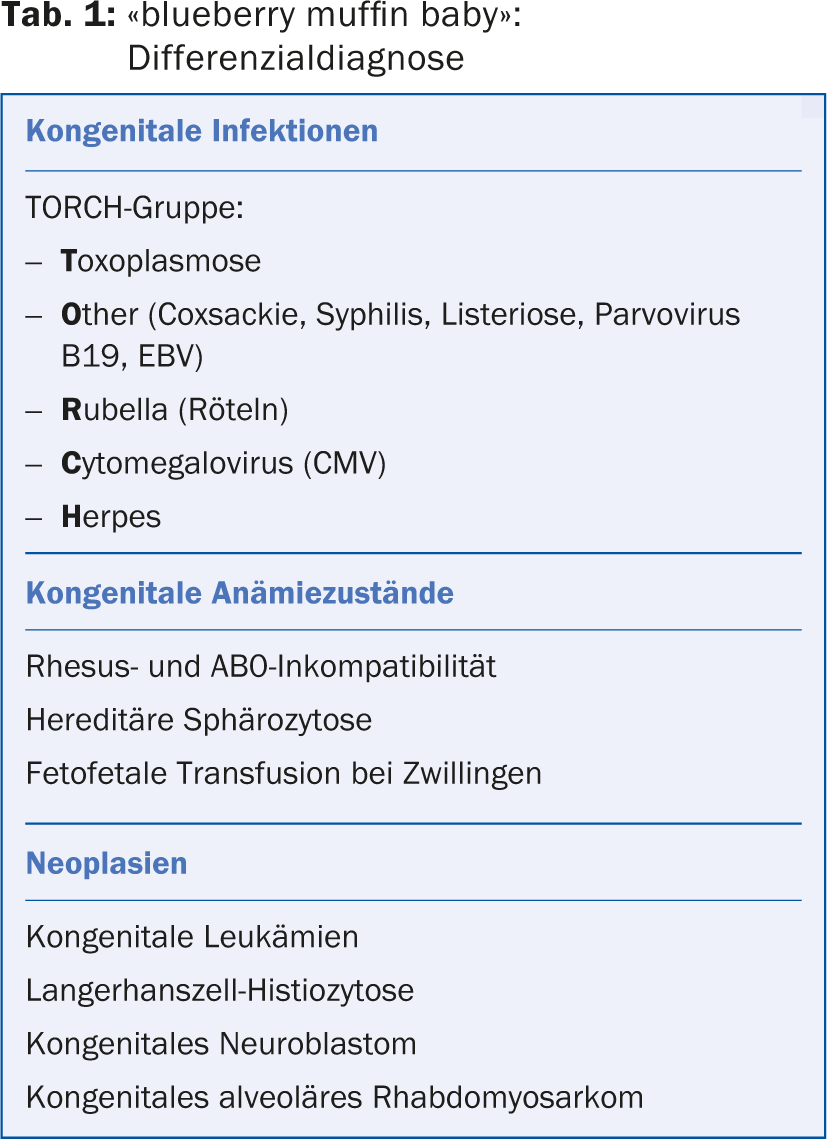


Due to the severity of the possible underlying diseases, “blueberry muffin” lesions should be interpreted as an alarm sign and immediate further investigations are indicated. These include a detailed history (signs of infection in pregnancy), clinical status (vital signs, lymphadenopathies, organomegaly), laboratory chemistry tests (differential blood count, chemistry, LDH, hemolysis parameters, serologic workup of congenital infections), skin biopsy, abdominal ultrasonography, and bone marrow and lumbar puncture if necessary.

There was no evidence of congenital infection in our patient and the initial investigations in our emergency department, in particular blood count, chemistry and abdominal ultrasonography, were unremarkable. Only skin biopsy revealed atypical myeloid infiltration compatible with acute myelomonocytic leukemia (M4) (response D). The subsequent bone marrow biopsy showed a blast percentage of 48% and the CSF findings were also positive.
Knowledge of the “blueberry muffin” phenotype as a cutaneous alarm sign is crucial for immediately directing affected newborns and infants to the necessary investigations and possible therapy.

Literature:

  1. Hodl S, et al: Blueberry muffin baby: the pathogenesis of cutaneous extramedullary hematopoiesis. Dermatologist 2001; 52: 1035-1042.
  2. Mehta V, Balachandran C, Lonikar V: Blueberry muffin baby: a pictoral differential diagnosis. Dermatol Online J 2008; 14: 8.

DERMATOLOGIE PRAXIS 2014; 24(5): 36-37
Autoren
  • Dr. med. Martin Theiler
Publikation
  • DERMATOLOGIE PRAXIS
Related Topics
  • Case Report
  • leukemia
  • Maculae
  • Newborn
  • plaque
Previous Article
  • 2nd Facial Workshop of the SGEDS

“If the result is visible, it has been overcorrected!”

  • Dermatology and venereology
  • Education
  • RX
View Post
Next Article
  • Therapy of chronic recurrent pyoderma

Erysipelas and boils carry a high risk of recurrence

  • Congress Reports
  • Dermatology and venereology
  • Infectiology
  • RX
View Post
You May Also Like
View Post
  • 9 min
  • Polycystic ovary syndrome 2025/2026

New pathophysiology, updated diagnostics and the age of incretin mimetics

    • Education
    • Gastroenterology and Hepatology
    • General Internal Medicine
    • Gynecology
    • Pharmacology and toxicology
    • RX
    • Studies
View Post
  • 14 min
  • Heart failure and type 2 diabetes

Oral semaglutide and cardiac decompensation in type 2 diabetes

    • Cardiology
    • Education
    • Endocrinology and Diabetology
    • RX
    • Studies
View Post
  • 7 min
  • Atopic dermatitis as a door opener for an atopic cascade?

AD trajectories: Summary of current findings

    • Allergology and clinical immunology
    • Congress Reports
    • Dermatology and venereology
    • RX
    • Studies
View Post
  • 11 min
  • New evidence on descensus, urinary incontinence and the future of reconstruction

Urogynecology and pelvic floor surgery 2026

    • Education
    • General Internal Medicine
    • Gynecology
    • Physical medicine and rehabilitation
    • RX
    • Studies
    • Surgery
    • Urology
View Post
  • 8 min
  • Proteins in wound healing

Do special amino acids lead to success?

    • CME continuing education
    • Dermatology and venereology
    • Endocrinology and Diabetology
    • Nutrition
    • RX
    • Studies
View Post
  • 5 min
  • Case study

Autosomal recessive polycystic kidney disease: atypical phenotype

    • Cases
    • Education
    • Gastroenterology and Hepatology
    • Genetics
    • Nephrology
    • RX
View Post
  • 12 min
  • Current evidence, risk classes and new counseling options

Hormonal contraception and cardiovascular risk

    • Cardiology
    • Education
    • Gynecology
    • Neurology
    • Pharmacology and toxicology
    • RX
    • Studies
View Post
  • 4 min
  • Acute otitis media: self-limiting course vs. "red flags"

In which cases are antibiotics necessary?

    • Congress Reports
    • General Internal Medicine
    • Infectiology
    • ORL
    • Pediatrics
    • RX
  • IBD matters

    Zum Thema
Top CME content
  • 1
    Do special amino acids lead to success?
  • 2
    Current status of PAT
  • 3
    Surgical wound complications
  • 4
    Do special amino acids lead to success?
  • 5
    Functional limb preservation between infection control, vascular medicine and resurfacing

Newsletter

Sign up and stay up to date

Subscribe
Medizinonline Medizinonline
  • Contact
  • General terms and conditions
  • Imprint

Input your search keywords and press Enter.