Medizinonline Medizinonline
  • News
    • News
    • Market & Medicine
  • Patients
    • Disease patterns
    • Diagnostics
    • Therapy
  • Partner Content
    • Diabetes
      • Dia-Month Club – Type 2 Diabetes
      • Diabetes in Motion
      • Diabetes Podcasts
    • Gastroenterology
      • IBD matters
    • Oncology
      • Swiss Oncology in motion
    • Orthopedics
      • Osteoporosis in motion
  • Departments
    • Allergology and clinical immunology
    • General Internal Medicine
    • Anesthesiology
    • Angiology
    • Surgery
    • Dermatology and venereology
    • Endocrinology and Diabetology
    • Nutrition
    • Gastroenterology and Hepatology
    • Genetics
    • Geriatrics
    • Gynecology
    • Hematology
    • Infectiology
    • Cardiology
    • Nephrology
    • Neurology
    • Emergency and intensive care medicine
    • Nuclear Medicine
    • Oncology
    • Ophthalmology
    • ORL
    • Orthopedics
    • Pediatrics
    • Pharmacology and toxicology
    • Pharmaceutical medicine
    • Phlebology
    • Physical medicine and rehabilitation
    • Pneumology
    • Prevention and health care
    • Psychiatry and psychotherapy
    • Radiology
    • Forensic Medicine
    • Rheumatology
    • Sports Medicine
    • Traumatology and trauma surgery
    • Tropical and travel medicine
    • Urology
    • Dentistry
  • CME & Congresses
    • CME continuing education
    • Congress Reports
    • Congress calendar
  • Practice
    • Noctimed
    • Practice Management
    • Jobs
    • Interviews
  • Log In
  • Register
  • My account
  • Contact
  • Publications
  • Contact
  • Deutsch
  • English
  • Français
  • Italiano
  • Português
  • Español
Subscribe
Medizinonline Medizinonline
  • News
    • News
    • Market & Medicine
  • Patienten
    • Krankheitsbilder
    • Diagnostik
    • Therapie
  • Partner Content
    • Diabetes
      • Dia-Month Club – Type 2 Diabetes
      • Diabetes in Motion
      • Diabetes Podcasts
    • Gastroenterology
      • IBD matters
    • Oncology
      • Swiss Oncology in motion
    • Orthopedics
      • Osteoporosis in motion
    • Phytotherapie
    • Rheumatology
  • Departments
    • Fachbereiche 1-13
      • Allergology and clinical immunology
      • General Internal Medicine
      • Anesthesiology
      • Angiology
      • Surgery
      • Dermatology and venereology
      • Endocrinology and Diabetology
      • Nutrition
      • Gastroenterology and Hepatology
      • Genetics
      • Geriatrics
      • Gynecology
      • Hematology
    • Fachbereiche 14-26
      • Infectiology
      • Cardiology
      • Nephrology
      • Neurology
      • Emergency and intensive care medicine
      • Nuclear Medicine
      • Oncology
      • Ophthalmology
      • ORL
      • Orthopedics
      • Pediatrics
      • Pharmacology and toxicology
      • Pharmaceutical medicine
    • Fachbereiche 26-38
      • Phlebology
      • Physical medicine and rehabilitation
      • Phytotherapy
      • Pneumology
      • Prevention and health care
      • Psychiatry and psychotherapy
      • Radiology
      • Forensic Medicine
      • Rheumatology
      • Sports Medicine
      • Traumatology and trauma surgery
      • Tropical and travel medicine
      • Urology
      • Dentistry
  • CME & Congresses
    • CME continuing education
    • Congress Reports
    • Congress calendar
  • Practice
    • Noctimed
    • Practice Management
    • Jobs
    • Interviews
Login

Sie haben noch keinen Account? Registrieren

  • Rare infections of the lung

The worm is in it

    • Congress Reports
    • Infectiology
    • Pneumology
    • RX
  • 3 minute read

In the context of increasing mobility and more people coming from endemic areas, it is important to be aware of rare lung infections. Older or immunosuppressed patients in particular often travel to exotic locations for recuperation, from which they then like to bring home a lung infection.

Global warming is doing the rest, with higher temperatures also increasing the incidence of infectious diseases in previously non-endemic regions. Almost all medical specialties are affected, from general medicine, pneumology and infectious diseases to intensive care medicine, hematology and oncology. Dr. Miriam Stegemann, Medical Clinic with a focus on Infectiology and Pneumology at Charité – Universitätsmedizin Berlin, presented some of these rare cases at the DGIM Internist Congress of the German Society of Internal Medicine in Wiesbaden.

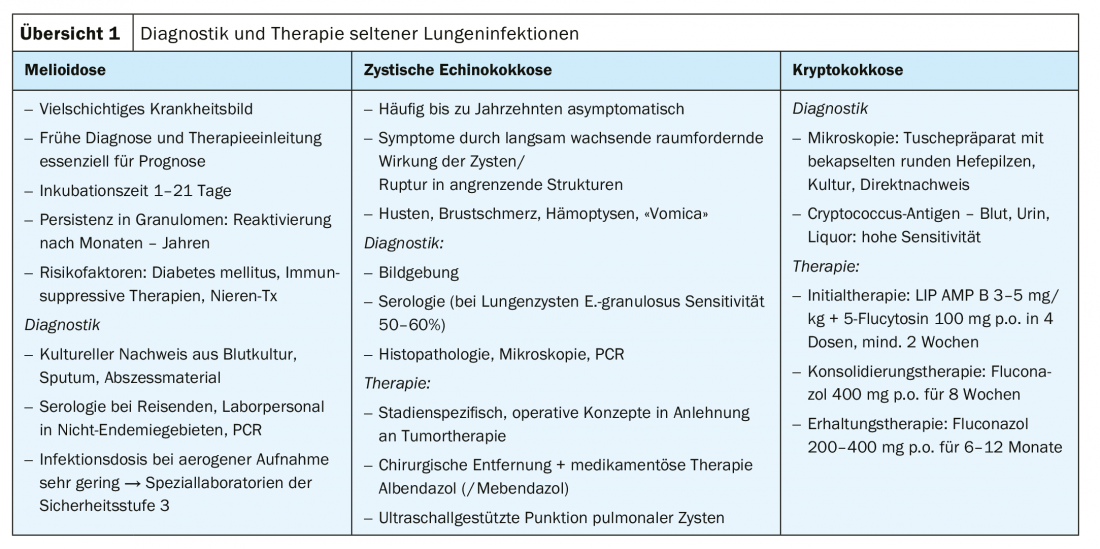
Melioidosis

A 45-year-old man with pre-existing diabetes mellitus was admitted to the hospital as an inpatient. The heavy smoker (>20PY) had returned ten days earlier from a two-week vacation in Thailand. Already during the trip he developed a weeping sore in the area of his left ankle, now he had fever, cough and dyspnea.

X-ray chest revealed multiple pulmonary abscesses on both sides of the lungs. In accordance with guidelines, blood cultures were obtained and empiric therapy with ampicillin/sulbactam and clarithromycin was initiated if CAP was suspected. “But with this history, we should think a little more broadly,” Dr. Stegemann cautioned: blood culture showed Burkholderia pseudomallei after eight days, which is the causative agent of melioidosis.

This is a bacterial tropical infection caused by gram-negative rod bacteria and occurs mainly in Southeast Asia and northern Australia. In Europe, there are sporadic imported cases from Thailand, Vietnam and Cambodia. It is likely, the expert said, that melioidosis is underdiagnosed, but is likely to become increasingly relevant due to global warming and natural disasters such as the 2004 tsunami. If left untreated, it can be associated with a mortality of >50%.


Parasites

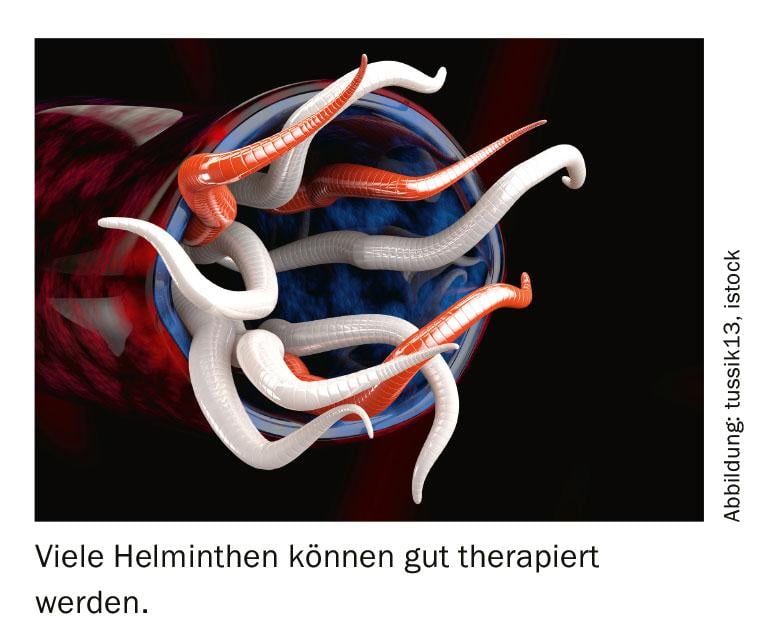
Most parasites have interesting life cycles and as part of their migratory phase, many of them also pass through the lungs. “If you’re lucky, you catch patients when they present with Löffler syndrome,” Dr. Stegemann said. In Löffler syndrome (also called acute worm larval migration syndrome), transient infiltrates may be seen and eosinophilia is also a sign of parasitic lung infection. Typical pathogens for Löffler syndrome are Ascaris spp, Toxocara spp, Necator americanus, Ancylostoma duodenale and Strongyloides stercoralis.

In this context, it is always important to take a good travel history. Thus, the pathogen spectrum can be narrowed down, and many helminths can be effectively treated.


Echinococcosis

Echinococcosis is a parasitic disease that can manifest itself not only in the liver, but also in the lungs, and can also be found in our country from time to time.

The causative agents of echinococcosis are, on the one hand, E. granulosus , better known as the dog tapeworm. It is the causative agent of cystic echinococcosis, which manifests itself mostly (80%) by singular cysts in the liver 20% lungs). This form should be distinguished from alveolar echinococcosis, which causes a more invasive growth and is associated with a much higher mortality (>90% vs. 2-4% for cystic echinococcosis).

Fungal infections

Physicians must also keep a watchful eye on fungal infections, as endemic areas change due to climatic factors, changes in land use, the distribution of host animals, or even global trade routes, as Dr. Stegemann further explained.

In Europe and the USA, invasive Aspergillus and Candida infections are the most common, while in the so-called LMIC countries (low and middle-income countries) cryptococcosis and Pneumocystis infections are leading (mainly due to the spread of HIV).

The most important fungal disease worldwide is cryptococcosis. Typically, pigeon droppings are contaminated with it, and manifestation in the lungs occurs via inhalation of contaminated dusts, but often goes undetected. Hematogenous dissemination may occur – if a systemic manifestation develops, one is usually (90%) dealing with cryptococcal meningitis. Predominantly but not only affected are immunosuppressed patients with cellular immunodeficiency. Worldwide, about one million cases are registered annually; in Germany, there are about 50-60 inpatient admissions per year, 40% of them without HIV infection.

Source: DGIM 2019, Wiesbaden (D)


InFo PNEUMOLOGY & ALLERGOLOGY 2019; 1(2): 35-36 (published 9/26/19, ahead of print).

Autoren
  • Jens Dehn
Publikation
  • InFo PNEUMOLOGIE & ALLERGOLOGIE
Related Topics
  • Echinococcosis
  • fungal infection
  • melioidosis
  • Parasites
  • worms
Previous Article
  • Juvenile Oncology

Keeping an eye on the late effects

  • News
  • Oncology
  • Pediatrics
  • RX
View Post
Next Article
  • BCL-2 Inhibition

The next chapter in blood cancer therapy is opened

  • Congress Reports
  • Hematology
  • Oncology
  • RX
View Post
You May Also Like
View Post
  • 11 min
  • New evidence on descensus, urinary incontinence and the future of reconstruction

Urogynecology and pelvic floor surgery 2026

    • Education
    • General Internal Medicine
    • Gynecology
    • Physical medicine and rehabilitation
    • RX
    • Studies
    • Surgery
    • Urology
View Post
  • 8 min
  • Proteins in wound healing

Do special amino acids lead to success?

    • CME continuing education
    • Dermatology and venereology
    • Endocrinology and Diabetology
    • Nutrition
    • RX
    • Studies
View Post
  • 5 min
  • Case study

Autosomal recessive polycystic kidney disease: atypical phenotype

    • Cases
    • Education
    • Gastroenterology and Hepatology
    • Genetics
    • Nephrology
    • RX
View Post
  • 12 min
  • Current evidence, risk classes and new counseling options

Hormonal contraception and cardiovascular risk

    • Cardiology
    • Education
    • Gynecology
    • Neurology
    • Pharmacology and toxicology
    • RX
    • Studies
View Post
  • 4 min
  • Acute otitis media: self-limiting course vs. "red flags"

In which cases are antibiotics necessary?

    • Congress Reports
    • General Internal Medicine
    • Infectiology
    • ORL
    • Pediatrics
    • RX
View Post
  • 6 min
  • Prurigo nodularis: evidence-based treatment

Targeted therapy options on the rise

    • Allergology and clinical immunology
    • Dermatology and venereology
    • Education
    • Pharmacology and toxicology
    • RX
    • Studies
View Post
  • 13 min
  • MACE risk, heart failure incidence and all-cause mortality

Metabolic syndrome as a cardiovascular risk factor

    • Cardiology
    • Education
    • Endocrinology and Diabetology
    • General Internal Medicine
    • RX
    • Studies
View Post
  • 9 min
  • Glaucoma in old age: slowing down progression

IOP lowering is currently the only evidence-based treatment

    • Education
    • General Internal Medicine
    • Ophthalmology
    • Prevention and health care
    • RX
    • Studies
  • IBD matters

    Zum Thema
Top CME content
  • 1
    Do special amino acids lead to success?
  • 2
    Current status of PAT
  • 3
    Surgical wound complications
  • 4
    Do special amino acids lead to success?
  • 5
    Functional limb preservation between infection control, vascular medicine and resurfacing

Newsletter

Sign up and stay up to date

Subscribe
Medizinonline Medizinonline
  • Contact
  • General terms and conditions
  • Imprint

Input your search keywords and press Enter.