Medizinonline Medizinonline
  • News
    • News
    • Market & Medicine
  • Patients
    • Disease patterns
    • Diagnostics
    • Therapy
  • Partner Content
    • Dermatology
      • Atopic dermatitis and psoriasis news
    • Diabetes
      • Dia-Month Club – Type 2 Diabetes
      • Diabetes in Motion
      • Diabetes Podcasts
    • Gastroenterology
      • IBD matters
    • Oncology
      • Swiss Oncology in motion
    • Orthopedics
      • Osteoporosis in motion
  • Departments
    • Allergology and clinical immunology
    • General Internal Medicine
    • Anesthesiology
    • Angiology
    • Surgery
    • Dermatology and venereology
    • Endocrinology and Diabetology
    • Nutrition
    • Gastroenterology and Hepatology
    • Genetics
    • Geriatrics
    • Gynecology
    • Hematology
    • Infectiology
    • Cardiology
    • Nephrology
    • Neurology
    • Emergency and intensive care medicine
    • Nuclear Medicine
    • Oncology
    • Ophthalmology
    • ORL
    • Orthopedics
    • Pediatrics
    • Pharmacology and toxicology
    • Pharmaceutical medicine
    • Phlebology
    • Physical medicine and rehabilitation
    • Pneumology
    • Prevention and health care
    • Psychiatry and psychotherapy
    • Radiology
    • Forensic Medicine
    • Rheumatology
    • Sports Medicine
    • Traumatology and trauma surgery
    • Tropical and travel medicine
    • Urology
    • Dentistry
  • CME & Congresses
    • CME continuing education
    • Congress Reports
    • Congress calendar
  • Practice
    • Noctimed
    • Practice Management
    • Jobs
    • Interviews
  • Log In
  • Register
  • My account
  • Contact
  • Publications
  • Contact
  • Deutsch
  • English
  • Français
  • Italiano
  • Português
  • Español
Subscribe
Medizinonline Medizinonline
  • News
    • News
    • Market & Medicine
  • Patienten
    • Krankheitsbilder
    • Diagnostik
    • Therapie
  • Partner Content
    • Dermatology
      • Atopic dermatitis and psoriasis news
    • Diabetes
      • Dia-Month Club – Type 2 Diabetes
      • Diabetes in Motion
      • Diabetes Podcasts
    • Gastroenterology
      • IBD matters
    • Oncology
      • Swiss Oncology in motion
    • Orthopedics
      • Osteoporosis in motion
    • Phytotherapie
    • Rheumatology
  • Departments
    • Fachbereiche 1-13
      • Allergology and clinical immunology
      • General Internal Medicine
      • Anesthesiology
      • Angiology
      • Surgery
      • Dermatology and venereology
      • Endocrinology and Diabetology
      • Nutrition
      • Gastroenterology and Hepatology
      • Genetics
      • Geriatrics
      • Gynecology
      • Hematology
    • Fachbereiche 14-26
      • Infectiology
      • Cardiology
      • Nephrology
      • Neurology
      • Emergency and intensive care medicine
      • Nuclear Medicine
      • Oncology
      • Ophthalmology
      • ORL
      • Orthopedics
      • Pediatrics
      • Pharmacology and toxicology
      • Pharmaceutical medicine
    • Fachbereiche 26-38
      • Phlebology
      • Physical medicine and rehabilitation
      • Phytotherapy
      • Pneumology
      • Prevention and health care
      • Psychiatry and psychotherapy
      • Radiology
      • Forensic Medicine
      • Rheumatology
      • Sports Medicine
      • Traumatology and trauma surgery
      • Tropical and travel medicine
      • Urology
      • Dentistry
  • CME & Congresses
    • CME continuing education
    • Congress Reports
    • Congress calendar
  • Practice
    • Noctimed
    • Practice Management
    • Jobs
    • Interviews
Login

Sie haben noch keinen Account? Registrieren

  • Spinal muscular atrophy

SMA in adults: the road to personalized treatment

    • Congress Reports
    • Education
    • Neurology
    • RX
  • 2 minute read

Adults with spinal muscular atrophy form a clinically and genetically very heterogeneous group. A common feature is the progressive loss of motor anterior horn cells in the spinal cord, resulting in impaired impulse transmission. Muscle atrophy, muscle hypotonia and paresis may result. Therefore, the therapy should individually consider the disease activity and needs of the patient.

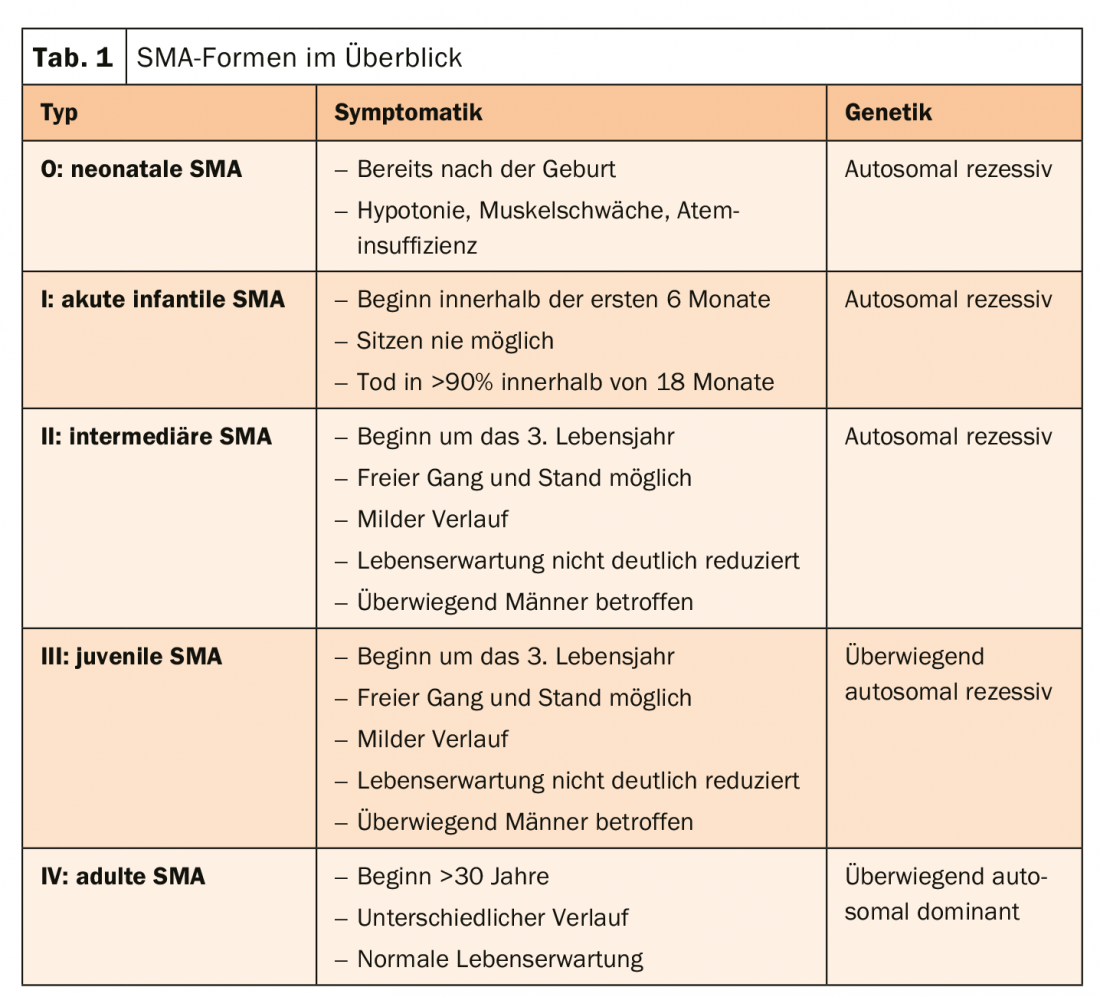
Spinal muscular atrophy (SMA) is a rare, predominantly autosomal recessive muscle disease in which motor anterior horn cells and motor cranial nerve nuclei degenerate. The cause is usually a defect in the SMN1 gene. The resulting lack of functional SMN protein can be partially compensated by the SMN2 gene. Therefore, the more SMN2 copies are present, the later the onset of SMA and the more favorable the course. Patients with late-onset SMA (types II-IV) often have a normal life expectancy. Basically, however, the disease forms a very heterogeneous group with numerous, even very rare forms. They are differentiated according to distribution pattern, onset of disease, severity, and pattern of inheritance. However, the vast majority (90%) is proximal SMA, which is characterized by the onset of muscle weakness in proximal muscle groups (types I-III). Type IV is a special form of the non-proximal type with an onset of disease >30 years (Table 1).


Individual treatment goals

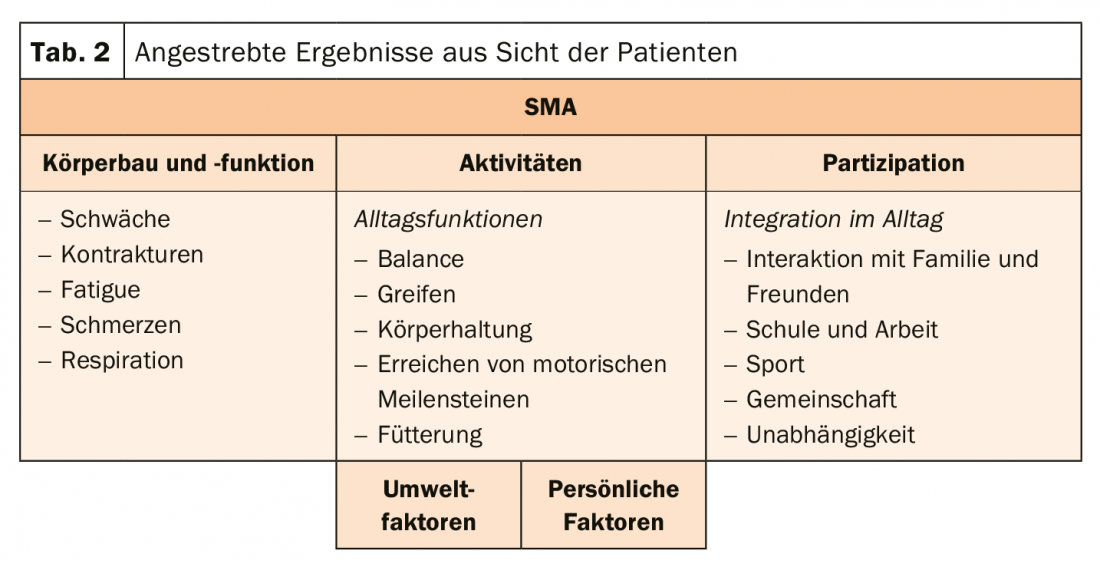
Because the group of adult patients with SMA is so diverse, treatment goals cannot be lumped together. For one person, it is important to maintain walking independence and delay the time of needing to use a wheelchair as much as possible. In other patients, however, the focus should be on the function of the upper extremities (tab. 2) . The SMA patients therefore receive physiotherapy, supportive mechanical ventilation if desired, and orthopedic measures to compensate for the curved spine. Also, care should be taken to ensure adequate caloric intake, so that the muscles do not break down even faster. Basically, treatment management aims to strengthen endurance and resistance, maintain bone health, prevent fractures, keep body weight constant, and monitor breathing.


No longer supportive-palliative treatment alone

The first disease-modifying therapy is now available. Since the pivotal studies were conducted in children, an observational study was now conducted to look more closely at the effect in adults. The results suggest that the antisense oligonucleotide nusinersen can also significantly improve motor function in adults with SMA. The change in the Hammersmith Functional Motor Scale Expanded (HFMSE) was assessed. Compared to baseline, this was significantly increased.

Source: EAN Virtual Congress 2020


InFo NEUROLOGY & PSYCHIATRY 2020; 18(4): 36 (published 6/29/20, ahead of print).

Autoren
  • Leoni Burggraf
Publikation
  • InFo NEUROLOGIE & PSYCHIATRIE
Related Topics
  • Pulse forwarding
  • SMA
  • Spinal muscular atrophy
Previous Article
  • Atrial fibrillation

Early rhythm control aims for better outcomes

  • Cardiology
  • Congress Reports
  • RX
  • Studies
View Post
Next Article
  • Migraine

Avert headaches in advance

  • Congress Reports
  • Education
  • Neurology
  • RX
  • Studies
View Post
You May Also Like
View Post
  • 10 min
  • A hub of biological aging

Mitochondrial dysfunction and energy metabolism

    • Education
    • General Internal Medicine
    • Genetics
    • Prevention and health care
    • RX
    • Sports Medicine
    • Studies
View Post
  • 3 min
  • Health Literacy

Promoting health literacy: from the abstract to the concrete level

    • RX
    • General Internal Medicine
    • Practice Management
    • Prevention and health care
    • Studies
View Post
  • 8 min
  • Pharmacological therapy

Anxiety symptoms in eating disorders

    • Education
    • Nutrition
    • Pharmacology and toxicology
    • Psychiatry and psychotherapy
    • RX
    • Studies
View Post
  • 4 min
  • Case study

Wiedemann-Steiner syndrome in a 2-year-old girl

    • Cases
    • Education
    • General Internal Medicine
    • Genetics
    • Pediatrics
    • RX
View Post
  • 4 min
  • Chronic back pain

Care in the virtual hospital – the Back@home project

    • Congress Reports
    • General Internal Medicine
    • Physical medicine and rehabilitation
    • Prevention and health care
    • RX
    • Studies
View Post
  • 4 min
  • Psoriatic arthritis

Long-term remission also possible without DMARDs

    • Dermatology and venereology
    • Education
    • Rheumatology
    • RX
View Post
  • 5 min
  • Clinical relevance, benefits and limitations

Atrial Fibrillation Screening

    • Cardiology
    • Education
    • RX
    • Studies
View Post
  • 9 min
  • Parkinson's disease: progressive and clinically heterogeneous

Individualized management of motor and non-motor symptoms

    • Congress Reports
    • Geriatrics
    • Neurology
    • Pharmacology and toxicology
    • RX
    • Studies
  • IBD matters

    Zum Thema
Top CME content
  • 1
    Causes and prevention at work
  • 2
    Yellow nail and Swyer-James syndrome
  • 3
    Recommendations for action in practice
  • 4
    From the β-cell to the center: the versatile role of amylin
  • 5
    Communication as the key to therapy adherence

Newsletter

Sign up and stay up to date

Subscribe
Medizinonline Medizinonline
  • Contact
  • General terms and conditions
  • Imprint

Input your search keywords and press Enter.